Keratin Treatments and Hair Color Longevity: What Actually Lasts Longer (and Why)
The question behind most longevity conversations isn't really about weeks or months. It's about consistency — wanting the hair to look as good in week six as it did in week one, without having to think about it constantly in between.
Keratin and color both contribute to that feeling when they're working well. But they contribute differently, and understanding the difference changes what you expect from each service — and what you actually need to ask for.
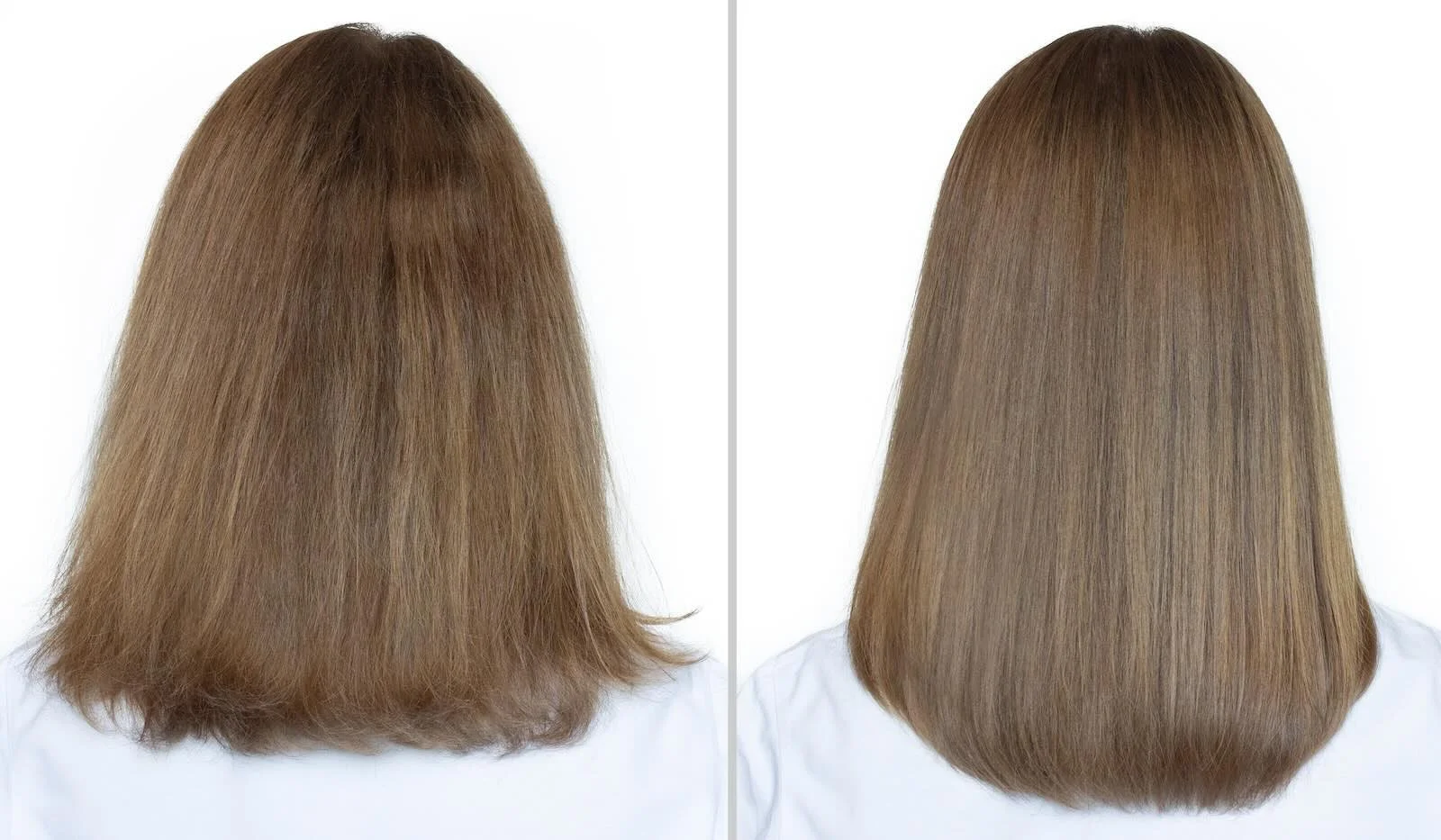
Longevity isn’t about locking color in. It’s about stabilizing what supports it.
What Actually Makes Hair Color Fade?
Color fades because pigment escapes the hair shaft — and the rate at which it escapes is controlled almost entirely by the condition of the cuticle, the outermost protective layer of each strand.
When the cuticle is smooth and intact, it lies flat against the shaft and holds pigment inside more effectively. When the cuticle is raised, damaged, or highly porous—from heat, repeated chemical services, water exposure, or physical friction—it creates gaps through which pigment gradually escapes. This is why two people with the same color formula can have dramatically different fade timelines: the hair architecture, not the color itself, determines how long the result lasts. Even mainstream coverage, such as Glamour, notes that keratin-infused care—from professional treatments to at-home shampoos formulated with smoothing proteins—helps color-treated hair keep its shine and tonal integrity over time.
Several factors accelerate cuticle lifting and therefore accelerate fade: daily washing, particularly with hot water, which swells the shaft and forces the cuticle open repeatedly; sulfate-based shampoos, which strip the surface aggressively; UV exposure, which degrades pigment molecules directly; and heat styling without protection, which stresses the cuticle surface over time.
None of these is surprising on its own. What matters is that they compound. Washing daily with a sulfate shampoo, blow-drying without heat protection, and spending time in the sun put color under four simultaneous fade accelerants—which is why it can look tired by week three.
Does Keratin Make Hair Color Last Longer?
Keratin can make hair color last longer because it seals the cuticle that pigment escapes through. Keratin smoothing treatments work by depositing protein into the hair shaft and sealing the cuticle more tightly with heat. The result is a temporarily smoother, more compressed surface—one that reacts less to the conditions that accelerate fade. This is the same structural framework outlined in Keratin Smoothing Treatments in NYC: A Modern, Wearable Approach.
Less cuticle lifting during washing means less pigment escape per wash cycle. More consistent surface integrity means the color reflects light more evenly as it ages, rather than fading unevenly in patches. Reduced porosity means tonal deposits — particularly glosses and demi-permanent colors — sit more uniformly in the shaft rather than absorbing at different rates in different areas.
This is how keratin extends the useful life of color. It doesn't permanently lock in pigment. It slows irregular loss by stabilizing the surface that would otherwise let it escape.
The practical result: color that fades more gradually and more evenly. Less patchy, uneven deterioration that makes color look worn before it needs refreshing—more consistent tone that keeps hair looking maintained even at week eight or ten.
Which Lasts Longer, Keratin or Hair Color?
Keratin usually outlasts most color services—three to five months, versus four to eight weeks for a gloss—and this is where expectations often misalign.
Keratin smoothing treatments typically last three to five months, depending on hair texture, washing frequency, aftercare routine, and the specific formula used. Coarser, thicker hair tends to hold the treatment longer. Fine hair, or hair washed daily, tends to fade faster.
Hair color timelines vary more significantly by type. A gloss or demi-permanent color — the kind used for toning, refreshing, or gray-blending maintenance — typically lasts four to eight weeks before a tonal shift becomes noticeable. Permanent color lasts longer in terms of coverage but shifts tonally over time as it oxidizes and fades at the surface. Balayage and dimensional lightening work last the longest in terms of visible grow-out because the techniques are designed for a gradual, soft-edged result.
So keratin outlasts most color services in terms of duration. Whether you should combine the two depends on your strategy, as outlined in Should You Combine Keratin and Hair Color? Not Everyone Should.
The answer: Keratin stabilizes the conditions that determine color. Color provides the tonal result, and keratin then helps maintain it. They're not competing — they're sequential. Keratin sets the table. Color fills it.
When Doesn't Keratin Help Color Last Longer?
Keratin doesn't help color last longer when damage is still being added underneath it, and it's worth knowing which conditions those are.
If the color formula was too aggressive for the hair's current condition — if significant lift was applied to already-compromised hair, or if the processing time exceeded what the strand could support — keratin can't undo the porosity that results. It can temporarily manage the surface, but the underlying damage still affects how color takes and holds.
If the client washes daily with a clarifying or sulfate-containing shampoo, the keratin deposit will degrade faster than the color's useful life, eliminating any longevity benefit before it has time to register.
And if ongoing lightening continues to compound porosity at every appointment, no smoothing treatment can keep pace with the damage being added. The productive conversation in that case is about reducing lightening intensity, not about adding more corrective treatments downstream.
Longevity is a cumulative outcome. It reflects the sum of every product choice, every styling habit, and every service decision over time. A single treatment — keratin or otherwise — can shift the trajectory, but it can't override a fundamentally unsupportive routine.
What Helps Color and Keratin Last Together?
The home care habits that extend keratin also extend color, because they share the same mechanism: protecting the cuticle from unnecessary stress.
A sulfate-free shampoo is the foundation. It reduces stripping that simultaneously degrades both the keratin deposit and the color. A color-safe conditioner used after every wash replenishes surface moisture and keeps the cuticle lying flat between washes. Olaplex N°.3PLUS Complete Repair Treatment used weekly supports bond integrity in chemically processed hair — maintaining the structural strength that both color and keratin depend on. And UV protection, whether through a dedicated UV-filter hair product or simply limiting prolonged sun exposure during peak hours, addresses the one fade accelerant that product use alone can't fully offset.
The goal is a routine that doesn't work against either service. Most clients already have the basics — the shift is usually in product formula (switching off sulfates) rather than adding new steps. The wider version of that routine is How to Make Hair Color Last Longer Without Overprocessing.
What Does Lasting Color Actually Mean?
Lasting color means consistency, not freedom from maintenance. Most people who say "I want my color to last" mean they want their hair to look consistently good between appointments—not great on day one and tired by day twenty.
That consistency is what keratin, used correctly alongside color, actually delivers. It is the foundation of Low-Maintenance Hair Color in NYC: What Actually Works for Busy Lives, where the goal is consistency rather than constant correction.
Not more weeks before the next appointment. Not a permanent solution to fading. But a more even, more graceful aging of the color work — one where the hair looks intentional at week eight rather than overdue.
That's the more useful promise. And it's achievable when both services are calibrated to the same goal.
Effortless Color For The Real You.