Should You Combine Keratin and Hair Color? Not Everyone Should.
The question comes up more than you'd expect: "Can I do keratin and color at the same time?" Sometimes it's asked because a client is trying to simplify her schedule. Sometimes it's because she's heard that keratin makes color look better and wants both. Sometimes she already has both and isn't sure whether they're working together or against each other.
The honest answer is that combining keratin and color can be genuinely excellent — or genuinely counterproductive — depending on what the hair needs, the color goal, and how the two services are sequenced. It is not an automatic yes. It is not an automatic no. It is a strategy decision, and the strategy depends on specifics.
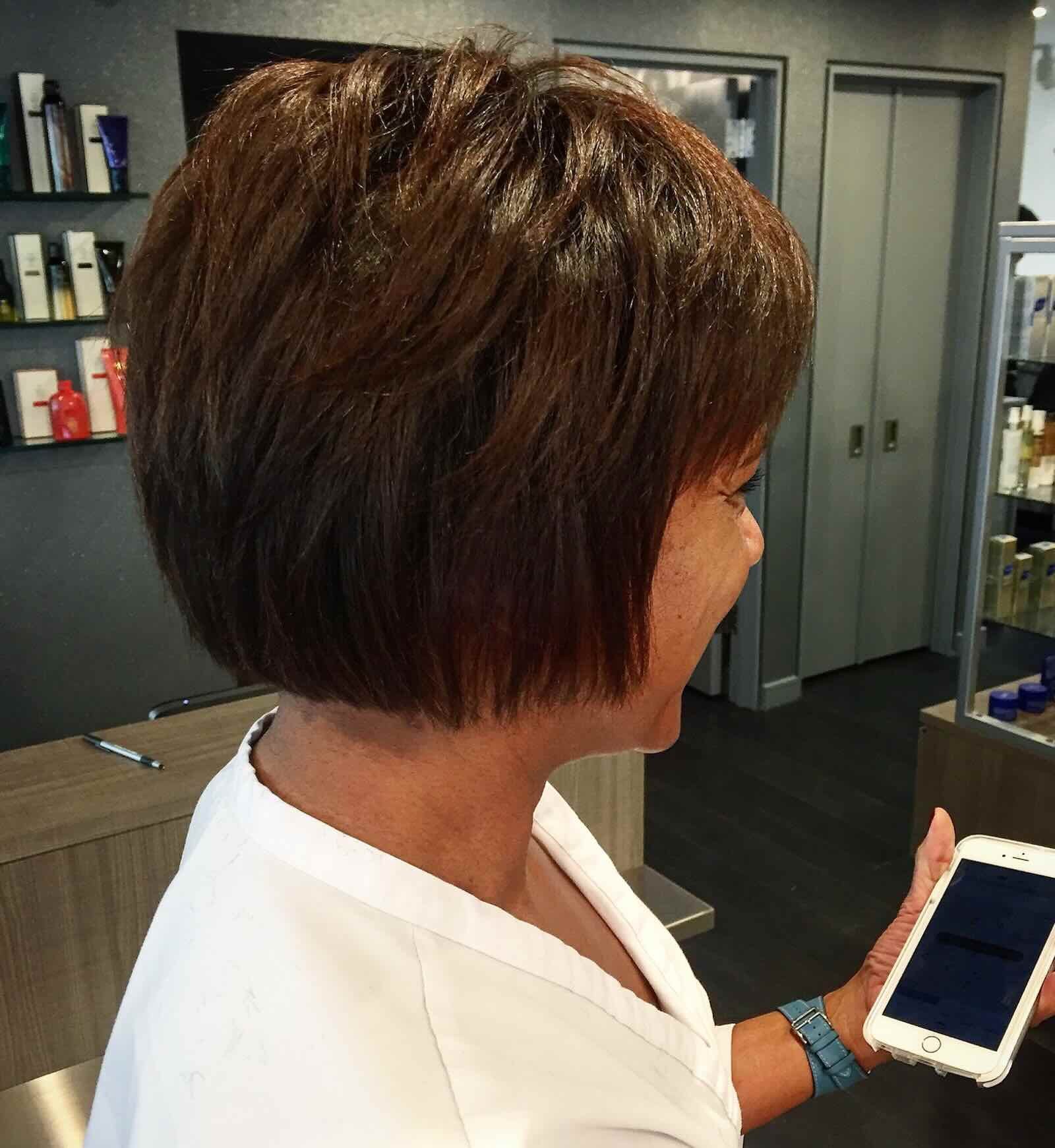
Smoother isn’t always better. It has to be intentional.
What Keratin Actually Does to Color
Before deciding whether to combine the two services, it helps to understand how keratin affects color at the structural level — because the effect is not neutral.
It is the same structural principle at work in keratin smoothing treatments generally: color sitting on a cuticle that was rough and raised can suddenly look richer, more dimensional, more polished — not because the tone changed, but because the surface improved.
It is worth being precise about why. Hair color does not emit light; it reflects it, and the quality of that reflection is governed almost entirely by the cuticle. Lying smooth and sealed, the cuticle returns light evenly and directionally, which the eye reads as depth. When left open, it scatters the same light in every direction, and scattered light reads as flat or chalky regardless of what pigment lies beneath.
The practical consequence is the one clients rarely anticipate: a smoothing treatment can do more for the appearance of existing color than a re-tone would. When color looks dull three months in, the honest diagnosis is often texture rather than pigment — and adding more pigment to a rough surface buys very little. Pigment takes the credit. The surface does the work.
This effect is most pronounced with dimensional color: balayage, gray blending, and highlights. This is why balayage in NYC depends heavily on surface quality to read as soft, blended, and intentional. These techniques rely on subtle tonal shifts that are read through surface quality. A smooth surface amplifies those shifts. It's why a well-blended gray can go from looking wiry to looking refined after a keratin treatment, or why balayage that looked streaky can read as seamlessly dimensional afterward.
But the same mechanism that enhances color when the surface is rough can flatten color when the surface is already good. A client with healthy, well-moisturized hair and beautiful tonal work doesn't necessarily need more compression. Adding it can reduce the lift and movement that made the color interesting in the first place.
When Combining Works Well
The clients who benefit most from combining keratin and color share a few consistent characteristics.
Their hair is moderately to significantly porous — due to age-related structural changes, a history of chemical processing, or environmental exposure. The porosity is what keratin addresses directly, and when it's present, the improvement in surface quality genuinely changes how color reads.
Their color goal is lived-in rather than high-contrast. Balayage, gray blending, and dimensional brunette all benefit from a smoother surface, as the goal is already softness and integration. Keratin reinforces that goal rather than working against it.
They're not looking for volume as a primary outcome. Keratin reduces expansion and frizz, thereby reducing some of the lift that creates the appearance of fullness. Clients who want their hair to look fuller tend to get less from keratin than clients who want it to look more controlled.
They're committed to a consistent color strategy rather than frequent tonal changes. Keratin slows the rate of color fade by sealing the cuticle more tightly, which is useful if you want your last color service to last longer, but less useful if you like adjusting your tone every eight weeks.
When to Be Careful
Combining services can be complicated under specific conditions, and it's worth addressing each condition directly rather than offering a general caution.
Fine hair with low natural volume is one. Keratin reduces expansion, and for clients whose hair already lies very flat, the additional compression can remove any remaining volume. The result feels heavy rather than smooth. This doesn't mean keratin is impossible for fine hair — formula choice and application technique matter significantly — but it does require more calibration than on thicker hair.
Aggressive ongoing lightening is another. Clients who are doing significant lightening at every appointment — strong bleach, multiple levels of lift — have hair that is increasingly porous and increasingly compromised. Keratin can help manage that porosity, but if the lightening continues to compound the damage, the treatment is addressing the symptom while the cause persists. A more productive conversation is usually about reducing the lightening intensity before adding a smoothing treatment.
Frequent tonal changes are a third consideration. If a client changes her color direction significantly every few months — going warmer, going cooler, adding dimension, removing it — keratin can work against her by making each new color service harder to execute predictably. A more sealed cuticle is less receptive to new tonal deposits, which means the colorist has to work harder to achieve the same result.
For the detailed breakdown of how keratin and color interact over time:
Keratin Treatments and Hair Color Longevity: What Actually Lasts Longer (and Why)
The Sequencing Question
Even when combining is the right decision, the order and timing of the two services matter. The general framework is color first, a stabilization period, then keratin — but the length of the stabilization period depends on the color service.
A gloss or toner with no significant lightening needs a relatively short window — two weeks is often sufficient. A service involving significant lift, bleach, or complex color correction needs longer — a minimum of four to six weeks — to allow the tonal deposits to stabilize before the cuticle is fully sealed around them.
There are cases where I reverse the order: hair that is structurally too compromised to take color evenly may need keratin first to restore enough cuticle integrity for the color to deposit predictably. And there are cases where I recommend spacing the services by a full color cycle rather than treating them as part of the same appointment sequence.
The sequencing decision is clinical, not cosmetic. It's made based on the current condition of the hair, the specific services being planned, and the product formulas in use—not on what would be most convenient for the schedule. This is the same logic behind low-maintenance hair color in NYC, where long-term behavior matters more than immediate results.
Even mainstream coverage, such as Glamour, covers how the combination of keratin treatments and color services — when properly sequenced — produces results that are smoother, more reflective, and longer-lasting than either service alone.
What Supports Both Services at Home
When color and keratin are both present in the hair, the home care routine needs to support both simultaneously — which is more straightforward than it sounds, because the two services share most of the same enemies.
Sulfates are the primary threat to both. They strip color faster and degrade the keratin deposit faster than almost anything else in a standard wash routine. Switching to a sulfate-free shampoo is the single most impactful home care change a client can make when maintaining both services. A keratin-safe, color-protecting conditioner used consistently after every wash extends the life of both. And Olaplex N°.3PLUS Complete Repair Treatment, used weekly, supports the integrity of color-treated hair's bonds without interfering with the keratin treatment — it's one of the few products that genuinely serves both purposes at once.
Heat protection before blow-drying is also important: the keratin treatment is partially maintained by styling heat, but excessive unprotected heat can degrade both the keratin deposit and the color over time. A lightweight serum with heat protection applied before the dryer addresses both.
The Goal: Alignment, Not Accumulation
The clients who do best with both services are those who came to the decision with a clear goal and chose both because each served that goal, not because one seemed like a good add-on to the other.
When keratin and color are aligned with the same objective — smoother, more dimensional, lower-maintenance hair that grows out gracefully and requires less daily effort — they reinforce each other beautifully. The color looks better because the surface is better. The surface lasts longer because the color maintenance is less aggressive. The whole system becomes more efficient.
When they're stacked without that alignment, the result is hair that feels managed rather than designed. Heavy rather than polished. Overworked rather than effortless.
The question to ask before combining isn't "can I do both?" It's "what am I trying to solve, and does each service address part of that problem?" If the answer is yes to both, deliberately combine them. If the answer is unclear, solve one problem at a time.
Effortless Color For The Real You.