Low-Maintenance Hair Color in NYC: What Actually Works for Busy Lives
At a dinner in June, a friend who works the kind of hours that leave no room for upkeep mentioned, almost in passing, that she had not thought about her hair in three months. She meant it as a confession of neglect. I heard it as the highest compliment a color can earn. Her color still moved like a decision: light in the right places, depth where it belonged, nothing asking to be fixed. Hair you never have to think about is not neglected hair. It is hair someone thought about carefully once, so she wouldn’t have to keep doing it.
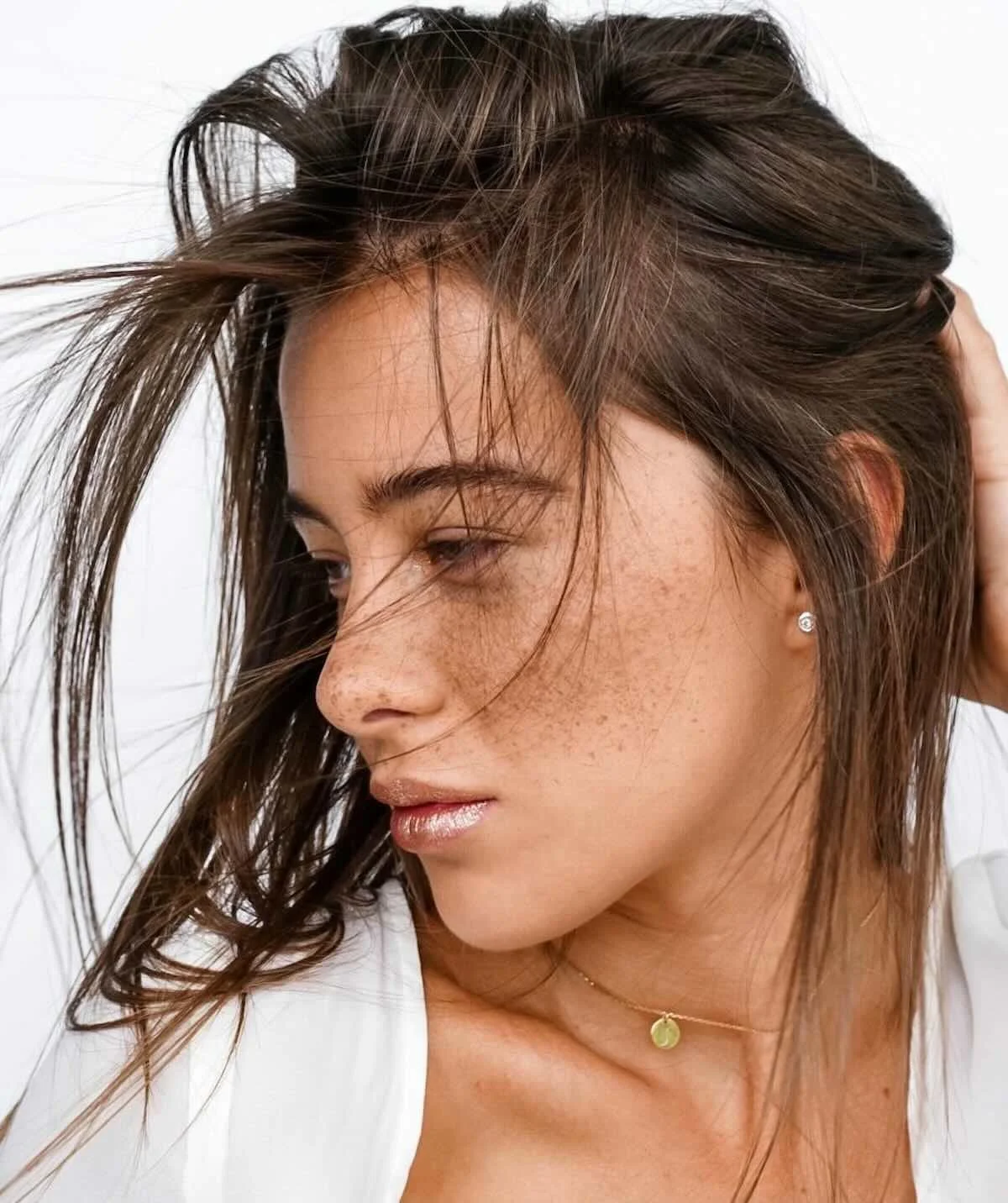
Color that moves with real life — soft dimension designed to stay intentional between visits.
What Is Low-Maintenance Hair Color?
Low-maintenance hair color is color designed to grow out softly, hold its tone and never demand correction between visits. People rarely ask for it by that name. They describe a life: work that runs late, weekends that fill themselves, a calendar with no obvious opening for upkeep. What many of them live with instead is color that needs re-toning within a month and a full rebuild within a season. The difference usually shows in the first few minutes of looking at the hair. The issue is never the goal. It is the design.
The word itself adds to the confusion. Low-maintenance sounds like a smaller version of the same service—the same color, ordered in a lighter portion. It is not. It is a different brief entirely, written in time rather than shade. Color asked to look intentional for sixteen weeks is not a diluted version of color asked to look intentional for five. It is a harder problem, solved differently.
Low-maintenance color is not created by doing less. It comes from making more precise decisions earlier.
Placement has to be intentional. Tone has to be calibrated to evolve, not peak. Respect the relationship between the natural base and the added color; don't override it. When those elements align, color settles into the hair instead of sitting on top of it. When they do not, the collapse follows a predictable schedule: high contrast hardens into visible regrowth, over-toned finishes fade, dull and uneven, and what looked fresh on day one starts to create urgency by week eight.
What that schedule costs is rarely counted honestly. Each correction is another salon visit, another process, another few hours that should have been spent somewhere else entirely. The promise of ease turns into a standing obligation, and the obligation gets blamed on the hair. The hair is not the variable. The plan was.
Is Low-Maintenance Color Harder to Do?
Low-maintenance color is harder to do, not easier: it asks more of the colorist, not less.
Color built on a five-week cycle forgives a great deal. Placement can drift, tone can be approximate, and the base can be pushed further than it should be—none of it has to survive long, because a correction is already on the calendar. Color designed to hold for five months has no such cushion. Placement, tone, and the reading of that specific base have to be right the first time. The cycle includes no rescue visit.
That missing cushion changes how the work is done. It removes the option of approximation. Every choice has to be made against a version of the hair that does not exist yet — the hair at week nine, week fourteen, week twenty — and judged there rather than here. Colorists are trained to make hair beautiful on the day. This asks for something closer to forecasting, and forecasting is a less flattering skill.
When it is not right the first time, the failure is rarely mysterious. It arrives in one of three ways.
The first is a hard root line. Color placed too close to the scalp without a proper blend doesn’t soften as it grows—it draws a line, and the line sharpens every week until a root touch-up becomes mandatory. The request was for less upkeep, and the result was a standing date with the salon.
The second is over-brightened ends. When the lightener is pulled straight through to the tips without accounting for ends that are older, more porous, and more reactive than the mid-shaft, they lift faster and further than the rest. It looks uneven on the day and deteriorates from there, the dimension flattening as the ends fade to a tone the rest of the hair never had.
The third is tonal collapse. When you choose a tone for maximum impact on day one—very cool, very ashy, very saturated—without accounting for how it fades on this particular base, it doesn’t fade gracefully. It empties, and what is left underneath was never designed to be seen.
None of the three is a product failure. Each is a decision made for the day of the service, not for the months after it.
Read together, they describe one habit rather than three separate errors. Each optimizes for the mirror at the end of the session, which is the only moment the work is ever witnessed being done. Everything after that is witnessed alone, in ordinary light, by someone who did not watch it happen and has no reason to grade it generously. That later moment is where When Your Low-Maintenance Color Stops Working begins.
Why Does Some Hair Color Last Longer Than Others?
Hair color lasts longer when the hair beneath it stays structurally sound. Longevity is neither an accident nor a product. It is structural.
Every unnecessary salon visit costs the hair something. Research published in Heliyon found that even a single dyeing session alters the cuticle surface, and that the damage compounds with each repetition. In color design, the implication is clear: the more often a color needs to be corrected, refreshed, or rebuilt, the less stable the hair becomes. Every unnecessary salon visit costs the hair something.
Structural is the right word here, not a flourish. Hair is a fiber with an outer layer that either lies flat or doesn’t, and tone depends as much on that layer's behavior as on the pigment beneath it. A smooth cuticle reflects light evenly and holds a tone where it was placed. A roughened one scatters light, reads dull within days, and lets tone leave faster than any formula intended. Two heads given identical color will not keep it identically, and the difference is more often condition than chemistry.
That is why low-maintenance is best defined not as spacing visits further apart, but as eliminating the visits that should never have been necessary. A well-designed color maintains its tone, its dimension, and its intention as it grows. That is the difference between maintenance and correction — and it is decided at the first application, not the fifth.
The distinction changes what a visit is for. One that repairs something avoidable isn’t maintenance; it is a correction wearing maintenance's clothes, and it leaves the fiber slightly less able to hold the next one. One that refines something already working leaves the hair where it was. Over a year, the gap between those two patterns isn’t really measured in money. It is measured in how much hair there is left to work with.
Which Decisions Make Color Low-Maintenance?
Three decisions make color low-maintenance: the natural base, the contrast and the tone.
The first is the natural base. Pushing hair too far from its natural depth requires more processing and destabilizes it faster as it fades. Staying within one to two levels of the natural base lets color age gracefully instead of visibly.
The second is contrast. Soft contrast creates movement without creating urgency. High contrast creates a line, and a line reads as regrowth. The difference between color that lasts eight weeks and color that lasts sixteen is usually decided here — not at the checkout desk; the same decision at the center of What Makes Balayage Last Longer? A Colorist's Perspective.
The third is tone. Tone should not fight the underlying pigment; it should evolve with it. As the surface softens over the weeks, what remains underneath should still feel intentional, not accidental.
None of these three decisions is visible on the day the color is done, and that is precisely the point. Nobody can see restraint in a mirror. It shows at week ten, when the color still reads as a choice rather than a countdown.
None of these three decisions is visible on the day the color is done, and that is precisely the point. Nobody can see restraint in a mirror. It shows at week ten, when the color still reads as a choice rather than a countdown.
Restraint is hard to argue for across a mirror and easy to recognize a season later. That gap — between what persuades in the moment and what proves correct over months — is most of this work. A colorist judged only on the last ten minutes of a service will drift, gradually and without deciding to, toward the version that wins the last ten minutes.
How Much Grow-Out Can You Live With?
How much grow-out you can live with is the fourth decision, and it has nothing to do with the hair.
Almost every color request starts with a reference image. The image shows the result on day one, in good light, freshly finished. What it cannot show is day sixty, and day sixty is where the person actually lives. The gap between those two images is where most disappointment is manufactured, and it is rarely a technical failure. The color did what it was built to do. It was not built for how this particular person experiences regrowth.
Tolerance for grow-out is personal, and it varies more widely than anything measurable. Two heads can have identical placement, identical tone, identical density, and the same eight weeks of growth. One person sees soft dimension settling in. The other sees a line she cannot look away from. Neither is wrong. They are describing the same hair.
So the question worth answering before any color is chosen, and the one rarely asked directly, is this: how visible does regrowth have to be before it bothers you? Not how visible it is; how visible it feels. Low tolerance needs contrast kept deliberately soft and a shorter cycle, and is happier for it. High tolerance can carry more brightness and a longer interval, and would find the cautious version underwhelming. Get that wrong and everything downstream is wrong: the tone can be perfect, the shape correct, the brightness well judged, and the result still disappointing at week ten, because the design answered a question that was never asked.
The cut is part of the same answer. Low-maintenance color relies on movement, on how layers meet light and how the ends blend into the mid-shaft. When the shape goes, the color loses its logic. The two are designed together, and they are kept together.
Is Gray Blending Lower Maintenance Than Coverage?
Gray blending is lower maintenance than traditional coverage, and gray is the clearest proof of this logic. Traditional coverage produces a fixed, opaque result, and the moment hair grows, the contrast between regrowth and color announces itself. That visibility creates urgency, and urgency multiplies appointments. The color is not failing — it was designed to be unforgiving.
The word coverage is doing quiet damage in that sentence. It frames gray as something to be concealed, and concealment sets a standard nothing can hold: it either works completely or it fails visibly, with no useful state in between. Every method built on that premise inherits the same brittleness. When the concealment slips, what shows isn't hair that has grown, but something that has stopped working.
Blending reverses the premise. Instead of eliminating gray, it integrates it, softening contrast and distributing tone so the grow-out arrives gradually rather than abruptly. Gray blending is less a technique than an outcome—the name for color designed to accept what the hair is already doing. That distinction is What Gray Blending Actually Means — and Why the Term Gets Misunderstood.
This is a structural argument as much as an aesthetic one, and it gets far less attention. Gray hair behaves differently from the hair around it—often coarser, more resistant at the root, and less consistent along its length. A method that demands uniformity fights that difference at every appointment and never stops. A method that distributes tone around the difference works with a variable it was never going to defeat, which is why the result lasts longer and asks for less.
Which is why the thinking improves the moment it stops being about gray at all. Once the question becomes how much contrast this particular head can carry and how that contrast should fade, gray becomes one more variable among several—no more decisive than porosity or base depth. People tend to relax at that point, and that relaxation isn’t cosmetic. It changes what they are willing to choose.
How Does New York Affect Hair Color?
New York wears hair color down faster than a gentler city would, and it is not a neutral environment for it. Hard water dulls tone and clarity. The daily swing between outdoor cold and overheated interiors stresses the fiber, and the reverse is true when summer humidity meets air conditioning. Frequent washing accelerates tonal drift, and daily styling adds cumulative wear. Color that only performs under ideal conditions was never designed for this city.
Humidity deserves its own mention. A July subway platform can undo a surface tone faster than a month of washing, so tone has to be set to survive the platform, not the salon lighting.
Styling heat compounds all of it. A dryer and an iron used daily do not damage hair the way a chemical service does — they do something slower and harder to notice, wearing the surface down until it no longer holds what was put into it. Almost nobody thinks of that as a color problem. It becomes one anyway.
Washing frequency is the variable most often underestimated, and it moves tone faster than anything else on that list. Hair washed daily meets water, friction, and heat several times more often than hair washed twice a week, and each meeting takes a small amount of tone with it. A formula cannot be neutral about that difference. It has to be built already knowing which of the two lives it is going into.
That is why a low-maintenance formula starts with questions that sound less like color and more like life: how often the hair is washed, how it is styled and what it is exposed to between visits. The same formula will not behave the same way across two different lives, and pretending otherwise is how low-maintenance becomes a broken promise. It is the question behind How Often Does Balayage Really Need Touch-Ups?
Geography belongs in a formula for the same reason it does in life. Color designed in one city and worn in another is a different color by the second month. The variables are not exotic — weather, water, transit, the number of hours spent under artificial light — but they are relentless, and relentless is what decides longevity. Nothing here is unique to New York except its concentration.
How Do You Make Hair Color Last Between Visits?
Hair color lasts between visits when the weeks after the service protect what it built. The service builds the structure; the weeks that follow decide how long it stands.
Very little of what happens in those weeks is dramatic. Tone leaves gradually, a fraction at a time, in water that is slightly too hot and under a dryer held slightly too close. The cuticle roughens by degrees rather than all at once. None of it registers as an event, which is exactly why it is so rarely connected to the result — by the time color reads dull, the reason is a month behind the observation. Longevity is lost the way it is built: slowly, and out of sight.
For hair that has been through repeated color work, Kérastase Résistance Bain Force Architecte Shampoo earns its place at the sink — it reinforces a fiber that processing has quietly weakened. A reinforced fiber is half of what keeps tone where it was placed. Between salon visits, Joico K-PAK Color Therapy Shampoo protects the color deposit itself, holding tone through the friction of daily washing. Neither is decoration. They share the same design: the color starts and continues at home.
For color-treated hair washed more often than it should be, Phyto Color Anti-Fade Shampoo sits in the same category from a different tradition — a French pharmacy staple built around holding tone rather than stripping it. That it is not a salon exclusive matters more than it sounds; the routine that survives is the one you can replace on a Tuesday without an appointment.
All three share a modest ambition. None of them repairs a wrong design decision. They protect one that was right, which is the only thing home care has ever been able to do. Expecting more than that from a bottle is how salon work ends up blamed on the shelf.
What Does Low-Maintenance Color Look Like When It Works?
When low-maintenance color works, visits become refinements instead of repairs, and everything downstream changes. The interval between visits extends on its own. The color continues to feel current without constant adjustment — not because less effort went in, but because the effort went in earlier, where no one would ever see it.
It is a quieter result than this industry tends to reward. There is no before-and-after in it, no moment that photographs well, nothing that announces the skill involved. The evidence arrives months later and takes the form of an absence — a problem that never happened, an appointment never needed. That is a difficult thing to show anyone and an easy thing to live inside. My friend at that dinner had been living inside it for three months without once thinking to name it.
That is what low-maintenance color actually means. Three months without thinking about your hair is not neglect. It is the design, doing its work.
Photo by Julia Kuzenkov on Unsplash
Effortless Color For The Real You.