Balayage in NYC: Effortless, Lived-In Hair Color by a Master Colorist
Balayage is the most requested hair color technique in New York City — and also the most misunderstood. Clients ask for it by name, but what they are describing is a feeling more than a method: hair that looks like it belongs to them, that catches the light without announcing itself, that grows out without demanding an emergency appointment. When balayage delivers that result, it is because of decisions made long before the first stroke of color touches the hair.
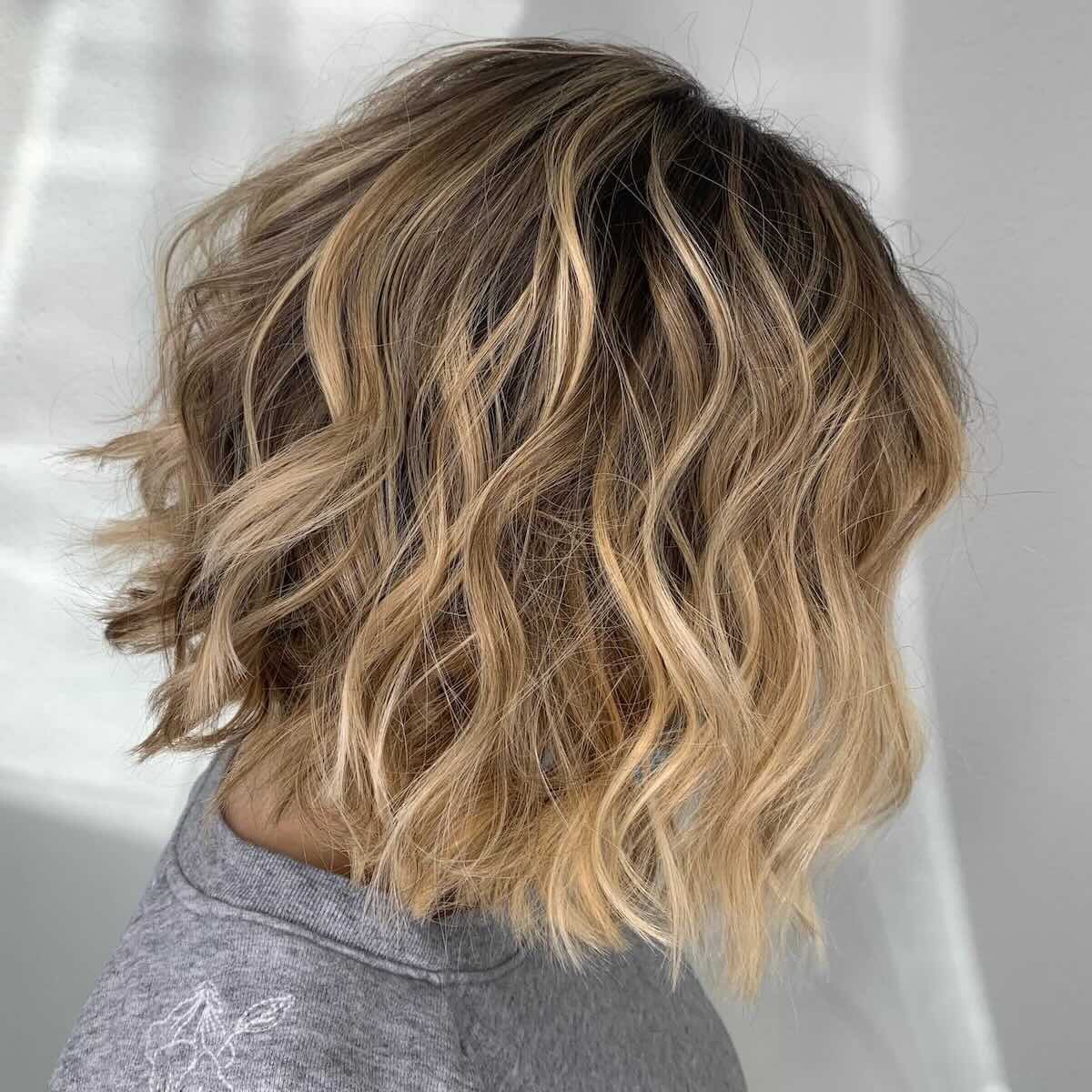
Soft, lived-in balayage designed for seamless grow-out and natural dimension.
What Balayage Actually Is
Balayage is a French word meaning to sweep or paint. Technically, it describes a freehand application method in which you paint lightener directly onto sections of hair without foils, working from mid-shaft through the ends and leaving the root area undisturbed. The absence of foil is not incidental—it defines the result. Foil creates heat, which drives lightener deeper and more uniformly into the hair shaft, producing the sharp, consistent brightness associated with traditional highlights. Without that contained heat, balayage produces a softer, more graduated lift that diffuses naturally from the darker root through the lighter mid-lengths and ends.
That diffusion is what makes balayage look lived-in. The color does not begin at a defined point. It emerges gradually, the way natural lightening from sun exposure actually works — concentrated at the ends and mid-lengths where light falls most often, softer and darker closer to the root, where new growth will appear. The result, when executed correctly, is not a color look. It is the convincing impression that this is how the hair grows. That is the whole premise of Low-Maintenance Hair Color in NYC: What Actually Works for Busy Lives.
Why the Technique Demands More Than It Appears To
The paradox of balayage is that its apparent effortlessness comes from considerable technical precision. Because there are no foils to control placement and no uniform grid of sections to follow, every decision about where to place color, how heavily to saturate each section, and how far from the root to begin is made by hand in real time. A line that is too defined, a section that is too saturated, a transition that breaks at the wrong point—any of these will read in the finished result as color that was applied rather than color that lives in the hair.
This is why the consultation matters as much as the application itself. The colorist needs to understand the client's natural base, the condition of the existing fiber, the history of prior services, the hair's density and texture, and the lifestyle factors that will determine how the result wears between appointments.
Research published in the Journal of Cosmetic Science and indexed by the National Library of Medicine examined how hair dye deposits within the fiber structure, how color is lost through consecutive wash cycles, and how the cuticle and cortex are affected by repeated chemical services — findings that confirm what precise balayage placement is designed to avoid: the cumulative damage and accelerated color loss that comes from over-processing the same sections of hair at every appointment. What that means for longevity is the subject of What Makes Balayage Last Longer? A Colorist's Perspective.
The Case for Balayage in New York City
New York demands more from hair than most cities. The pace of life here means clients cannot return to the salon every five or six weeks. The variety of environments — office, subway, outdoor, social — means hair needs to read well across very different light conditions. And the city's general aesthetic leans toward the precise but unpretentious: hair that looks considered without looking maintained, polished without looking done.
Balayage answers each of those demands. Because it does not create a defined root line, regrowth lacks an obvious demarcation that signals urgency. The color grows out in the same direction it was placed — gradually, from darker to lighter — so the result at ten weeks looks intentional, not overdue. Because the lightness is placed mid-shaft through the ends rather than uniformly from root to tip, the root has natural depth that adds dimension without constant toning to maintain it. And because the technique is calibrated to the individual — not applied from a template — balayage designed for one client's specific base, texture, and face shape will not look like balayage designed for anyone else.
This is what separates balayage from a formula. It is a method that produces an intrinsically personal result.
Balayage and the Low-Maintenance Design Philosophy
The most common misconception about low-maintenance color is that it means less color, less precision, or less investment. In practice, low-maintenance color is higher-precision color—it requires more careful calibration up front so you need less correction later. Balayage best aligns with that philosophy because its entire structural logic is built around graceful evolution rather than periodic correction.
Balayage is not simply low-maintenance color. It is color that gets more interesting as it ages rather than less, that adapts to the client's actual rhythm of life instead of demanding one, and that turns the interval between appointments from a liability into part of the design. It is an intelligent system, and it answers how long it actually runs in How Often Does Balayage Really Need Touch-Ups? A Master Colorist Explains.
Tone, Gloss, and the Finish Layer
Balayage creates the structural foundation of the color result — the placement of lightness, the gradient, and the depth at the root. Toning completes it: applying a gloss or toner over the lightened sections to neutralize unwanted warmth, add precise tonal direction and seal the cuticle to maximize shine. A balayage result before toning is an unfinished sentence. Toning is where the color acquires its character.
Tonal options in balayage are broad. Cool, ashy blondes. Warm honey or caramel. Neutral beige that sits between the two. Deeper brunette balayage with subtle warmth through the mid-lengths. The lightening step opens the door; the toning step determines which room the client walks into. That is why a change in tone at a follow-up appointment—from cool to warm, or from warm to neutral—can feel like a significant transformation even when no new lightening has been done. The structure was already there. The finish was adjusted.
Tone is also the variable the calendar moves. What the spring recalibration involves, and why it recurs on the same schedule every year, is set out in Predictable Elegance: The Annual Return to Lived-In Brightness; what changes again once the light turns directional in June is the subject of Summer Balayage in NYC: When Hair Gets Lighter Without Looking Overdone.
What Clients with Different Hair Types Should Know
Fine hair requires particular restraint in balayage. Thin sections cannot carry the same saturation as dense hair, and too much lightness on fine hair reduces the apparent density of the overall look. The goal for fine hair is a few precisely placed lighter pieces that create the impression of movement and dimension without removing the visual weight the hair cannot afford to lose.
Dense or coarser hair can support more sections and slightly more contrast, but spacing between sections becomes critical—too close together and the result reads as highlights, not balayage. Curly and textured hair requires special consideration of how the curl pattern will interact with placement, since lightness that reads as gradual on straight hair can look different when the curl contracts. In every case, the principle is the same: place color where it contributes to the result, and leave the rest alone.
Fine Hair: Where Balayage Forgives the Least
Fine hair is the most demanding canvas in color work, not because it is hard to lighten but because it is so easy to overlighten. The strands are narrower, so there is less fiber for the chemistry to work through: fine hair lifts faster, further, and less predictably than medium or coarse hair under the same formula. Oxidative lightening measurably reduces the shaft's mechanical strength, and fine hair starts with less to spare. A formula that produces soft dimension on medium-density hair can leave fine hair looking fragile, overworked, and visually thin.
The visual problem is density. Fine hair does not tolerate excess; it reveals it. Very bright pieces against a dark base pull the hair apart to the eye, so it reads as several thin layers rather than one whole, and the result looks less full, not more. The remedy is not avoiding lightness. It is controlling the relationship between light and dark so the impression is dimension rather than contrast: a few lighter pieces, spaced apart, with the darker unlit hair left to carry the weight.
The adjustments are specific. Narrower sections, lower saturation per section, more space between them, and closer attention to the lift, aiming for a result that reads as dimensional rather than blonde. Balayage suits fine hair because the placement starts away from the root and saturation builds gradually, without the wall-to-wall coverage foils can produce, and because open-air lightening lifts more slowly than lightener sealed in heat.
Tone follows the same logic. Because fine hair lifts fast, it lands brighter and warmer than the same formula would on coarser hair, and very cool tones on so little mass read as washed out rather than polished. Warm neutrals, honey, beige, soft caramel, sit more harmoniously with the natural undertone and fade toward a softer version of themselves. And gloss matters more here than on denser hair: a refresh every eight to ten weeks, with no new lightening, keeps the tone defined on a fiber that holds less of it.
Between appointments, the support has to hold the fiber without weighing it down; the heavy proteins and silicones built for thick, processed hair flatten fine hair. Shu Uemura Art of Hair Muroto Volume Pure Lightness Shampoo cleanses and lifts at the root. OUAI Fine Hair Shampoo gives lightweight hydration that strengthens without costing movement. Oribe Serene Scalp Balancing Conditioner, applied mid-length through ends only, conditions the porous lengths and leaves the root alone.
Well-executed color on fine hair does not look like a color appointment. It looks like hair that is more alive than it was: more movement, more light, more depth when it catches the sun at an angle, with no visible stripe and no moment where the color announces itself. That invisibility is harder to reach on fine hair than on any other, because fine hair forgives less. Every decision shows.
The Support Layer for Balayage Results
The quality of the blonding product determines the ceiling of the result. Wella Professionals Blondor provides controlled, consistent lift with minimal disruption to the cuticle structure — critical for a soft, graduated result rather than an aggressive one. After lightening, Olaplex No. 9 Bond Protector Nourishing Hair Serum protects the compromised bond structure against thermal and environmental damage in the days and weeks following the service. For at-home tonal maintenance between appointments, Kevin Murphy BLONDE.ANGEL.WASH deposits a gentle cool tone into lightened sections, extending the precision of the salon result without the overcorrection that stronger purple shampoos can cause.
These are not incidental choices. The lightening agent affects how the fiber responds. The bond protection affects how the result wears. The at-home tonal maintenance affects how long the appointment's look lasts. Each layer contributes to the same result.
The Measure of Great Balayage
The best balayage result doesn’t draw attention to itself the way dramatic color does. No moment of "look at my highlights." It's the consistent impression that the person wearing it looks brighter, more dimensional, more like themselves. Clients with excellent balayage are often complimented on their hair in ways unrelated to color: "your hair looks so healthy," "there's something different about you," "you look great." That invisibility — the sense that the color is simply the hair being its best version — is the standard.
It requires restraint, precision, and a clear design philosophy applied from the first consultation through every follow-up service. In New York City, where the standard for everything is high, and the tolerance for looking overdone is low, that is exactly the right kind of ambition.
Balayage should never look like something you had done.
It should look like something your hair does.
Effortless Color For The Real You.