How Often Does Low-Maintenance Hair Color Really Need Touch-Ups?
The question of how often to return for a color appointment sounds like a scheduling question. It is actually a design question. The answer depends almost entirely on how the color was built — the contrast level, the tonal direction, the technique used, and how closely the design accounts for the specific way this client's hair grows. When those variables are handled with intention, the timing takes care of itself.
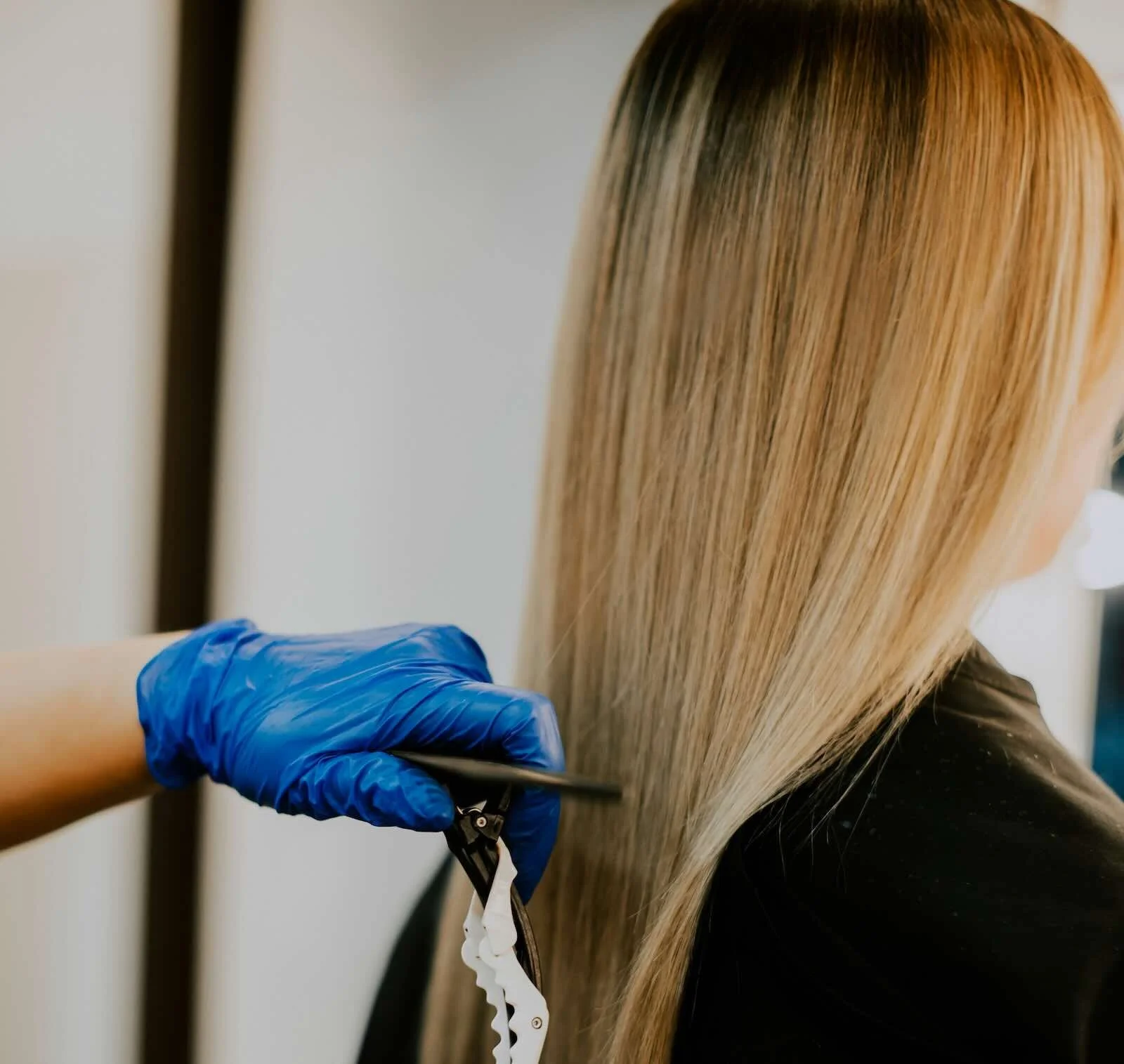
Off-scalp work buys time. The root is the only part keeping a calendar.
Why Touch-Up Timing Is a Design Variable, Not a Calendar Rule
Most clients arrive at a color appointment having already decided how often they want to return — usually based on what their previous colorist required, what their schedule allows, or what they have read online. The standard advice of "every six to eight weeks" stems from traditional highlighting protocols, in which the lightener is applied from the root, resulting in a visible line of demarcation as the hair grows. That timeline is not a law. It’s a byproduct. It is a consequence of a particular technique applied at a particular contrast level.
Low-maintenance color, designed correctly, operates on a fundamentally different timeline because it is structured around the hair's grow-out behavior from the start. The placement begins further from the root. The contrast between the lightened sections and the natural base is controlled rather than maximized. The tonal direction is chosen to fade gracefully rather than shift dramatically. The result is a color that can extend comfortably to twelve, fourteen, or even sixteen weeks without the client feeling that something has gone wrong — because nothing has. The color is doing exactly what it was designed to do.
Research indexed by the National Library of Medicine on the biology of hair growth describes the hair growth cycle — the progression from anagen (active growth) through catagen (transition) to telogen (resting) — and confirms that the rate and pattern of scalp hair growth are individual variables influenced by age, health, and genetics.
This is why prescribing a universal return schedule is both scientifically and practically imprecise. A client whose hair grows quickly and densely will see visible root movement sooner than a client with a slower growth rate. The color design has to account for individual biology, not a generalized average.
The 3–5 Month Window: What It Really Means
For most clients with well-designed, low-maintenance color—soft balayage, blended dimension, gray integration —a comfortable return window of three to five months is realistic. That range is not arbitrary. It reflects the typical duration over which a color designed with soft root diffusion and controlled contrast remains intentional rather than overdue. It is not the point at which the color stops looking good. It is the point at which a refinement — a gloss refresh, a tonal adjustment, or targeted additional lightening — will meaningfully extend and improve the result.
Some clients in this category return every 3 months because they prefer a consistently precise look and respond to even subtle tonal drift. Others extend comfortably to five or six months because they have a higher tolerance for natural grow-out and genuinely enjoy the slightly lived-in quality that develops over a longer interval. Both are valid. The goal is alignment between what the color was designed to do and what the client's instincts and preferences require.
When Tone Moves Before Placement Does
One of the most common patterns in low-maintenance color upkeep is that placement still looks correct long after tone has drifted from its target. The structure of the color — where the lighter sections fall, how they transition from the darker root area, how they move through the mid-length — remains intact. But the tonal quality shifts: ash fades to a lighter, slightly flat tone, warm blonde oxidizes toward a brassy register, and neutral tones lose their precision and begin reading as generic. The hair looks like it needs something, but the client cannot identify exactly what. Why Hair Color Maintenance Feels Different as We Get Older
In this situation, a standalone gloss appointment is often the complete answer. It requires no additional lighting, no structural changes, and far less time and investment than a full-color service. It resets the tone, seals the cuticle, and restores the reflective quality that makes well-designed color read correctly. For clients who have treated every salon visit as a major appointment, using gloss as a maintenance tool is one of the most meaningful shifts in how they approach their color schedule.
Low-Maintenance Hair Color in NYC: What Actually Works for Busy Lives
Lifestyle Variables That Affect Timing
Beyond the color itself, several lifestyle factors predictably shorten or extend the effective interval between appointments. Wash frequency is the biggest factor: clients who wash daily experience more cumulative surfactant contact, higher temperatures, and greater mechanical stress than those who wash every two to three days. The difference in tonal retention between these two groups — even with identical color formulas — can be measured in weeks.
Heat styling frequency matters for the same reason. Every session with a flat iron or blow dryer at high temperature opens the cuticle and accelerates the escape of tonal molecules from the cortex. Clients who air-dry regularly retain tone significantly longer than those who heat-style daily. Environmental factors—UV exposure in spring and summer, hard water mineral buildup, chlorine from swimming—compound over weeks, creating meaningful differences in how the color behaves at the twelve-week mark.
The at-home protocol that supports timing includes Pureology Strength Cure Shampoo, specifically designed for color-treated, chemically processed hair, and preserving tonal deposit with a sulfate-free formula that cleanses without stripping. Wella Professionals Care Ultimate Repair Conditioner restores the cuticle's ability to seal properly after washing — a critical factor in how well tone is retained between visits. And IGK First Class Charcoal Detox Dry Shampoo, used between wash days, extends the interval between full washes, reducing cumulative surfactant exposure, the primary driver of premature tonal fade.
Balayage in NYC: Effortless, Lived-In Hair Color by a Master Colorist
The Right Question Is Not "How Often?" But "How Well?"
The most useful reframe for clients thinking about touch-up frequency is to stop treating it as a fixed interval and start treating it as a response to what they observe. Color that is performing well does not require a return appointment. It requires a return when the client notices something has shifted enough to warrant a refinement—and with well-designed, low-maintenance color, that moment arrives later, less urgently, and with less anxiety than it does with color built for maximum impact rather than maximum longevity.
When the design is right, the schedule is almost incidental. The client returns when the color is ready for the next chapter, not because a deadline has passed.
Effortless Color For The Real You.