Balayage vs Highlights: Which Is Better for Low-Maintenance Color?
Balayage and traditional highlights are both lightening techniques. Still, they are not interchangeable—and the difference becomes most apparent not on the day the color is done, but in the weeks that follow. This is not a question of aesthetics. It is a question about structure: how each technique places lightness relative to the root, how each ages as the hair grows, and what each asks of you between visits.
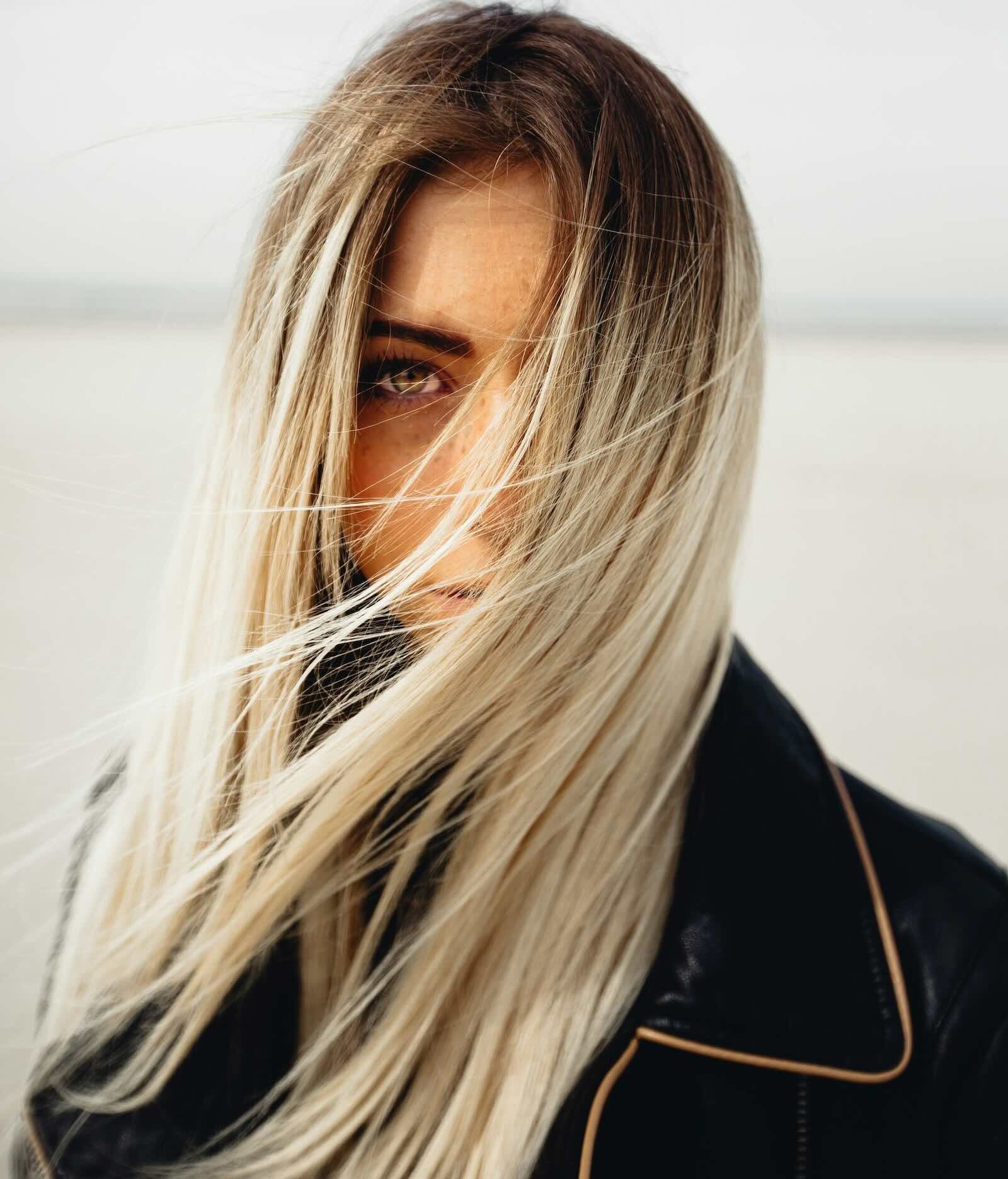
A root that grows out softly is the whole argument for placement over pattern.
What Is the Difference Between Balayage and Highlights?
The difference between balayage and highlights is where the lightener starts: foil highlights begin at the root, while balayage is painted freehand, starting away from it. Traditional foil highlights isolate sections of hair, weave or slice them, wrap them in foil with lightener applied from the scalp outward, and process them under heat. The foil creates an enclosed environment that raises the temperature and drives the lightener deeper into the hair shaft than an open-air application would. The result is consistent, saturated brightness from root to ends—polished, high-definition, and immediately readable as "highlighted" hair.
Balayage takes the opposite structural approach. The application is freehand, without foils, with lightener painted onto the surface of sections starting away from the root and building concentration toward the mid-length and ends. There is no enclosed heat environment. The lift is softer, more graduated, and more variable — intentionally so. The result is dimension that begins where the natural base leaves off, creating a gradient rather than a stripe.
Research published in the International Journal of Cosmetic Science and indexed by the National Library of Medicine found that heat exposure—including from heated styling tools and the elevated temperatures generated in enclosed processing environments—causes oxidative damage to disulfide bonds in hair keratin at specific, measurable locations within the fiber structure.
The relevance of foil highlights is direct: the enclosed heat of the foil environment adds a thermal stress variable on top of the chemical stress of the lightener. Balayage, applied in open air without the heat amplification of a foil, produces a gentler chemical process, which is one reason the fiber tends to respond more predictably and hold the result with less volatility.
Which Grows Out Better, Balayage or Highlights?
Balayage grows out better than traditional highlights because it leaves no line where new growth meets lightened hair. That difference, more than any aesthetic preference, decides which is actually low-maintenance for a given person.
Foil highlights, because they begin at the root, produce a highly visible line of demarcation as the hair grows. At four weeks, the root is noticeable. At eight weeks, it is prominent. The urgency to return isn't imagined—it is structural, and it is why how often balayage really needs touch-ups has a different answer.
The contrast between the uncolored new growth and the lightened sections is pronounced from the first centimeter of growth and becomes more visible with each passing week. For anyone who prefers a consistently precise look, this timeline can work. For anyone who wants genuine flexibility in their schedule, it creates friction.
Balayage, because it begins at the ends rather than the roots, does not produce that visible line. New growth appears at the root area — already the darkest part of the design — and blends into the established gradient rather than announcing itself. At twelve weeks, a well-designed balayage result may look less fresh than it did at two weeks, but it does not look overdue. The color has evolved rather than expired.
When Are Highlights Better Than Balayage?
Highlights are the better choice when you want high-definition brightness that starts right at the scalp. Low maintenance is not the right goal for everyone. Some people prefer the look of traditional highlights—the consistent brightness from root to end, the clean, precise framing of the face, and the immediately polished quality that professional foil work delivers. For them, the maintenance schedule is not a burden. It is part of their relationship with their hair, and they return every eight to ten weeks, not because they have to, but because they want to.
Traditional highlights also serve specific technical purposes that balayage cannot replicate. When the goal is maximum brightness at the root—for gray coverage that requires lightening before toning, or for a dramatic change that demands saturation close to the scalp—foil work is the right tool. The question is not which technique is categorically better. It is which technique serves a person's specific goals and life. That choice rests on knowing what balayage is actually for — placement that grows out on its own terms rather than on a schedule.
Does Contrast Matter More Than Technique?
For a low-maintenance result, contrast level matters more than the choice between balayage and highlights, and it is the point most consistently underweighted in the balayage vs. highlights conversation. A high-contrast balayage — significant brightness against a dark base, aggressive lightening close to the root — will feel just as high-maintenance as traditional highlights because the visual gap between the root and the lightened section becomes apparent quickly, regardless of how the color was applied. Conversely, very soft, delicate traditional highlights placed with minimal contrast can grow out with relatively little urgency for anyone who finds that look satisfying. Most people focus on technique. Professionals focus on contrast.
The technique creates the structure. The contrast level determines the maintenance pressure. Both variables must align with the client's actual tolerance for grow-out and their preferred schedule for the result to function as low-maintenance in practice. The standard they are measured against is what low-maintenance color actually looks like in a working week.
How Do You Make Balayage or Highlights Last Longer at Home?
Whether the color was applied as balayage or highlights, the at-home support layer determines how long it stays intentional. Goldwell Dualsenses Color Revive Root Retouch Spray extends the interval between visits for anyone with traditional highlights by temporarily blending the visible root area, buying weeks of additional polish without a salon visit. Kenra Platinum Silkening Mist, applied to damp or dry hair, smooths the cuticle and increases reflectivity — the surface-level quality that makes dimension visible regardless of technique. And Amika The Wizard Detangling Primer, used before combing or heat styling, reduces mechanical stress on the hair fiber — helping reduce breakage and cuticle disruption that accelerate both structural damage and tonal fade.
These products serve different functions in the maintenance cycle. Still, they share a common purpose: extending the life and quality of a professionally designed result so that the gap between appointments is determined by choice rather than necessity.
Is Balayage or Highlights Right for You?
Balayage is right for anyone who values flexibility, a softer look and the freedom to stretch the time between visits; highlights are right for anyone who wants maximum brightness and does not mind a steady eight-week rhythm. Choosing between them is less about trend than about how you want to live with your color over time. The right answer is always specific to the individual, and the best colorist is the one who helps you find it.
Photo by Thibault Debaene on Unsplash
Effortless Color For The Real You.