Best Low-Maintenance Hair Color for Fine Hair (What Actually Works)
Fine hair is the most demanding canvas in color work — not because it is difficult to lighten, but because it is so easy to overlighten. The same formula that produces soft, dimensional results on medium-density hair can make fine hair look fragile, overworked, and visually thin. Low-maintenance color for fine hair is not a simplified version of standard low-maintenance design. It is a more precise version, with tighter margins and a narrower window between the right result and the wrong one.
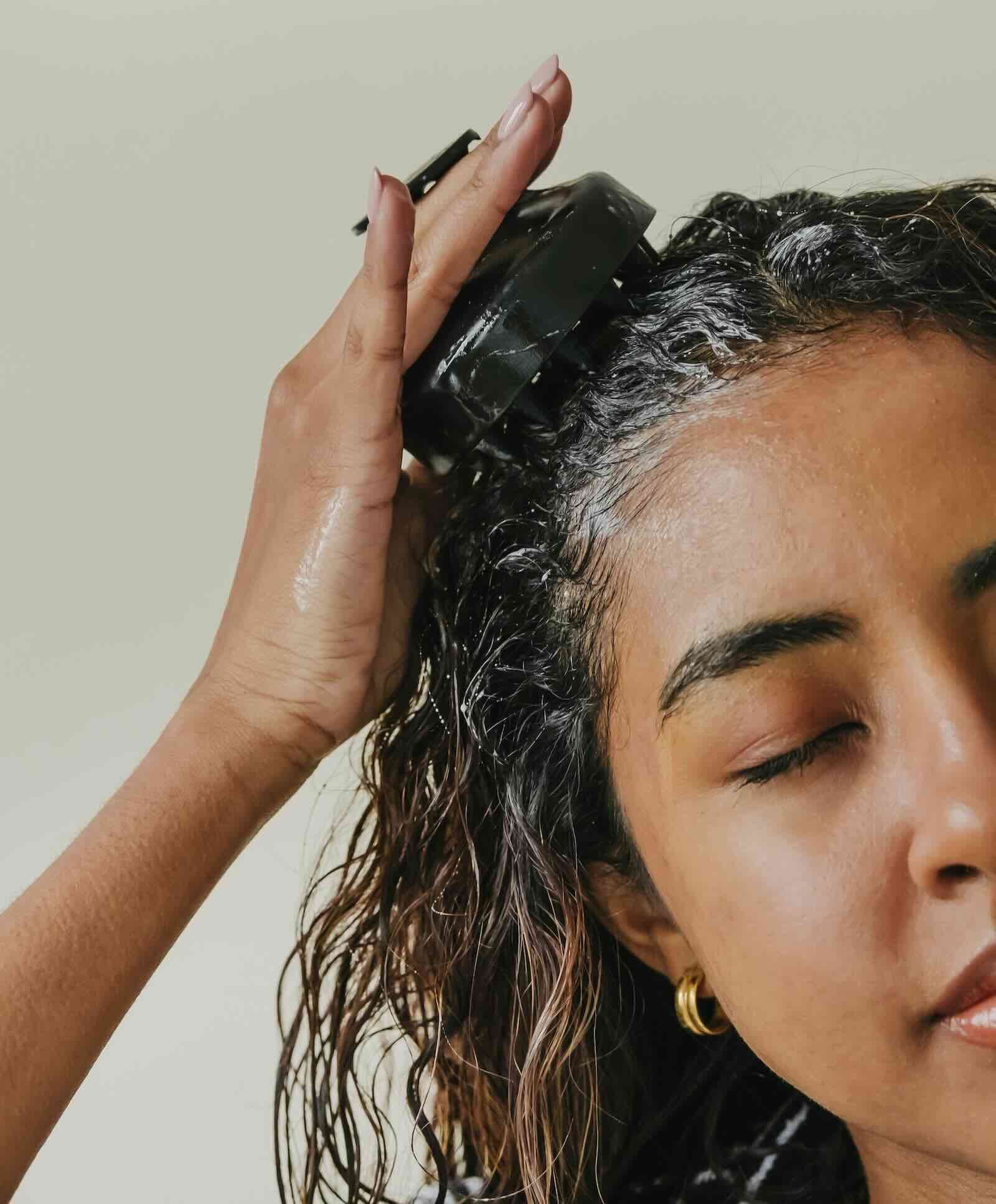
Subtle, soft dimension enhances fine hair without creating harsh contrast or heavy regrowth.
Why Fine Hair Responds Differently to Color
Fine hair is defined by its fiber diameter — the individual strands are narrower than average, which means there is less structural mass in each shaft. A smaller cortex holds less protein, which means it is both more susceptible to chemical processing and more responsive to it. Fine hair processes faster under lightener than medium or coarse hair because there is less fiber for the oxidative chemistry to work through. The result lifts more quickly, more dramatically, and more unpredictably if the colorist is not calibrating specifically to the fiber's properties but instead follows a standard protocol.
This is where many fine hair color problems originate. A client with fine hair who has been through multiple rounds of lightening at full saturation may have hair that has lost significant structural integrity — hair that breaks at the mid-length, that refuses to hold tone because the cuticle is too compromised to seal properly, that looks thinner and more fragile than it did before the color began. The problem is not the color itself. It is the accumulated weight of processing that was not calibrated to the fiber's capacity.
Research published in the International Journal of Cosmetic Science and indexed by the National Library of Medicine on hair tensile properties following combined chemical bleaching and heat treatment confirms that oxidative bleaching measurably reduces the mechanical integrity of the hair shaft — findings that are especially significant for fine hair, which has lower baseline tensile tolerance than coarser fiber types.
The Visual Problem High Contrast Creates on Fine Hair
Fine hair doesn’t tolerate excess. It reveals it. The primary aesthetic risk in coloring fine hair is the loss of visual density. Hair that appears to have volume and body when healthy and well-conditioned can look flat and thin when the fiber is compromised — and high-contrast color can accelerate that perception. When very bright highlights are placed against a dark base on fine hair, the visual separation between the light and dark sections reduces the hair's apparent mass. The eye reads the contrast as multiple thin layers rather than one cohesive whole. The hair looks less full, not more.
The solution is not avoiding lightness entirely. It is controlling the relationship between light and dark so that the overall impression is dimension rather than contrast. Subtle lighter pieces, spaced apart — not packed end to end across the head — allow the darker, unlit hair to provide visual weight. The lighter sections create movement and catch the light. The combination produces the impression of healthy, dimensional hair rather than over-highlighted thinness.
How Balayage Serves Fine Hair When Done Correctly
Balayage is often recommended for fine hair, and the recommendation is well-founded — but only when the application is calibrated specifically for fine hair. The advantages of balayage for fine hair are structural. Because the placement begins away from the root and saturation builds gradually, it is possible to create dimension without the wall-to-wall coverage that foil highlighting can produce on fine hair. The open-air application also avoids the enclosed heat environment that drives lift more quickly and aggressively, giving the colorist more control over how the fine fiber responds.
The specific adjustments for fine hair balayage involve narrower sections, lower saturation per section, greater spacing between sections, and careful monitoring of lift level — targeting a softer result that reads as dimensional rather than blonde. The goal is not to maximize brightness. It is to create the impression of brightness with minimal structural cost to the fiber.
Balayage in NYC: Effortless, Lived-In Hair Color by a Master Colorist
Tone Strategy for Fine Hair: Soft, Not Aggressive
Because fine hair lifts quickly, the tonal register it lands in after lightening tends to be brighter and potentially brassier than the same formula would produce on coarser hair. This makes gloss and toner selection particularly important — and it makes the case for a slightly warmer or neutral tonal direction rather than an aggressive ash or cool blonde.
Very cool tones on fine hair can produce a washed-out effect that reads as gray or lifeless rather than polished and sophisticated. The hair lacks the visual mass to carry a strong, cool tone with conviction. Warm neutrals — honey, beige blonde, soft caramel — interact with the hair's natural undertone more harmoniously and tend to age more gracefully, fading toward a softer version of themselves rather than toward the flat, ashy quality that cool tones can develop on fine, lightened fiber.
Gloss frequency matters more for fine-hair clients than for clients with denser hair. Because the fiber is more porous after lightening and the tonal deposit is thinner to begin with, gloss refreshes every eight to ten weeks — even without additional lightening — maintains the precision and vibrancy of the result, and prevents the dull, undefined quality that develops when fine hair is left without tonal support for too long.
What Fine Hair Needs Between Appointments
Fine hair's lower structural mass means it is more vulnerable to the cumulative stresses of daily life: heat styling, mechanical tension from brushing, mineral buildup from hard water, and the ongoing cycle of washing and drying. The at-home support layer for fine hair color clients at AlbertColor is built around products that support the fiber without weighing it down — a critical distinction, since the conditioners and treatments designed for heavily processed hair often contain silicones and heavy proteins that make fine hair flat. How Often Does Low-Maintenance Hair Color Really Need Touch-Ups?
Shu Uemura Art of Hair Muroto Volume Pure Lightness Shampoo cleanses gently while lifting at the roots and maintaining volume — essential for fine-hair clients who need structural support without heaviness. OUAI Fine Hair Shampoo provides targeted, lightweight hydration that strengthens hair fibers without compromising the lift and movement fine hair requires. And Oribe Serene Scalp Balancing Conditioner, applied mid-length through ends only, conditions the sections that need it most — the lightened, more porous mid-length and ends — without adding weight to the root area where fine hair loses volume most easily.
Low-Maintenance Hair Color in NYC: What Actually Works for Busy Lives
The Standard for Fine Hair Color Done Right
Well-executed color on fine hair does not look like a color appointment. It looks like hair that is simply more alive than it was before — more movement, more light, more depth when it catches the sun at an angle. There is no obvious highlighting pattern, no visible stripe, no moment where the color announces itself as something applied rather than something inherent.
That invisibility is harder to achieve on fine hair than on any other hair type, because fine hair forgives less. Every decision in the service — how much lighter, how long, how saturated, how tonal — shows in the finished result. When those decisions are made correctly, fine hair can carry low-maintenance color beautifully, with results that grow out gracefully and hold their quality for a longer cycle than most clients expect.
Photo by Mathilde Langevin on Unsplash
Effortless Color For The Real You.