The Man in the Mirror: Skincare, Grooming, and the Quiet Shift Nobody's Announcing
A man adjusts his tie before he leaves. Chin down, both hands working, the whole thing over in three seconds. The gesture hasn’t changed in a hundred years. What sits behind it has. Not dramatically — that’s the point. Quietly. The way a conversation shifts without anyone calling attention to it.
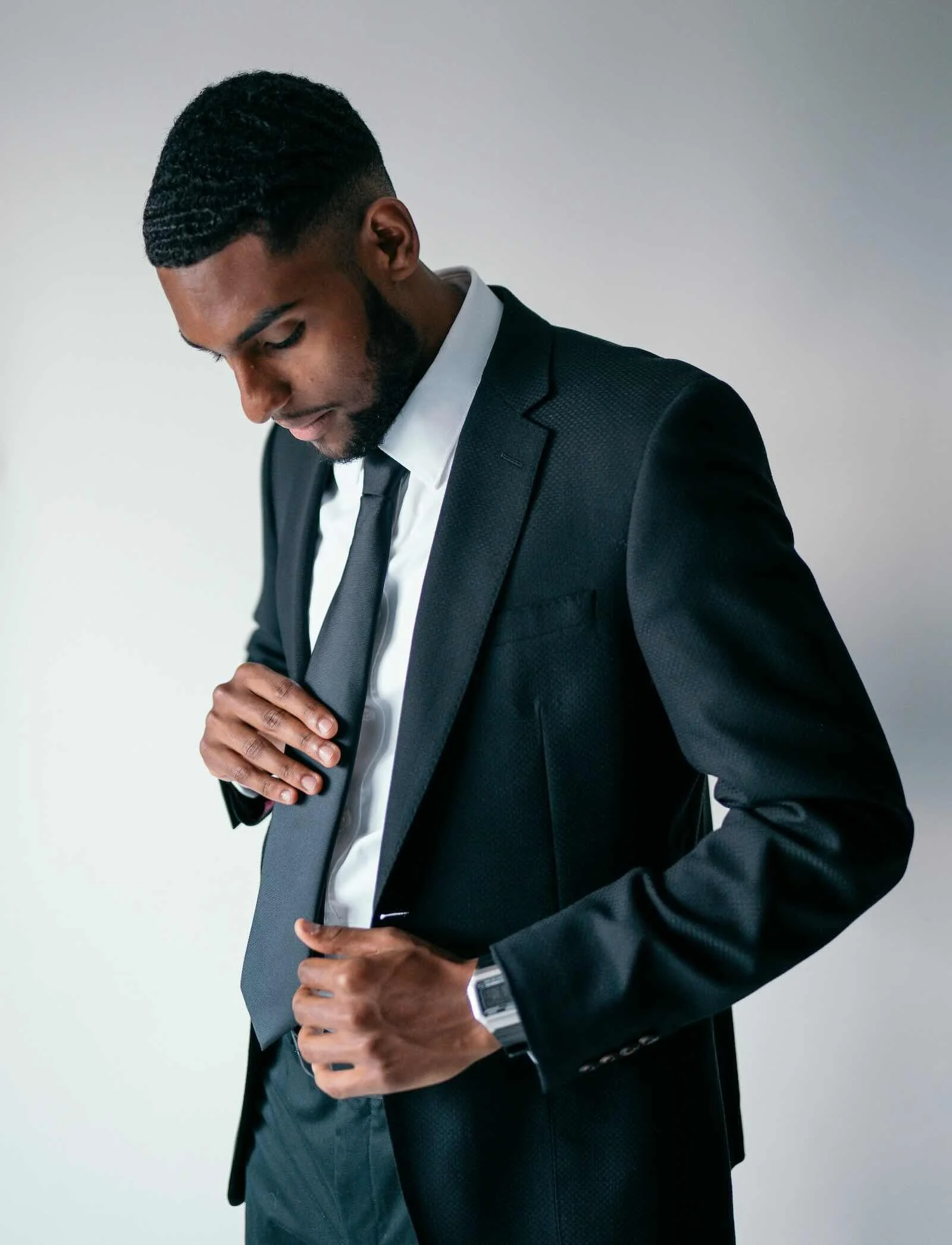
Presence is built in layers. The suit. The skin. The hair. All of it considered, none of it announced.
The Skincare Conversation First
Men know more now about their hair, about their scalp, about what they want the result to look like. And increasingly, they know more about their skin. A cleanser they switched to. A moisturizer a friend mentioned. A concealer mentioned almost in passing, the way you'd mention a new restaurant.
Nobody's making a statement. That's what makes it interesting.
Before the makeup conversation can happen — and it is happening — you have to understand the skincare conversation.
In 2026, more than half of American men will keep a daily skincare routine. The subjects they search for reveal a shift in behavior: interest has moved toward resilience, recovery, and longevity. Men treat the skin as a living record of stress, sleep, environment, and age. As GOA Skincare's 2026 men's grooming report notes, grooming has moved into public space; men treat the mirror as a checkpoint before entering the day, not a vanity exercise.
That framing matters. It's not vanity language. It's a performance language. Niacinamide for oil regulation. SPF for protection. Retinol for long-term structure. The products are the same ones that have been part of women's routines for years. What changed is the framing and the permission.
Many men have started framing grooming — and, for some, makeup — as maintenance rather than vanity. That reframing removes the stigma and unlocks spending. As CNBC reported in January 2026, the share of U.S. men who say they never wear makeup has fallen from more than 90% in 2019 to about 75% in 2024 — with industry experts saying those figures are likely higher today.
The suit is pressed. The beard is shaped. The watch is considered. Everything about the image reads as the work of someone who thinks about how he presents himself not to perform, but because it matters to him.
That's the shift—self-care without the apology.
Then the Makeup Conversation
It starts small. Almost always. A concealer for an event. A tinted moisturizer left on the counter. A brow gel that someone noticed made a difference.
Men might avoid saying they use makeup, instead mentioning products that even skin or cover redness. Brands now focus on educating users, delivering subtle yet real results, and highlighting functional benefits up front. As Vogue recently noted in its Beginner's Guide to Undetectable Men’s Makeup, most men aim for undetectable skin improvement, not makeup.
The entry point that makes the most sense for most men is exactly that: undetectable. Something like Tom Ford Shade and Illuminate Concealer — waterproof, hyaluronic acid-infused, buildable — does exactly what the name says without announcing itself. For a step back from coverage, Armani Neo Nude Tinted Moisturizer delivers a result that reads as better skin rather than product on skin. Both are the entry points that most men don't talk about but quietly use.
The Same Conversation
Hair is the colorist's territory. But hair, skin, and overall presentation are part of the same conversation — how you want to move through the world and what you want people to see when you walk into a room.
Men have always cared about their appearance. The change now is the permission given. As Personal Care Insights, what's different today isn't the desire — it's that the cultural permission to act on it has finally arrived.
The men coming into salons now — and into skincare aisles, and into conversations about concealer — aren't rebelling against anything. They're just taking care of themselves. Thoroughly, thoughtfully, without a manifesto attached.
That feels like progress. Not because men wearing moisturizer is inherently political. But the idea that caring about how you look is somehow a compromise of your identity is finally and quietly losing ground.
Where Hair Fits In
Color. Texture. Condition. The hair is always part of the picture — often the first thing people notice. A great haircut or a considered color decision operates the same way a good skincare routine does: it doesn't announce itself. It just makes everything look right.
The hair side of that equation starts with what's in the shower. Davines OI Shampoo — built around Roucou oil from the Amazonian Achiote plant, antioxidant-rich, formulated for any texture, including tight coils and clean fades — is the kind of daily cleanser that doesn't require a complicated routine. Pair it with Davines OI Conditioner for a complete foundation that leaves hair genuinely soft and manageable, not product-dependent.
For styling and finish, Oribe Men's Edit covers everything from pomades to texture sprays — without the mass-market packaging that used to make these conversations feel like they were in the wrong aisle. It's grooming at the level the rest of the routine deserves. What men's color should be, and how it earns its place without announcing itself, is the argument of What the Modern Man Actually Wants From His Hair.
Photo by Brock Wegner on Unsplash
Effortless Color For The Real You.
albertcolor.com