Why Hair Color Maintenance Feels Different as We Get Older
There's a moment when maintenance starts to feel heavier. Not because your hair changed overnight. But because your relationship to it did.
Most clients who come in to describe this shift can't pinpoint exactly when it happened. It wasn't a single appointment. It was an accumulation — the cycle that used to feel like a regular part of the schedule starting to feel like a deadline. The root line that used to feel manageable for two weeks is already visible after ten days. The sense that the color was running the calendar rather than the other way around. How Often Does Low-Maintenance Hair Color Really Need Touch-Ups?
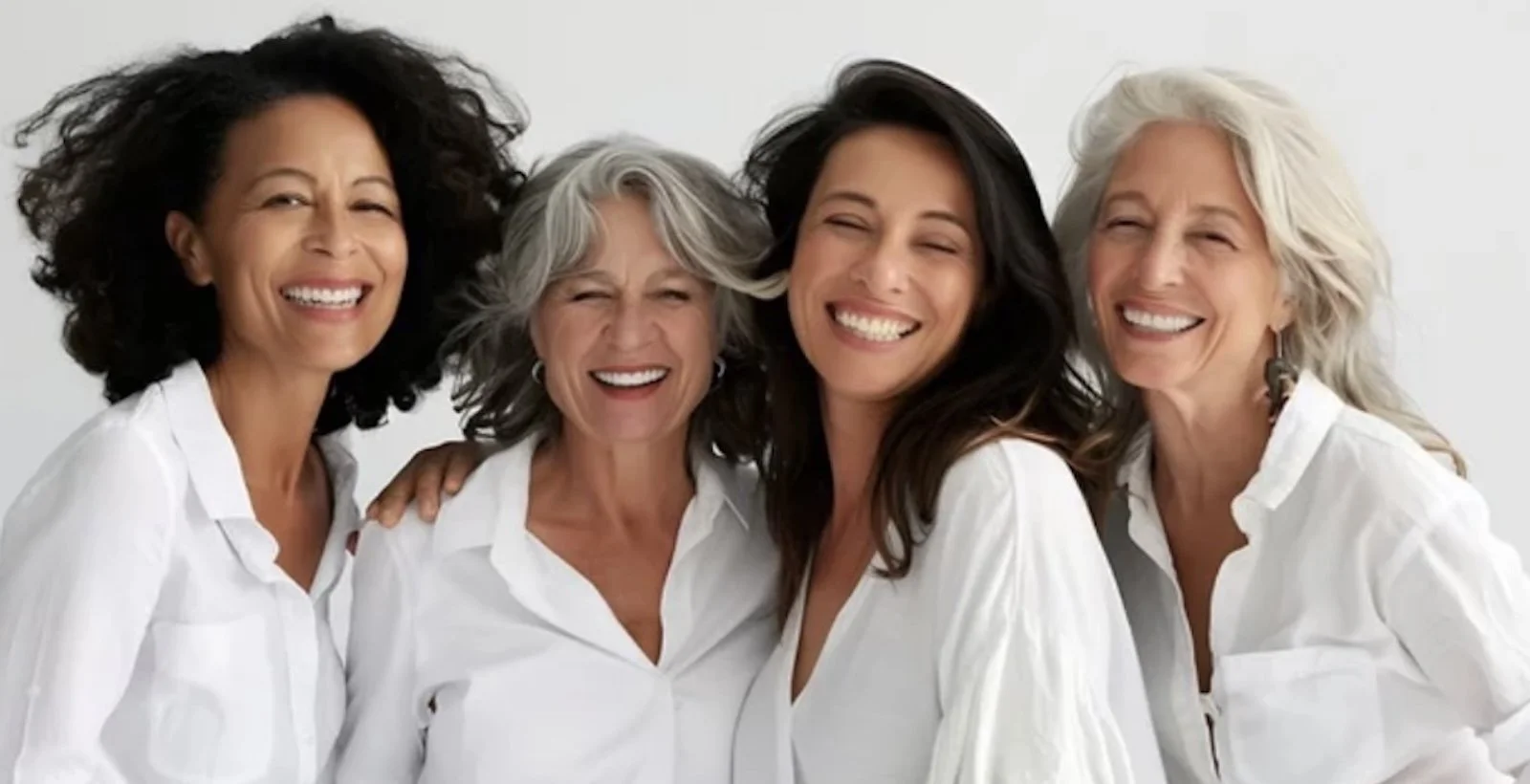
Hair color maintenance evolves with age — strategic blending reduces urgency and restores comfort.
The Biology of the Shift
Part of what makes maintenance feel different as we age is genuinely biological — the hair itself has changed, and those changes affect how color behaves, how long it lasts, and how visible the grow-out becomes.
Hair structure changes in measurable ways with age. Melanocyte activity — the cellular process that produces pigment — gradually slows and eventually stops in individual follicles, which is why gray appears progressively rather than all at once. But alongside that pigment shift, the structural proteins in the hair strand also change. Keratin integrity decreases slightly with age, leading to hair that is more porous, more prone to moisture loss, and more reactive to chemical services than it was in earlier decades.
More porous hair behaves differently when color is applied. It absorbs tint more quickly and fades more quickly. Tonal deposits that might have lasted six weeks in a client's thirties may fade noticeably in four. Root color that once held a clean line may oxidize slightly faster, making regrowth appear sooner than the biological growth rate would predict. Gloss and toner treatments that are used to hold for two months may shift within six weeks.
None of this means the color service was done incorrectly. It means the hair's relationship to color has changed, and the maintenance strategy needs to adapt accordingly.
According to research published in the International Journal of Trichology, age-related changes in hair fiber — including reduced cortical protein density and increased porosity — directly affect how hair responds to chemical processing. The shift clients describe isn't imagined. It's structural.
The Emotional Layer
The biological changes help explain why maintenance feels different. They don't explain everything.
There is also a psychological shift that happens over long-term color relationships that rarely gets named directly. When you've been maintaining a color strategy for ten or fifteen years, the ritual becomes deeply embedded — not just as a grooming habit, but as part of how you manage your sense of control over your appearance. The appointment is the reset. The fresh roots are the signal that things are in order.
When the interval between resets shortens — when the hair starts to look overdue before the appointment window even opens — that signal system breaks down. The client isn't just responding to a visual; she's responding to a disruption in a reliable routine. That disruption registers as more significant than it might look from the outside.
This is also the moment when the question changes. For many clients in their forties and fifties, the fatigue with rigid maintenance isn't really about the time or the cost, though those are real factors. It's about a growing sense that the strategy no longer fits life. What worked before starts to feel like maintenance for its own sake. What felt like self-care has started to feel like upkeep. That there is a difference between the two, and it matters.
Why Contrast Amplifies the Problem
As the gray percentage increases, the visual stakes of a solid coverage strategy also increase. A client with minimal gray at 35 has a low-contrast grow-out — the regrowth and the colored hair are close in tone, and the line of demarcation is relatively soft. The same client at 48, with significantly more gray, has a higher-contrast grow-out — the natural silver grows in against a darker colored base, and the line between them is sharper and more visible sooner.
This is why the four-to-six-week cycle that felt sustainable at one point in life can start to feel like a three-to-four-week reality a decade later — not because the appointment frequency changed, but because the visual urgency threshold lowered as the contrast increased. The hair is objectively demanding more attention because the biology has shifted, not because the client is doing anything wrong.
Strategic blending addresses this directly by reducing the contrast at the grow-out zone rather than reinforcing it. When the root area is designed to be dimensional rather than uniform, the line between natural and colored hair softens — and the visual urgency that drives the accelerating maintenance cycle decreases.
For the full explanation of how blending changes the maintenance relationship:
What Gray Blending Actually Means — and Why the Term Gets Misunderstood
The Texture Complication
Beyond the root cycle issue, aging hair presents a secondary maintenance challenge that is less often discussed: texture. The increased porosity that accompanies age-related structural changes makes hair both more reactive and less predictable. It absorbs heat differently. It responds to humidity differently. It holds a blowout for less time and loses shape faster than it did a decade earlier.
This isn't specifically a hair-color problem, but it intersects with color maintenance in meaningful ways. More porous hair fades faster, which shortens the effective life of a color service. Hair that is coarser or more reactive requires more conditioning to maintain the surface smoothness that makes color look polished. And hair that has accumulated years of chemical services — even well-executed ones — carries a history that affects how new color takes and holds.
Understanding this helps recalibrate expectations in a useful direction. The goal isn't to return the hair to how it behaved at thirty. It's to build a strategy that works with its current behavior.
For a broader framework on low-maintenance color that accounts for these realities:
Low-Maintenance Hair Color in NYC: What Actually Works for Busy Lives
What Supports Aging Hair Between Appointments
The structural changes that make maintenance feel harder also create specific home care needs that, when addressed directly, measurably extend the quality of color work between appointments.
Increased porosity means the hair needs more moisture and more protein to maintain integrity. A weekly bond-repair treatment — Olaplex N°.3PLUS Complete Repair Treatment is the most well-researched option — addresses the protein side of the equation, strengthening the strand's internal structure and reducing porosity-related fade that shortens color life. A rich, hydrating masque applied to mid-lengths and ends weekly addresses the moisture side, restoring the surface softness that makes color look luminous rather than dry.
For the tonal side, a color-safe, sulfate-free shampoo reduces the stripping that accelerates fade between visits. And a lightweight, heat-protecting serum used before blow-drying protects the strand surface from the thermal stress that compounds the structural vulnerability aging hair already carries.
These interventions don't stop the clock. But they change the equation enough to matter — extending the comfortable interval between appointments, maintaining the quality of the color work, and making the overall maintenance feel less like a treadmill.
The Goal: A Strategy That Respects the Change
The shift that makes maintenance feel heavier isn’t something to push through. It's information. It's telling you that the strategy that worked before isn't calibrated for where you are now — and that recalibrating isn't giving up; it's getting smarter.
Color designed with age in mind looks different from color designed to hold a standard. It's softer at the root. It's more dimensional through the length. It's built around a gradual rather than abrupt grow-out, so the interval between appointments becomes a design feature rather than a maintenance failure.
The goal isn't to stop caring. It's to care in a way that costs less and delivers more. When maintenance feels effortless, it's usually because someone designed it that way.
Effortless Color For The Real You.