Low-Maintenance Hair Color: Why It Still Requires Thought
“Low-maintenance” sounds simple. Clients ask for it because they want ease—flexibility, color that fits into real life without constant attention. That’s reasonable.
But low-maintenance doesn’t mean fewer decisions. It means better ones, made earlier.
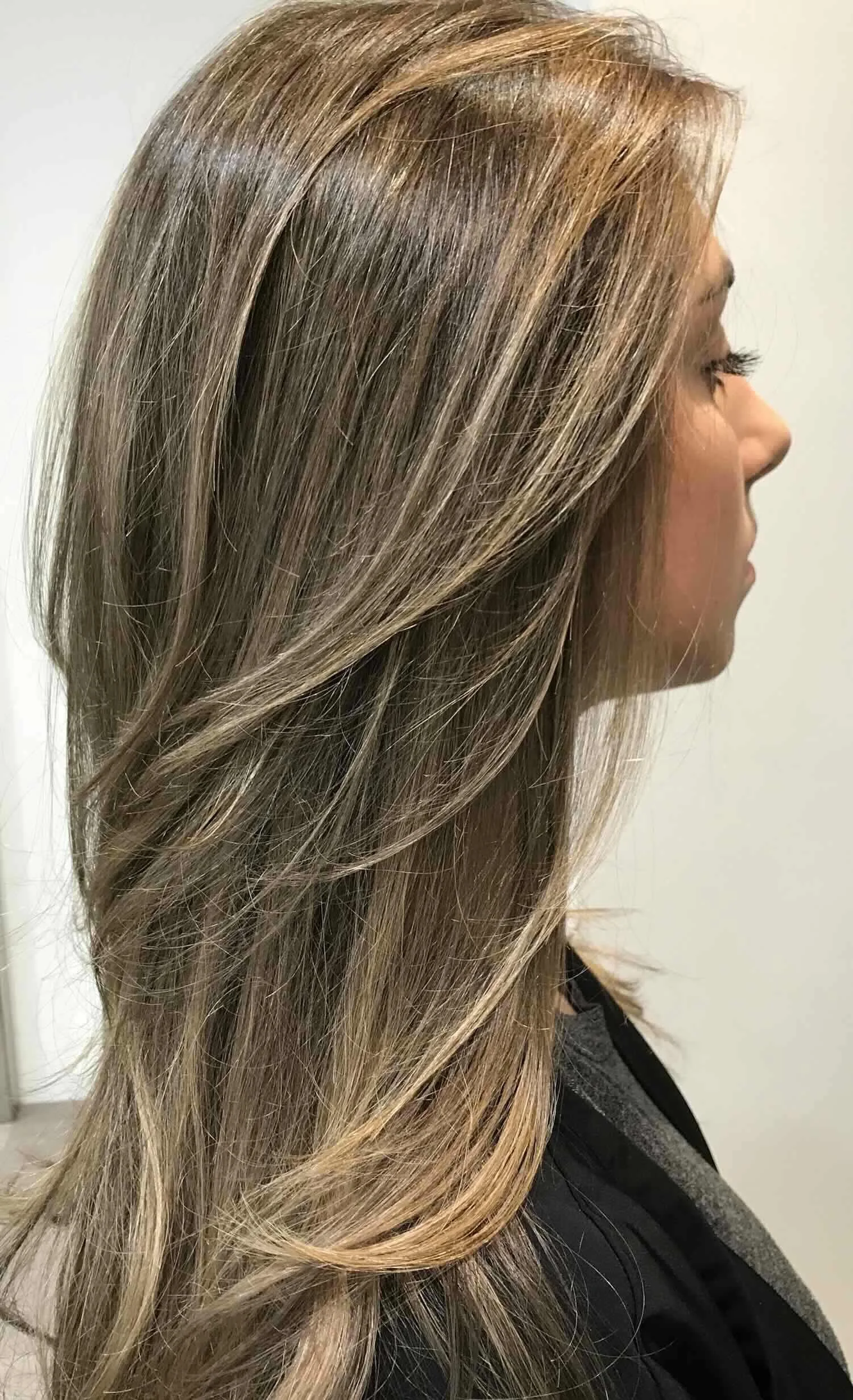
Low-maintenance color works best when it’s designed to age well—not just look good on day one.
Low-Maintenance Is a Strategy, Not a Shortcut
What most clients mean by 'low-maintenance' is spending less time in the salon. What they actually need is a result that holds its shape as it grows.
That doesn’t happen by doing less. It happens through better design—from the start.
Over the years, I’ve noticed that the most satisfied clients aren’t the ones who do the least. They’re the ones who understand exactly what they’re choosing—and why. That understanding is the real work of low-maintenance color, and it happens in the consultation, not after the appointment.
The decisions that determine how effortless color feels over time rarely appear in inspiration photos. They’re quieter than that: where brightness begins on the strand, how soft the blend is at the root, how much natural depth is intentionally left untouched to support the grow-out, whether the tone is warm enough to age gracefully or cool enough to stay clean over several months. None of these decisions is visible on day one. All of them determine how the color behaves on day ninety.
True low-maintenance color is designed. It doesn’t happen accidentally, and it isn’t something you decide once and walk away from forever. It’s built around a specific understanding of how your hair grows, how visible regrowth feels to you personally, how much tonal shift you’re comfortable living with between visits, and how often you actually want to think about your color. When those elements are aligned from the start, hair becomes genuinely easy. When they’re not, even the simplest color direction can start feeling complicated six weeks in.
For the full foundation on how low-maintenance color is structured and what that means in practice:
Read Low-Maintenance Hair Color in NYC: What Actually Works
The Decisions That Get Skipped
Most clients come in with a reference image and a desired outcome. The image shows the result on day one—in good light, freshly blown out.
What it doesn’t show is what the color looks like on day forty-five. What the regrowth pattern looks like at week eight. Or whether the contrast that looked right in the photo reads the same way on this client’s base, with her skin tone, in her daily lighting.
The decisions that get skipped—contrast level, grow-out tolerance, tonal direction relative to natural base—are the ones that create the most frustration later. Not because the colorist made the wrong choice, but because the client didn’t know she had a choice.
Low-maintenance isn’t a single technique. It’s a category of design. Balayage, gray blending, and lived-in brunettes all fall under it—but they behave differently on different people. The maintenance cycle is different. The way they age between visits is different.
Grow-Out Tolerance Is the Variable Nobody Discusses
The most honest question I ask new clients isn’t what color they want. It’s how they feel when they see regrowth in the mirror.
Not what they think they should feel—how they actually feel. Because that answer determines the entire design strategy.
Some clients genuinely don't mind a grow-out. They're comfortable watching the root come in, trusting the blend to carry the look through a longer cycle. For them, a soft, rooted balayage or a blended gray strategy with a long interval between appointments is a natural fit. Others find visible regrowth genuinely distressing — it interrupts the image they carry of themselves and creates low-grade friction every morning. For them, even the most carefully designed low-maintenance color will feel high-maintenance if the grow-out is too visible.
There's no correct answer to that question. There's only the honest one. And the color strategy that comes out of an honest answer will almost always feel easier to live with than one designed around what a client thinks she should prefer.
For a closer look at what ongoing maintenance actually involves between appointments:
Read Why "Low-Maintenance" Hair Color Still Needs Maintenance (Just Less Often)
When the Rhythm Is Right
Some clients come in frequently and feel completely low-maintenance. Others come rarely and feel tension every week between visits.
The difference isn’t the schedule. It’s alignment—between what the color was designed to do and what the client actually needs it to do.
When that alignment exists, hair stops feeling like something you manage and starts feeling like something that works. The goal of low-maintenance color isn’t to do less. It’s to choose a rhythm that fits—quietly, consistently, without pressure.
And when that rhythm is right, the hair behaves the way the client expected it to from the beginning.
The most satisfied clients I've worked with over the years have one thing in common: they know what they chose and why. Not because they studied hair color, but because someone took the time to explain the decision and build the strategy around the person, not just the image.
What Supports This Kind of Color
Color designed for longevity requires care that protects what has been built. The lighter, more porous sections of a soft dimensional result are the ones that fade first without the right protocol. Once those sections lose their tone, the effortlessness of the entire look collapses.
A sulfate-free shampoo — Oribe Gold Lust Repair & Restore or Davines NOUNOU — protects tone and prevents premature tonal drift that can make a clean, intentional color direction look messy between visits. Color-depositing conditioners or glosses used at home every two to three weeks extend vibrancy and keep the color reading as intended.
The other underrated support is UV protection. Fading is cumulative, and sun exposure — especially in New York in the spring and summer — accelerates it. A lightweight UV-protective hair mist, used before outdoor exposure, adds weeks of longevity to a result designed to last.
Low-maintenance color rewards investment at the start — in the consultation, in the design, and in the care that follows. When all three are in place, the ease is real.
Effortless Color For The Real You.