There's a particular kind of clarity that arrives before a significant moment. Not excitement — something quieter, and usually felt before it is named. Weeks out from a wedding, the request is rarely to look different. It is to look like yourself, only more so: recognizable in every photograph, with nothing about the color announcing itself first.
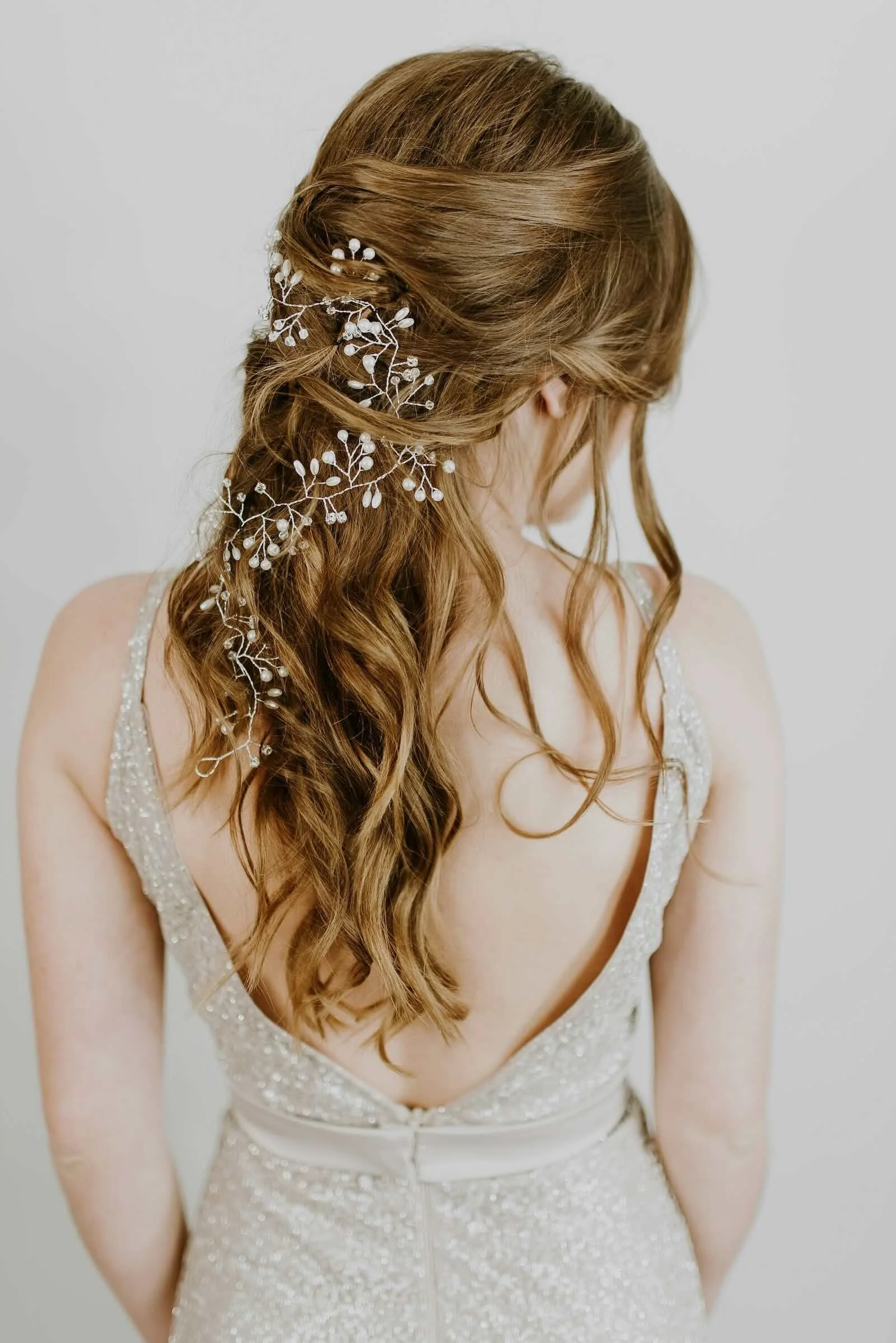
Color built to hold on the day that matters most — soft, dimensional, and entirely yours.
The Appointment Before the Appointment
Most clients think about color for a wedding or special event the way they think about a dress: something chosen, worn, and photographed on the day. What they discover — sometimes too late — is that color prepared this way rarely performs the way they hoped.
The most successful special occasion color is not made at the last appointment before the event. It is built over the two or three appointments that precede it.
This is not about doing more. It is about doing things in the right order, at the right time, so the color on the day of the event looks like the best version of what you already have — not a result that is still settling, still adjusting, still becoming yours.
What "Camera-Ready" Actually Means
Camera-ready color is not a bright color. It is not a
dramatic color. It is not color that announces itself in every photograph.
Camera-ready color has three qualities that matter:
Dimension. Flat, uniform color disappears on camera. Dimension — the movement between lighter and darker tones within the hair — is what gives hair presence in photographs without demanding attention.
Tone precision. Warmth that reads beautifully in natural light can shift under event lighting, flash photography, or the mixed light of a venue. Color designed for an occasion accounts for how the tone will behave across environments, not just how it looks in the salon.
Color that holds across a full day of changing light is built to last from the start — the subject of How to Make Hair Color Last Longer Without Overprocessing.
Settled surface. Fresh color, applied too close to the event, often looks slightly sharp — tones at their most saturated, cuticle slightly elevated from the chemical process, result not yet integrated with the hair. Color that has had ten to fourteen days to settle reads more naturally, more dimensionally, and more like it belongs.
This is why the timing of a special occasion appointment is a scheduling detail. It is a design decision.
The Timeline That Works
For most clients planning for a significant event, the ideal structure looks like this:
Six to eight weeks before: The primary color appointment. This is where any significant lightening, tonal shifts, or structural changes happen. The hair has time to recover, settle, and be assessed before the event.
Two to three weeks before: A refinement appointment — typically a gloss, a tonal adjustment, or targeted brightening. This brings the color to its optimal state: fresh enough to look intentional, settled enough to look natural.
The day of (optional): A blowout or styling appointment only. No color. No chemical services. The color should already be exactly where it needs to be.
Clients who compress this timeline — who try to do everything at once in the week before the event — are working against the design. Hair needs time between services to recover, settle, and reveal what it actually looks like in the world rather than under salon lighting.
Why "Just a Gloss Before the Wedding" Often Misses
The single-appointment approach — a gloss or touch-up scheduled a few days before the event — is one of the most common special occasion color mistakes. Not because a gloss is wrong, but because a gloss at that stage is a correction, not a design.
If the color was not prepared in advance for the occasion, a last-minute gloss fills the gap. It adds shine and refreshes tone, but it cannot add dimension that was not placed, correct structural issues that developed over months, or give the color time to integrate before it appears in photographs that will be kept for decades.
A gloss two to three weeks before the event, after the structural work has been done, is a different service entirely. It is a finish — the final calibration of a result that has already been built. That gloss performs differently because the foundation is already there.
What the Consultation Covers
A special-occasion color begins with a different conversation than a standard appointment does. The questions that matter include:
What is the lighting environment — outdoor, indoor, mixed, flash photography?
What are you wearing, and what tones are in it?
How does your hair typically behave between appointments — does it fade warm, does it lift unevenly?
What has your color history been, and what does the hair need structurally to achieve the result you want?
What does "polished" mean to you — dimensional brightness, refined depth, seamless gray integration?
These are not questions a client needs to answer in advance. They shape the entire strategy. The answers determine the timeline, the technique, and whether the goal is realistic within the available time.
Special Occasion Color and Gray Blending
For clients managing gray, the special occasion conversation has an additional layer. Gray hair — especially coarser, more porous gray — responds differently to color, toning, and lighting than fully pigmented hair. What reads as sophisticated and dimensional in person can flatten in photos if the tone isn’t calibrated carefully.
The goal for gray-blending clients preparing for an event is not to cover the gray. It is to ensure the blend is at its best: luminous, dimensional, tonally controlled, and photographed with the utmost intentionality. This often means a gloss refresh timed precisely for the event, along with the home care set out in How to Maintain Gray Hair After Blending (Without Purple Shampoo Overload), kept up in the weeks before to keep the hair's porosity balanced.
The Detail That Separates Good Event Color from Great Event Color
Some special-occasion colors look beautiful in the salon the day they're done, but slightly off in every photograph. The tone was too cool for the venue's lighting. The color was too fresh and reads as saturated rather than dimensional. The client's natural warmth was over-neutralized in pursuit of a look that worked on someone else.
And there is a version that makes the client look like she has always had hair this good — dimensional, luminous, proportionate, fully hers. The photographs capture something real, not something constructed.
The difference is rarely the formula. It is the timeline, the calibration, and the understanding that special occasion color is not a single appointment. It is a strategy.
Photo by Angelo Pantazis on Unsplash
Effortless Color For The Real You.
albertcolor.com