Every spring, color in New York goes quietly out of step. Loose golden waves that looked rich and right in January start to read heavy by March: the same shade, under a different sky. A yellow gerbera held against them makes the point better than any formula could. The season asks not for a new look but for a recalibration.
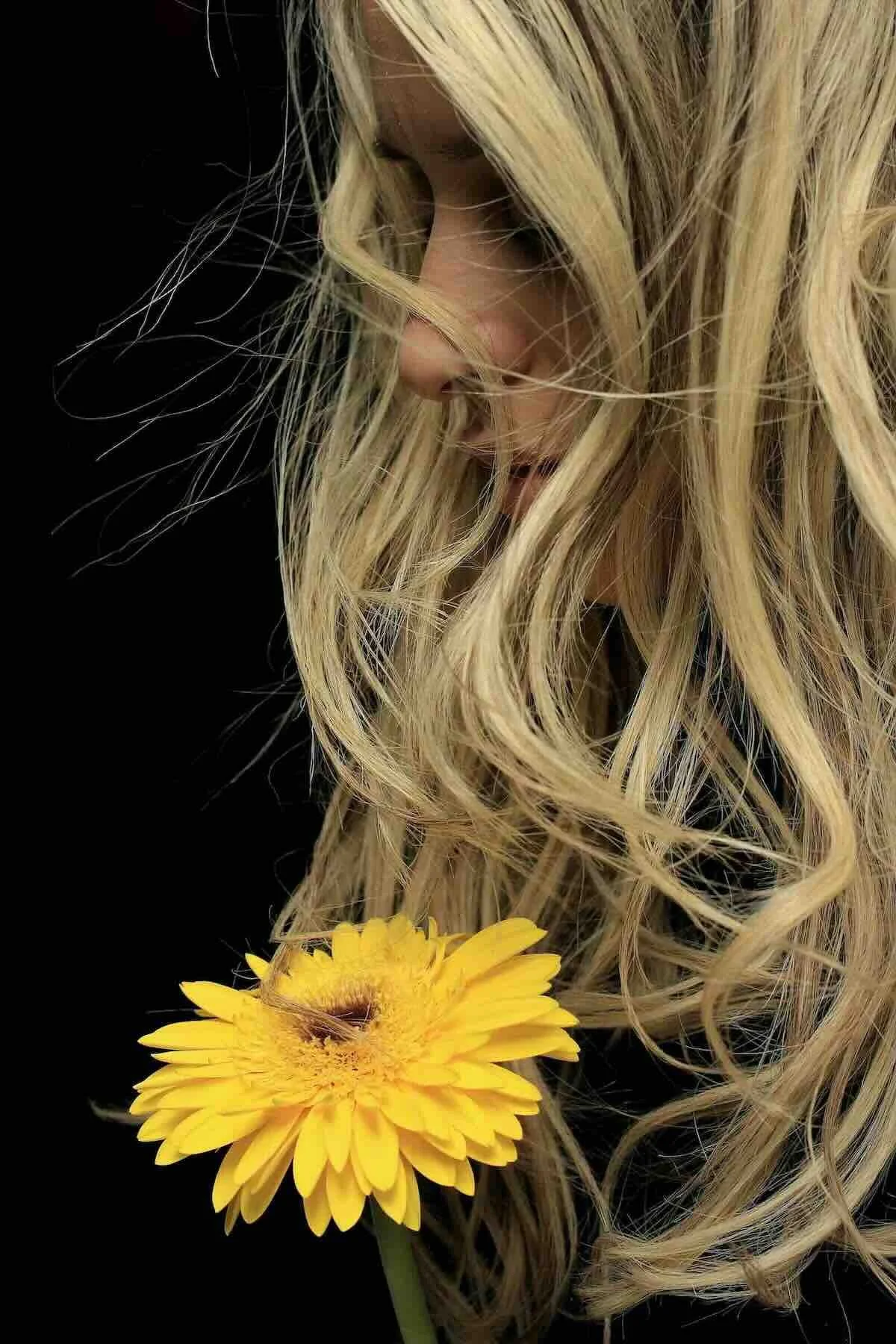
The annual return to brightness — color that catches the light without asking for attention.
Why Does Hair Color Feel Wrong in Spring?
Hair color feels wrong in spring because the light changes, not the hair. For most of the year, New York sits under low, flat light, the kind that makes even well-crafted color appear heavier than it is. As days lengthen and the sun rises higher, hair perfectly calibrated for February reads differently by the end of March. Tones that felt rich and warm indoors can look dense or slightly dull in brighter, more directional spring light. This is not a failure of the color. It is a function of the environment it now lives in.
Understanding this is the first step toward the right seasonal adjustment. The goal isn't to undo what you did in fall or winter. It is to bring the color back into relationship with the light, and with the person wearing it.
What Is the Spring Hair Color Shift?
The spring hair color shift is a small recalibration, not a transformation: a slight brightening around the face, softer transition zones, a gloss to restore vibrancy to unevenly faded color, and sometimes a few lighter pieces for movement without disturbing the overall depth. The instinct behind “just a little lighter” is correct even when the language is imprecise. It is a perceptual observation. The color is slightly out of phase with the season, and the work is to bring it back into alignment — a specific, solvable problem that rewards someone who can translate a feeling into a formula. The same adjustment never reads the same way twice, which is the subject of Why Balayage Looks Different on Everyone.
Why Is Balayage the Best Spring Hair Color Technique?
Balayage suits spring because its lightness sits where the season’s light lands, so the result reads as dimension rather than contrast. Balayage in NYC: Effortless, Lived-In Hair Color by a Master Colorist explains how the technique places that lightness and why it leaves the root alone.
The practical advantage is equally significant. Because balayage doesn't create a defined line at the root, it grows out without the urgency to return every six to eight weeks, which is often why people choose it in a busy New York spring. How long the interval can stretch before a refresh is owed is set out in How Often Does Balayage Really Need Touch-Ups? A Master Colorist Explains. Where balayage is already in place, the spring adjustment is the short list above and nothing more: color as a living system, not a series of independent services.
Why Has Spring Hair Color Moved Away From High Contrast?
Spring hair color has moved away from high contrast because soft dimension now reads as more refined, and it is harder to do well. For years, the spring adjustment meant contrast: sharp transitions from a deep root to bright ends, aggressive lightness near the hairline, brightness that photographed well and communicated effort. That aesthetic was legible from across a room, which was the point.
What has replaced it is harder to execute and quieter to look at. Soft dimension demands more precision than contrast. When the goal is a transition gradual enough to be nearly invisible, there is no margin for a line that sits too high, a section that is oversaturated, or a tone that is fractionally off target. Contrast forgives a misplaced section, because the eye reads the overall effect and moves on. Softness does not forgive it, because the eye reads the transition itself. The craft becomes visible in its absence — the better the work, the less of it appears to have been done.
That is the same distinction drawn in The Post-Trend Era: Why Modern Clients are Choosing Subtlety Over ‘Wow’, and it is why hand-painting keeps moving in this direction: placement that follows the natural fall of the light produces dimension that lives inside the hair rather than sitting on its surface.
Why Does Tone Matter More Than Lightness in Spring?
Tone matters more than lightness in spring because a shade calibrated for winter light can look flat, ashy, or brassy once the light turns brighter and more neutral. Much of the conversation about spring hair color focuses on lightness, but the required adjustment is rarely about adding more. A color that reads slightly cool in winter light can look washed out as spring brightness increases; a color calibrated warm may look brassy as the light becomes more direct. The fix is to shift the tonal register so the color harmonizes with the new light.
This is where gloss becomes one of the season's most useful tools. A clear or tinted gloss can smooth the cuticle, restore shine, neutralize brassiness, or add warmth without changing the underlying level of lightness. It is a low-commitment, high-impact service that resets color in a single short visit, and The Forty-Minute Hair Gloss Most People Don’t Know They Need outlines what it does in that time.
What Are the Best Warm Tones for Spring Hair Color?
The best warm tones for spring are amber, honey, and beige, held with restraint so the warmth reflects light instead of turning brassy. Warm is a narrow band, and its width is the whole skill. Amber sits between the deep copper of autumn and the pale gold that reads as high summer: rich without weight, dimensional without aggression. On a brunette base, it surfaces as caramel through the mid-lengths, the tone that looks as though the sun has been finding it for years. On blonde, it reads as honey rather than gold, a slightly deeper register that removes the faintly metallic quality cold-weather toning tends to leave behind. Gold itself works better as an accent than as a foundation, placed through the face-framing sections or concentrated where the light already falls.
Beige is doing the most work right now, and it's the one most often misread. It is not flat, and it is not dull. It is balanced — warm and cool held in the same formula so the color keeps its character across different lighting rather than pushing in one direction. That is why it survives the walk from an office to a sidewalk to a restaurant without changing personality.
Warmth carries a reputation it did not earn. For years it was the thing to avoid, on the assumption that warmth and brass were the same event. They are not. Brass is warmth that was never controlled — undiffused, unsoftened at the root, left to dominate instead of support. Warmth, placed with restraint, does something cooler tones rarely manage: it reflects light naturally, creating depth without needing contrast to manufacture it. Color built that way grows out more gradually and asks for fewer corrections in between, which is the argument of Low-Maintenance Hair Color in NYC: What Actually Works for Busy Lives — not less effort, but better decisions taken earlier.
The register keeps going as the light does. By June, the question shifts from which warmth to how much density the color can still carry, which is where Summer Balayage in NYC: When Hair Gets Lighter Without Looking Overdone takes it up.
How Does Spring Color Protect Long-Term Hair Health?
Spring color protects long-term hair health when each adjustment builds on the last instead of starting over. That is only possible with the full picture in view: the hair’s current condition, the history of prior services, the natural tone and how it responds to lightener, and the life that will decide how the color wears between visits. Condition also matters to the color itself. Healthy, well-conditioned hair reflects light more evenly and with greater luminosity, so spring is a good moment to address both.
Bond protection belongs in the lightening process, not after. Between visits, Kérastase Chroma Absolu Soin Acide Chroma Gloss Hair Gloss, a rinse-out gloss the brand suggests once a week, helps seal the surface and hold shine on color-treated hair, and Oribe Gold Lust Nourishing Hair Oil, worked through damp lengths, adds shine and softness without weight. Neither makes the color. Both help it last, grow out gracefully, and read as intended.
What Does the Right Spring Hair Color Look Like?
The right spring hair color looks as though the hair has caught the light, not as though it has just been colored. The most successful spring updates are invisibly effective, and the most satisfying are rarely the most dramatic: they are the ones where the color, after the adjustment, feels like it was always meant to look exactly like this.
That is the goal of every seasonal shift: not to change the color, but to restore its relationship with the person wearing it and the world they are moving through. In a city that changes as noticeably as New York does between February and April, that recalibration is its own kind of artistry.
Why Does the Spring Color Shift Happen Every Year?
The spring shift happens every year because it follows perception, not trends: as the light changes, the same color starts to feel heavier. As the environment changes, so does the way people evaluate themselves. The color that felt rich and grounded in winter begins to feel heavier as light increases and daily life returns with movement. Clients are not reacting to trends — they are responding to themselves in a different context.
This is why the request rarely comes in dramatic language. It shows up as a feeling first: something is slightly off, slightly heavier, slightly less aligned than it was a few months ago. The colorist’s role is not to replace what exists, but to interpret that shift accurately and respond with restraint.
When done well, the adjustment is almost invisible. The color is not transformed — it is recalibrated. That recalibration is what lets the result feel effortless again, without losing the integrity of what was already built.
Photo by Engin Akyurt on Unsplash
Effortless Color For The Real You.