Keratin Smoothing Treatments in NYC: A Modern, Wearable Approach
Keratin smoothing treatments at AlbertColor are approached as a refinement — not a transformation. The goal is not to flatten, freeze, or radically alter the hair, but to improve its day-to-day behavior: reducing frizz, increasing manageability, and enhancing natural shine while preserving movement and versatility.
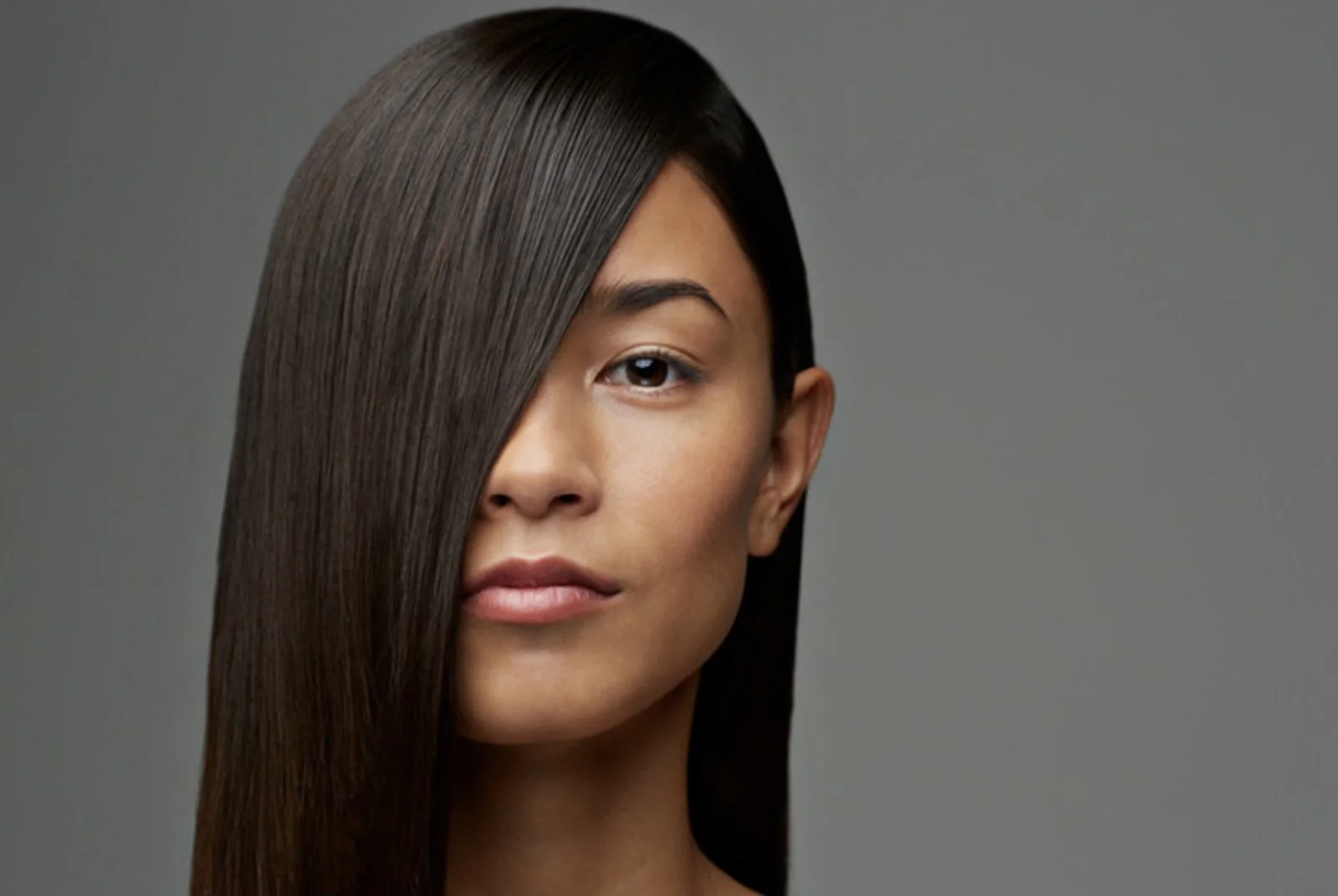
Keratin should refine movement — not erase it.
What Keratin Really Does (And What It Doesn't)
I've had clients come in expecting keratin to straighten their hair. I've had others come in, afraid it will. Both groups are working from the same misconception — that smoothing means erasing. It doesn't.
Keratin smoothing treatments are not chemical relaxers. They are not permanent straightening systems. What they do is refine the hair's surface — reducing expansion in humidity, softening frizz at the cuticle, improving how the hair reflects light, and making daily styling more predictable. The goal is controlled movement, not rigid straightness. Hair that behaves better. Hair that looks more intentional with less effort.
Modern keratin technology has evolved significantly over the past decade. The formulas in use now are far removed from the early generation of treatments that gave keratin its reputation for heaviness and over-straightening. Applied thoughtfully, a contemporary smoothing treatment supports hair that feels softer, looks healthier, and holds its shape longer — without eliminating body, natural pattern, or individuality.
According to research on hair fiber structure published in the International Journal of Cosmetic Science, repeated thermal and chemical exposure degrades the hair's cortex and cuticle integrity over time, which is precisely why smoothing treatments formulated to restore surface alignment, rather than chemically alter the fiber, represent a significant advancement in professional hair care.
Who Keratin Is Designed For
The clients who benefit most from keratin smoothing are those whose hair is working against them daily. They spend significant time managing frizz, re-doing blowouts that don't hold, or dealing with a texture that shifts unpredictably from the salon to the street — especially in New York City, where humidity is a constant variable from spring through fall.
Keratin works particularly well for clients who want smoother blowouts that hold longer, who prefer polish without sacrificing natural body, and who value predictability in their daily routine without being willing to give up movement or softness. When applied correctly, it should feel wearable — not heavy. It should support the haircut and the color, not overpower them.
It is especially valuable for clients who wear dimensional color. For balayage, lived-in brunettes, and gray blending, where the color depends on movement and softness to read correctly, texture inconsistency — expansion, frizz, surface roughness — is the primary thing that makes well-executed color look less refined than it is. Keratin addresses that without touching the color itself.
For the full breakdown of how keratin and color interact, and when to schedule one relative to the other, read:
When Keratin Treatments Make Hair Color Look Better (and When They Don't)
Who Keratin Is Not For
Keratin is not the right tool for every client, and knowing where it falls short matters as much as knowing where it excels.
Fine hair with minimal natural volume can lose what little lift it has when the cuticle is smoothed. If the hair already lies flat and the primary goal is body, smoothing will work against that goal. Clients who are actively undergoing aggressive lightening — particularly bleach-on-bleach or high-lift processes — are not good candidates for keratin at that moment; the hair's structural integrity needs to recover before a smoothing treatment can be applied responsibly. And clients who rely on high-texture, airy styling — diffused curl volume, lived-in waves, deliberately undone movement — will find that smoothing reduces the very character they're after.
This is why the consultation precedes everything. Texture, color history, density, porosity, and lifestyle all influence whether keratin will support the result or quietly undermine it.
For clients with fine hair specifically, the question of whether keratin is appropriate requires its own conversation:
Should You Combine Keratin and Hair Color? Not Everyone Should.
How Keratin Interacts With Color
Keratin does not change pigment. What it changes is reflection.
A smoother cuticle reflects light more evenly across the hair shaft. That evenness is what makes color look richer, more saturated, more intentional. The same color on rough, porous hair and smooth, sealed hair can look like two different results — not because the formula changed, but because the surface it's sitting on changed. This is why many clients notice their color looking better after a keratin treatment than it did immediately after the color appointment itself.
Timing matters, however. The relationship between keratin and color is productive only when sequenced correctly. Applying keratin over freshly deposited color, or before color that requires the cuticle to be open, can compromise both services. That sequencing conversation belongs in the consultation — and it changes depending on the specific color and smoothing services involved.
How Long Keratin Treatments Last
Most professional keratin treatments last three to five months. Longevity is determined by several factors: the natural texture of the hair (coarser, higher-porosity hair tends to hold the treatment longer), washing frequency, aftercare products, and heat styling habits. A sulfate-free shampoo is non-negotiable for extending the life of a keratin treatment — sulfates break down the treatment faster than any other single variable.
The fade should feel gradual and natural. The smoothness softens slowly over the course of the treatment's lifespan. It should never drop off suddenly or leave the hair in a noticeably different condition than before the treatment. When it does, that is usually a sign of either product incompatibility or an application issue — both of which are avoidable with the right approach.
The AlbertColor Approach
At AlbertColor, keratin is never a standalone service. It is part of a broader structure — cut, color, texture, lifestyle — that all have to work together for the result to hold. With over 35 years of experience in texture, color chemistry, and long-term hair health, I approach keratin as a refinement tool, not a quick fix. The goal is not transformation. It is calibration.
Hair should feel easier. Not altered beyond recognition. When keratin is working correctly, you don't think about it. You notice that your hair is behaving — and that the color you invested in looks the way it was designed to look, for longer than it otherwise would.
Because great hair should feel like you. Only calmer.
▸ What Supports This Kind of Treatment
The at-home care that follows a keratin treatment is as important as the treatment itself. A sulfate-free, color-safe shampoo — Oribe Gold Lust Repair & Restore or Davines NOUNOU Shampoo — is the foundation. Both protect the smoothing bond and the color simultaneously. A lightweight leave-in conditioner or smoothing serum, such as Oribe Supershine Moisturizing Cream or Davines OI Oil, maintains the surface refinement between washes and reduces the thermal stress of daily styling.
Avoid sodium chloride (salt) in shampoos and conditioners — it is as disruptive to keratin treatments as sulfates and appears in many products under names that don't make it immediately obvious. Read ingredient labels. The investment in the treatment is worth protecting.
If you're exploring keratin smoothing in New York City, the first step isn't scheduling. It's a conversation about whether it fits — your texture, your color history, your lifestyle, and your goals.
Effortless Color For The Real You.
AlbertColor is a private hair color experience in Midtown Manhattan. Book a consultation: albertcolor.com