Copper Hair Color: Who It Suits, Why It Fades First, and How to Keep It
Copper was sleeked flat over the crown, gathered low at the nape, and let loose in crimped, pleated ribbons across bare shoulders while a hand overhead misted it into place. That was a fantasy look at a Sahag creative soirée in November 2005, made for one night and never for the street. Twenty years on, the color has left the stage. Copper is the warm shade fall keeps coming back to, and the one people most want to know how to keep.
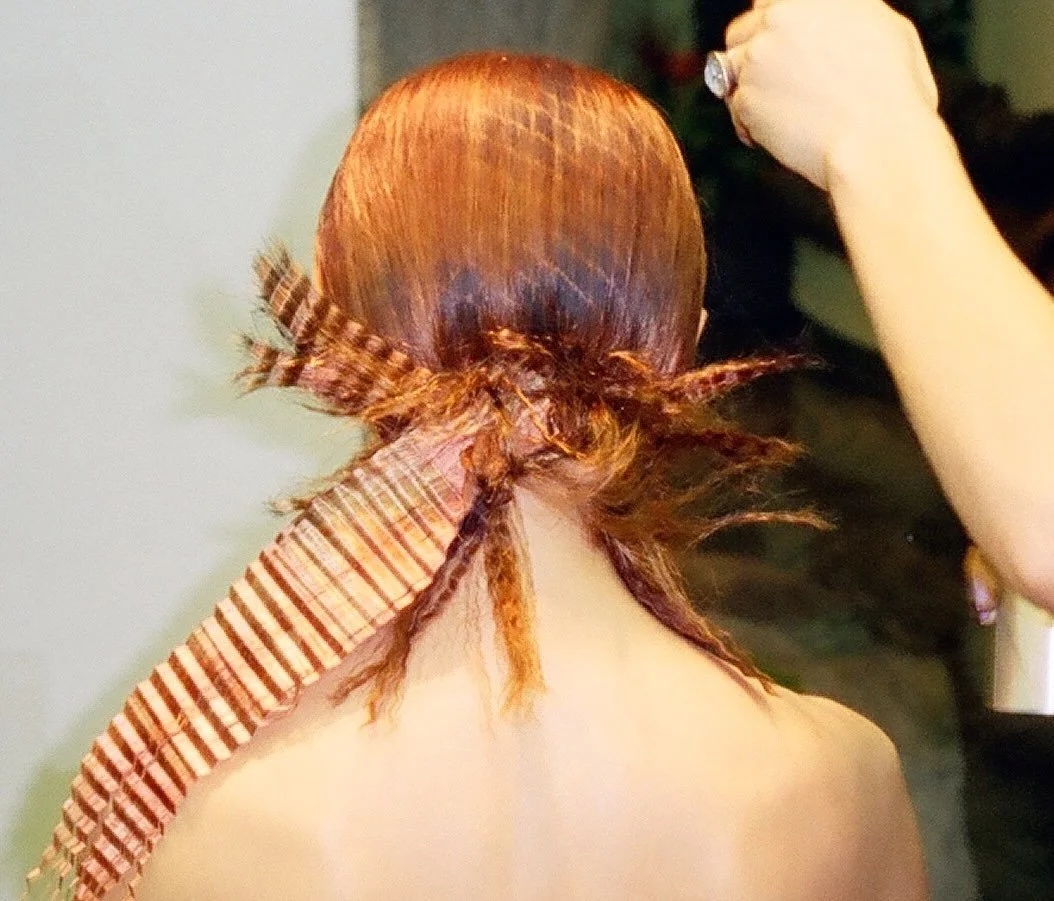
My copper color, on hair and colored hairpieces, worn sleek at the crown and pleated at the nape, from a Sahag creative soirée in November 2005.
What Is Copper Hair Color?
Copper hair color is a warm shade between red and gold, built on orange-red tones rather than the deeper, violet-leaning red of auburn or burgundy. It comes in every depth. At the light end, it is golden copper, close to strawberry blonde; in the middle, it is the bright, penny-colored copper most people picture; at the dark end, it becomes copper brown, where the warmth shows mainly in daylight and at the ends.
That range is why the word covers so much, and it is part of why copper keeps returning. Copper is a cyclical trend: big seasons ago, quiet for years, and resurfacing now. Marie Claire's fall 2026 color report, by Annie Blay-Tetty, lists deep golden copper among the season's leading shades, beside chestnut red. Both sit lower and softer than the bright copper of its last turn. A trend that comes back is rarely the same, and this one has returned as copper that reads like a color someone could have been born with.
What Is the Difference Between Auburn and Copper Hair Color?
Auburn is red-brown, and copper is red-gold. Auburn is built on a brown base with red and a touch of violet, so it reads deeper and cooler; copper is built on orange and gold, so it reads brighter and warmer. In low indoor light, the two can look alike. In daylight, they separate at once: auburn holds its depth, and copper lights up.
The difference matters as much for upkeep as for looks. As each fades, auburn drifts toward brown and copper toward a paler, brassier gold, which is why copper asks for more attention to stay copper.
Who Does Copper Hair Color Suit?
Copper suits more people than it seems to, because it can range from a light, gold-leaning copper to a deep copper brown. The question is less whether copper works than which copper, and how strongly.
Brown hair is the natural starting point. Lightening brown hair passes through red and orange before it reaches yellow, the same warmth that Purple, Blue, or a Gloss: What Brassy Hair Is Actually Asking For treats as something to cancel. Copper works with that warmth instead of against it. The approach I gave The Right Hairstyles' fall 2026 trend report is copper at roughly half strength over a naturally warm base. Half strength keeps the result close to the hair's own depth, so it grows out softly and reads as warmth rather than as dye.
Light hair takes copper as golden copper or strawberry. Very dark hair takes it as a copper glow through brown rather than as bright copper, unless it is lightened first.
Does Copper Hair Color Fade Fast?
Yes: copper fades faster than most shades, and it fades fastest at the ends. Writing for NBC News Select in October 2025, Ashley Morris explained that red dye "clings well to hair, but is difficult to penetrate well, which leads to fading," and that sun, heat styling, and chlorine speed it up.
Porosity decides where it goes first. Ends that have been lightened, heat-styled, or sun-dried take copper in quickly and give it up just as quickly. As I said in The Right Hairstyles, high-porosity ends absorb copper quickly but also fade more rapidly. The roots, on newer, healthier hair, hold it longest, so copper that looked even on the first day can read as two shades within a few weeks: richer at the top, paler and brassier through the lengths. How to Make Hair Color Last Longer Without Overprocessing covers why that happens and how to slow it.
How Do You Keep Copper Hair From Fading?
Copper lasts longest with fewer, cooler washes, protection from sun and heat, and a copper-depositing treatment between salon visits. Every wash takes some copper with it, so washing less often does more than any single product. Cool water helps too; the colorist Meri-Kate O'Connor, in the same NBC News Select piece, notes that warm water opens the cuticle and can help color seep out. Heat protection before styling and a hat in strong sun do the rest.
A pigmented treatment puts back a little of what each wash removes. Christophe Robin Shade Variation Mask Chic Copper is built for that job: a copper-tinted mask applied after shampoo and left on for five to twenty minutes, depending on how much color you want, and the brand says it rinses away over two to five shampoos. It refreshes copper; it does not replace it.
The professional version of the same idea is a gloss, a demi-permanent layer of tone that restores copper's brightness and seals the cuticle in one short service, as The Forty-Minute Hair Gloss Most People Don't Know They Need explains. On copper, a mid-cycle gloss is often the difference between a color that holds and one that has to be rebuilt.
Is Copper Hair Color Worth the Upkeep?
Copper is worth the upkeep for anyone who wants warmth that reads as their own and is willing to tend it between services. It is not a set-and-forget color. It fades toward a paler version of itself, and the fade shows sooner than it does on most shades.
What it gives back is light. Copper catches daylight the way few colors do, and on the right base it warms the face without anything else changing. The fantasy version, pleated and crimped for one night in 2005, was about how far copper could be pushed. The version that has resurfaced years later is about how little it needs: the right depth, half the strength, and a little care every week.
Effortless Color For The Real You.
albertcolor.com