Purple, Blue, or a Gloss: What Brassy Hair Is Actually Asking For
A head of curls on a September sidewalk, the ends a shade lighter and a shade more golden than the roots, catching the low light the way hair does after a summer outside. It is the color that comes up in the search box every year about now, asked ten different ways: what is brassy hair, and which bottle fixes it? The bottle is the wrong place to start.
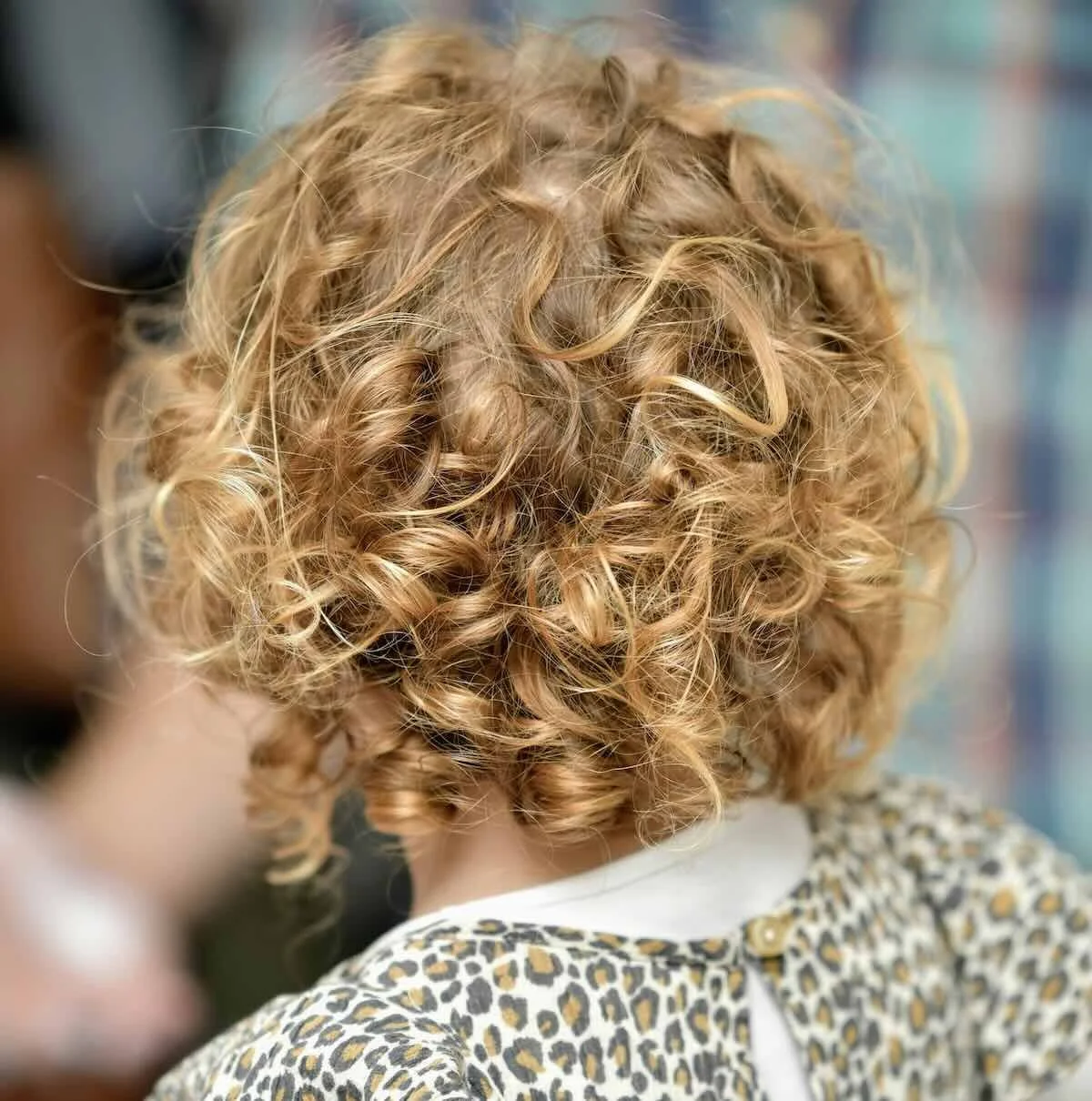
The ends a shade warmer than the roots. September, in one head of curls.
Brassy is not a color that went wrong.
Every head of hair carries warm pigment underneath its surface tone. Lighten dark hair, and it does not go straight to blonde. It passes through red, then orange, then yellow, because those are the pigments being uncovered, in that order. Lifting hair means working against that sequence, and the tone applied afterward is what covers whatever warmth remains at the level where the lift stopped.
Brassy is the name for that warmth showing through again. It is not damage, and it is not a mistake in the formula. It is the pigment that was always underneath, exposed.
Two things expose it. The first is a lift that stopped short, which leaves more raw warmth than a toner can cover for long. The second is time. Sun, heat, minerals, and ordinary washing wear the applied tone away, and what was underneath comes back. A summer does most of that work in three months, which is why the shift is so visible right now. What Your Hair Tells Me in September is about that arrival. This is about what to do with it.
Which brass you have decides everything.
Not all brass is the same color. At the lightest levels, pale blonde, platinum, silver, and gray, the warmth that surfaces is yellow. In the middle, dark blonde, light brown, and most highlighted brunettes, it is orange. At the darkest levels, deep brown lifted a little, it leans red.
A yellow problem and an orange problem look similar in a bathroom mirror but are chemically different. Everything that follows depends on knowing which one is in the mirror.
Why purple works on one and blue on the other
The reason shampoo can do anything about this is the color wheel. Opposites cancel. Healthline's medically reviewed explainer puts it plainly: on a color wheel, purple hues sit opposite yellow hues. So a small amount of violet pigment, deposited during a wash, dims yellow. L'Oréal Professionnel Chroma Crème Purple Shampoo is that pigment in a bottle, made for blondes through platinum and for no one darker. It does nothing to orange, because orange sits opposite blue, not purple. That is why blue shampoo exists: for brunettes and dark blondes whose warmth shows up as orange.
That is the whole logic, and it is why the internet's favorite bottle disappoints so many brunettes. Purple on orange hair is a mismatch. The hair does not read cooler; it reads dull, with a faint gray-mauve cast that looks like a new problem and is only the wrong tool.
When the shampoo is truly helpful
Used correctly, a toning shampoo is a maintenance tool, and a good one. It is helpful when the hair is at the right level for the pigment in the bottle. It helps when the goal is to hold a tone that is already right, rather than change one that is wrong. It also helps when used as a scheduled correction rather than a daily wash: once a week, twice at most, on wet hair, timed and rinsed rather than left to sit.
A toning shampoo deposits. It does not lift, and it doesn’t remove. That distinction sets its ceiling, and most disappointment with these products comes from asking them to work above it.
Gray hair has its own version of this. The yellow it fights is real, and so is the overcorrection. How to Maintain Gray Hair After Blending (Without Purple Shampoo Overload) covers the buildup problem in full, and nothing here loosens it.
When it is not the tool
It is not the tool when the lift stopped short. No shampoo cancels a full level of warmth; the pigment is too much and too raw for a rinse to influence, and a week of trying only adds a violet film on top of orange.
It is not the tool when the warmth is orange and the bottle is purple, for the reason above.
And it is not the tool when the hair has gone dull rather than brassy. Flatness from minerals in the water is a buildup problem, not a tone problem. A violet rinse on dull hair makes it duller. The fix is a clarifying wash, and only then should you assess what the tone underneath has actually become.
What a gloss does that a shampoo cannot
A gloss is a demi-permanent tone applied in the salon, and it is the professional answer to the same question. It lays a translucent, even coat of the right tone over the whole head, leaving no trace of pigment behind after a wash. It seals the cuticle and restores the reflectivity that made the color read fresh in the first place.
A shampoo maintains a tone. A gloss resets it. When brass has climbed past a shampoo's ceiling, or the hair has gone flat, the gloss is the tool, and a toning shampoo afterward keeps its work in place. Neither replaces the other. The shampoo is week to week; the gloss is the seasonal correction. Together, they help a color that shifted over a summer come back into line without redrawing the whole thing.
What to do with this
Look at the warmth in daylight and name it.
Yellow: purple, once a week.
Orange: blue, once a week.
Red, or a full level of warmth: neither. That is a gloss, or a proper toning at the salon.
Dull rather than warm: a clarifying wash before anything with pigment in it.
And if the purple bottle has been in the shower every day since July, stop, let the hair clarify for two weeks, and see what tone is underneath before choosing a color to fight it. Most of the time it is less of a problem than it looks, and the right bottle, used once a week, is enough.
Photo by Shraga Kopstein on Unsplash
Effortless Color For The Real You.