The Appointment Isn't the Transformation — The Weeks After Are
The appointment ends. She leaves looking at herself differently — not dramatically, but noticeably. Something has shifted. What she does not yet know, and what I have watched play out more times than I can count, is that the shift she felt in the chair is not the one that will matter most.
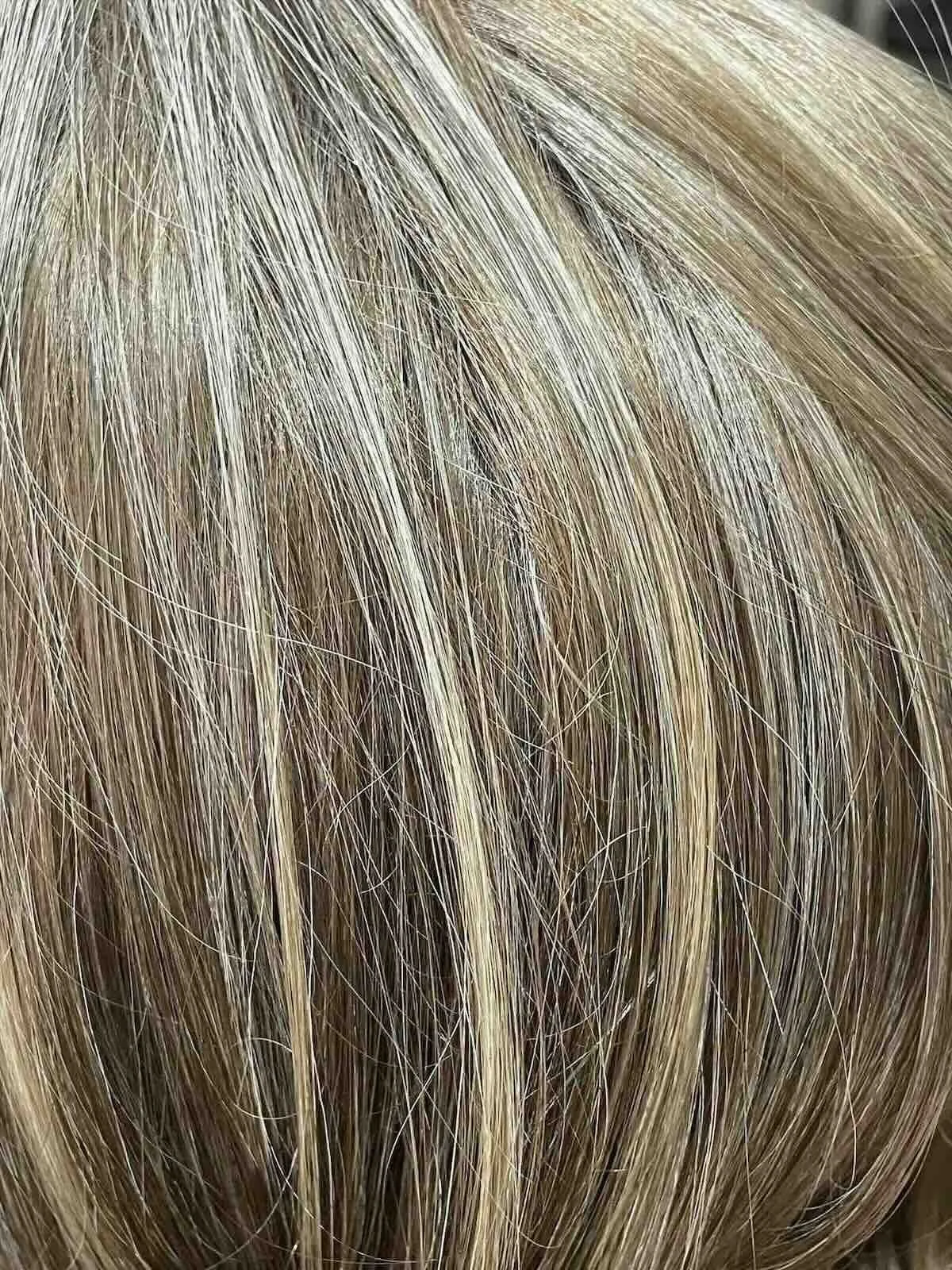
The blend doesn't announce itself. It just settles in.
What the First Week Actually Is
The days immediately following a gray blending appointment are the most honest part of the process — and the most misread.
The color is at its most precise. The toner is at its most saturated. The contrast between blended sections and natural gray is at its sharpest before the hair begins to settle. For clients new to gray blending, this is often the moment of doubt. The result looks intentional in the salon. At home, in familiar light, in the mirror they have looked at for years, it can feel slightly foreign. Too noticeable. Too much silver showing. Too different from what they expected.
Most of them are looking at a result that has not yet fully become what it is.
Gray blending, more than almost any other color technique, improves in the days and weeks after the appointment. The tone softens. The contrast between silver and blonde relaxes. The color begins to integrate with the hair the way natural dimension always does — gradually, subtly, until the question shifts from "does this look right?" to "when did this start looking this good?"
This is not an accident of chemistry. The design is working as intended.
The Pattern That Keeps Appearing
Across years of gray-blending work, one pattern repeats. Clients who call or message in the first week after an appointment are almost always reacting to the same thing: the result looks different at home than it did in the salon.
They are correct. It does look different. The salon environment — controlled lighting, a fresh blowout, the immediate visual satisfaction of a just-completed service — presents the color at one specific moment. Home lighting, natural light, the bathroom mirror at seven in the morning — these present it differently. Not worse. Just honestly.
The clients who understand this tend to settle into the result quickly. They know to give it two weeks. They know the toner will soften, the contrast will ease, and the hair will begin to look more like theirs and less like a service. They have been through the settling period before, or they were prepared for it in the consultation.
The clients who do not understand it often decide in week one that they will not make it in week three. They come back asking for a correction that the hair did not need. They add coverage back over a blend that, given another ten days, would have read exactly as intended.
The appointment is not the transformation. It is the beginning of one.
Read: Who Gray Blending Is Not For
What the Weeks After Actually Determine
The quality of a gray blending result at week six is determined less by what happened in the chair than by what happened at home in the weeks following.
Hair that has been over-toned with purple shampoo will look flat and monochromatic — the warm dimension that made the blend look natural is stripped away as violet pigment accumulates over time. Hair washed with sulfate-heavy shampoo will lose its gloss and reflectivity faster than anticipated. Hair that has been aggressively heat-styled without protection will carry surface damage, making the tonal work read as dull rather than dimensional.
The inverse is equally true. Properly hydrated hair responds differently during the settling period. Moisturized gray is luminous. Dry gray is flat. The same blend looks like a sophisticated, intentional design on one hand and like a maintenance problem on the other. The color did not change between those two outcomes. The condition of the fiber carrying it did.
This is the part of gray blending that the appointment cannot control — and the part that determines more of the final result than most clients realize until they have lived through the difference.
The Real Transformation
What changes in the weeks after a gray-blending appointment are not in the hair? It is the client's relationship to it.
The moment of doubt in week one — when the silver felt like too much, when the result felt unfamiliar — gives way to something quieter. The hair has stopped being new. It has become hers. Not because the color changed significantly, but because she changed in relation to it. She stopped looking for the problem and started seeing the result.
This is the transformation that the appointment was building toward. Not the moment she left the chair. The morning three weeks later, when she looked in the mirror and did not think about it, because it looked right, and things that look right do not demand attention.
Gray blending is designed for that outcome. Not the reveal. The residence.
Read: What Gray Blending Actually Means — and Why the Term Gets Misunderstood
Effortless Color For The Real You.