The season's first cold morning changes New York's sidewalks in a single commute. Knit caps come out of drawers, berets tilt over one ear, and the cloche, the close-fitting bell of a hat, returns to shop windows. A hat is the one accessory that sits on your hair all day, pressing, rubbing, and warming it, and it's worth knowing what it does before you put one on.
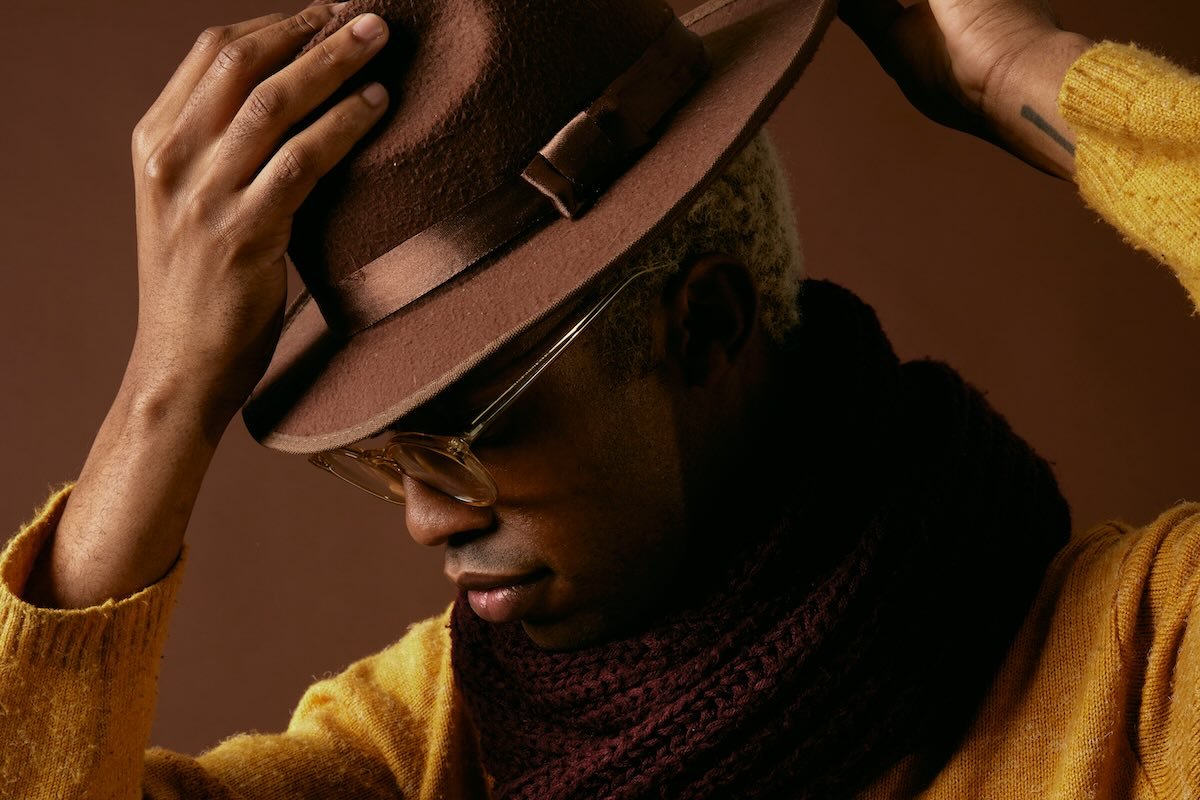
A felt fedora over short bleached hair, the one accessory that touches the hair all day.
Does Wearing a Hat Cause Hair Loss?
No strong evidence shows that an ordinary, comfortable hat causes hair loss, and the most-cited study points to the opposite. In a 2013 study of 92 identical twin men published in Plastic and Reconstructive Surgery by Gatherwright and colleagues, daily hat use was one factor linked to less hair loss at the temples. The link was small and statistically borderline, and it is an association, not proof that a hat protects anything.
Fit and tension matter. Dermatologist John Anthony, interviewed by the Cleveland Clinic, describes reduced blood flow from very tight or very hot hats as a possible risk, not an established cause. The same article notes that when a tight ponytail or braid sits under a hat, the risk comes from the hairstyle rather than the hat. Dermatologists call hair loss caused by repeated pulling traction alopecia. A 2018 review in Clinical, Cosmetic and Investigational Dermatology by Billero and Miteva finds it most often along the front and sides of the hairline, records it in people who wear tightly fixed head coverings for work or faith, and explains that early cases can be reversible once the tension stops. A loose fit, with no tight style beneath it, helps reduce that tension.
What Causes Hat Hair?
Hat hair happens because hair takes the shape it is held in while it dries. Water breaks the hydrogen bonds in keratin, the protein hair is built from, and as the hair dries, those bonds form again in whatever shape the hair is in at that moment. Maria Fernanda Gavazzoni Dias describes the same mechanism in the International Journal of Trichology; it is why a blow-dry holds. A hat pulled over damp hair, or over a scalp warm and damp from the walk, works like a blow-dry in reverse: it sets the root flat.
The rule that follows is simple: hair goes under a hat completely dry. For lift that lasts the day, Rōz Root Lift Spray is a lightweight volumizing spray made for the root. The brand directs it onto damp roots before a blow-dry, then onto dry roots the next day, with a blast of heat, to restore a flattened style.
Why Is Hair So Static in Hat Season?
Hair turns static in hat season because rubbing against a hat charges it, and dry air lets the charge stay. A 1985 study in the Journal of the Society of Cosmetic Chemists by M. L. Garcia found that at low humidity, hair behaves like an insulator, holding onto much of the charge friction puts on it. A heated apartment and a wool cap pulled off at the door are exactly those conditions.
Conditioner is the counter. Gavazzoni Dias notes that conditioners neutralize the hair fiber's negative charge and reduce friction. A leave-in carries that through the day: Gisou Honey Milk Active Repair Leave-In Conditioner Mist is misted onto damp lengths before styling, and the brand says it detangles, smooths, and controls frizz. Summer frizz is a different problem with a different cause, and Humidity Is Coming: What Most People Get Wrong About Frizz Control covers that side of the year.
What Does a Hat Do to Hair Color?
A hat doesn't change hair color, but its friction can change how that color reads. Gavazzoni Dias counts abrasion and friction among the causes of hair damage, through protein lost from the surface. The hair under a hatband, at the hairline and the nape, takes that rubbing every day of the season, and a roughened surface reflects less light, so color can look duller there before it has faded at all.
Dull is often a surface problem rather than a pigment problem, and shine is what a gloss restores; The Forty-Minute Hair Gloss Most People Don't Know They Need explains the appointment. Winter Hair Color in NYC: Low-Maintenance Options That Actually Last covers how color holds through the cold months.
How Do You Wear a Hat Without Undoing Your Hair?
Wear it on dry hair, wear it loose, and give the hair underneath nothing to fight. A hat that leaves a line across the forehead is too tight for all-day wear. A tight ponytail or braid has no place beneath one. A smooth lining where the knit meets the hair reduces rubbing at the hairline, and a leave-in on the lengths handles the rest. When you take the hat off and the root has dropped, a little root spray and a minute of heat bring it back.
The hat can stay. The hair under it only asks to arrive dry, sit easy, and leave the house conditioned.
Photo by Natalia Blauth on Unsplash
Effortless Color For The Real You.