Your Hair Is Going on Vacation Too
Every summer, the same thing happens. You leave the city, you leave your routine, and for a few days — maybe longer — you stop thinking about your hair. That's the point. But your hair doesn't stop reacting. Sun, salt, chlorine, humidity, heat — each one is doing something specific to color-treated hair while you're not paying attention.
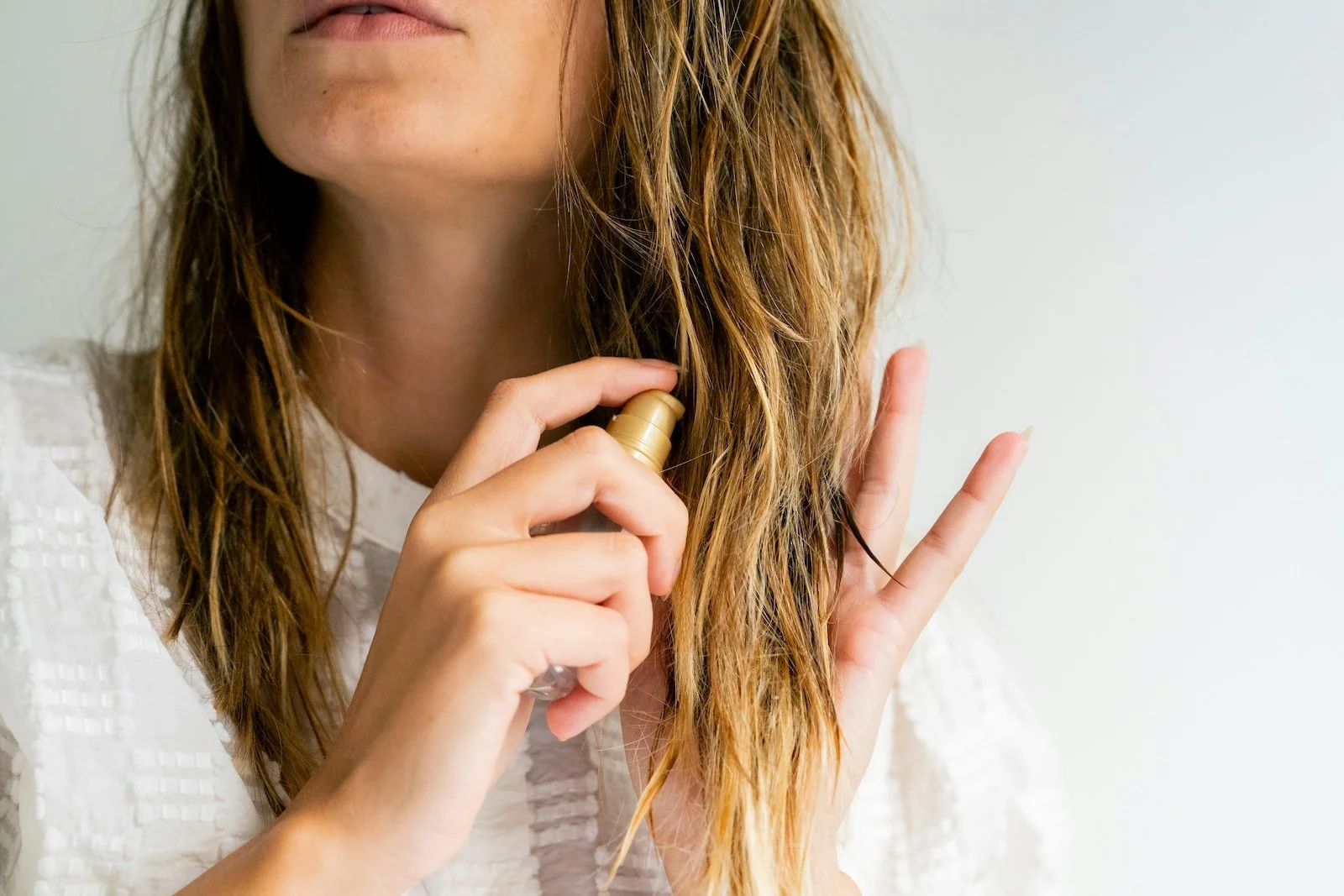
A light hair mist through damp ends — the simplest summer ritual for color-treated hair.
What Summer Actually Does to Your Hair
This is worth understanding once and for all, so you stop guessing at it every June.
UV exposure oxidizes color. It's a chemical reaction — the same one that turns a cut apple brown. Balayage and highlights fade toward a warm or brassier tone. Glosses dull. Blended grays can shift. The lighter the color, the faster you'll notice it.
Two products worth keeping in the rotation specifically for summer: Phyto Phytoplage Protective Sun Oil, applied before sun exposure, creates a lightweight barrier against UV-induced oxidation without weighing the hair down. For moisture recovery at the end of the day, OLAPLEX Nº.7 BONDING OIL is the one product that travels well—a few drops through damp hair can handle frizz, seal the cuticle, and rebuild bond integrity at the same time. Both earn their place in a minimal summer kit.
Salt water and chlorine are both drying agents. Salt pulls moisture out of the hair shaft. Chlorine strips the cuticle and, at high concentrations, can leave a greenish cast on blonde or highlighted hair. Neither is catastrophic in moderation. Both become a problem with repeated unprotected exposure.
Humidity affects texture. If you've had a smoothing treatment, humidity is the first thing working against it. If your hair is naturally wavy or curly, summer amplifies whatever it already wants to do — which can be beautiful, or exhausting, depending on the day.
Heat compounds everything. High temperatures weaken the hair shaft's protein structure over time. Add sun, salt, and a blow dryer on a rushed morning, and the cumulative effect shows up later — not immediately.
The Approach That Actually Travels
The goal isn't to recreate your full home routine on vacation. It's to make four decisions before you leave.
UV protection. This is non-negotiable for color-treated hair. A UV-protective leave-in or hair sunscreen meaningfully slows color oxidation and costs nothing in terms of time or effort. Most people who skip this step don't realize they're skipping it — they notice their color looks different by August.
A leave-in that works in two directions. Something that seals the cuticle against humidity and adds back moisture lost to sun and salt. A light oil-or cream-based leave-in applied to damp hair in the morning handles both.
Rinse before you swim. Saturated hair absorbs significantly less salt water and chlorine than dry hair. Wet your hair with clean water before you get in. This is the simplest protective habit in summer hair care and the most consistently overlooked.
One product that travels. Not a bag full of backups. One versatile product that handles damp styling, frizz control, and light moisture. Edited, not stocked.
If Your Color Was Designed to Last
Balayage and lived-in color are built for summer — that's part of their design logic: soft transitions, natural dimension, and a grow-out that reads as intention rather than neglect. Balayage in NYC: Effortless, Lived-In Hair Color by a Master Colorist lays out that design logic in full.
Low-maintenance color is designed with exactly this kind of lifestyle in mind — that is the whole argument of Low-Maintenance Hair Color in NYC: What Actually Works for Busy Lives. Less dependence on perfect conditions, more resilience over time. But even the most low-maintenance color needs one or two adjustments in summer to perform as it was designed.
The distinction matters: designed to last doesn't mean designed to be ignored. It means the maintenance is lighter—not nonexistent —and How to Make Hair Color Last Longer Without Overprocessing explains what lighter actually involves.
What to Address When You Come Back
Summer damage is cumulative and slow. You may not notice it in the moment. Still, a color appointment in September after a summer of unprotected sun, salt, and pool exposure looks different than one after a protected summer.
What to bring back to the chair: color that's gone warmer or duller than you left it, ends that have dried out noticeably, and any texture changes — hair that behaves differently than it did in May.
This is the adjustment appointment, not the panic appointment: a gloss, a trim, a toning service. The goal coming back is restoration, not reconstruction. If your color was well-designed going into summer, it shouldn't take much to reset it.
Summer is the real test of how well your hair was set up. The color that fades fast wasn't built for longevity. The hair that comes back rough was under-protected. What returns to the salon in September tells the whole story of what summer actually was—and whether the preparation was right. What Your Hair Tells Me in September picks that story up—what to look at first when you come back, and in what order.
Photo by Natalia Blauth on Unsplash
Effortless Color For The Real You.