Summer Balayage in NYC: When Hair Gets Lighter Without Looking Overdone
As summer approaches, the instinct is familiar. Go lighter. Add brightness. Refresh everything. But the most refined balayage doesn't follow that instinct directly. It adjusts — not by increasing contrast, but by reducing weight. Creating hair that feels lighter, moves more freely, and responds better to natural light.
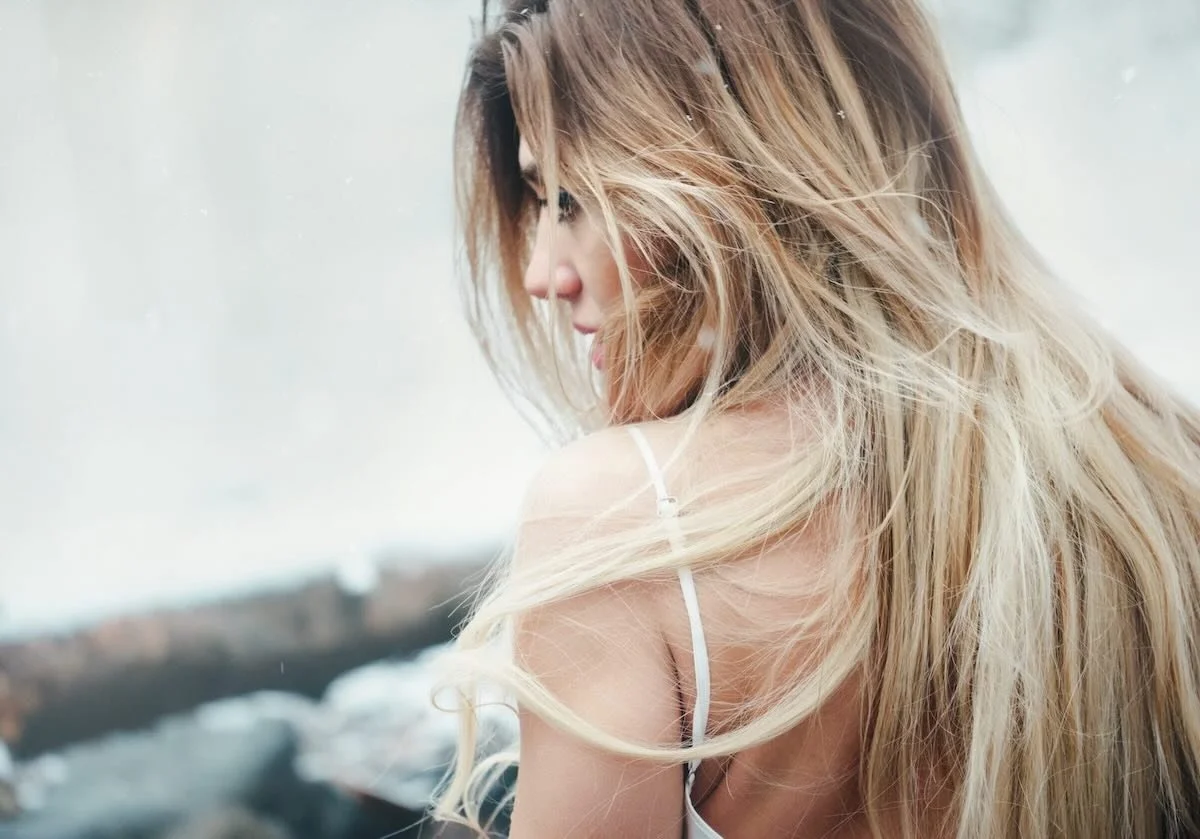
Balayage refined for summer — lighter in feel, softer in tone, built to move.
What Is the Difference Between Lightness and Brightness in Hair Color?
Lightness and brightness are different, and confusing them is the most common mistake going into summer.
Brightness is visual impact — the contrast between the lightest and darkest sections of the hair. Lightness is distribution. How freely light moves through the hair, how open the structure feels, how naturally the color sits.
You can have very bright hair that feels heavy. And you can have softer tones that feel lighter because they are distributed correctly — spaced rather than stacked, dissolved rather than defined.
This is the distinction early summer balayage is built on. No more lightness added to the hair. Better distribution of the existing lightness.
Why Does Spring Color Feel Too Heavy in Summer?
Spring color feels heavy in summer because the dimension it builds starts to read as density once the light changes. Spring color often builds dimension. Warmer tones return. Soft contrast replaces sharp winter lines. Depth and lightness are layered together — the result is richer, more present, more alive than what January produced.
But as the season shifts, that layering can start to feel compact. The warmth that read as refined in April begins to read as heavy in June. Not incorrect — just more than the summer light asks for.
This is where the adjustment begins. Not a new direction. A refinement of the existing one, removing density where it has accumulated, opening space where the hair has become too uniform, allowing light to move through the color rather than sit on top of it — the spring shift described in Predictable Elegance: The Annual Return to Lived-In Brightness.
Why Does Balayage Respond to Summer Light?
Hand-painted color is unusually well suited to a season that changes the light rather than the hair. Because the lightness sits mid-shaft through the ends — where the sun would have found it, where movement reveals it — it becomes more legible as the light turns directional, not less. The dimension was already there. June only lights it.
This is the compounding property of balayage done with restraint, and it is the part most people miss. A good result doesn't peak on the day it is applied and then decline from there. It develops as its environment changes. Placement that was not maximized in January, contrast that wasn’t pushed, leaves the color somewhere to go, and by July it has gone there without being asked. That is the difference between color that was finished and color that was designed to keep arriving. The structural reasoning behind it — where the lightness is placed, why the root is left undisturbed, what the absence of foil actually buys — is set out in Balayage in NYC: Effortless, Lived-In Hair Color by a Master Colorist.
It is also why the early summer adjustment is usually smaller than expected. A slight brightening around the face, a correction for whatever tonal drift the spring introduced, a gloss to restore the surface reflectivity that makes dimension visible at all. The structure is already built, so the work is calibration rather than reconstruction — and it is calibrated to one head of hair, which is why two people wearing the same formula never read the same way. Why Balayage Looks Different on Everyone takes that up in full.
What Changes in Summer Balayage?
The adjustment is subtle but specific. Lighter placement around the face. Softer transitions through the mid-lengths — reduced density through interior sections that have become too uniform.
No more highlights. Better spacing.
The goal is to let light pass through the hair more freely — especially in the natural daylight of summer, which is more directional and more revealing than the flat light of winter. Color that reads as dimensional in January can flatten under the July sun if it has not been adjusted. Color that has been edited — spaced correctly, toned for the season — becomes more visible, not less, as the light increases.
How Should Tone Change as Summer Light Increases?
Control tone going into summer, not intensify it. As sunlight intensifies, tone changes. Warmth reflects more readily. Contrast sharpens naturally without any additional lightening.
Early summer balayage leans toward soft beige, neutral honey, and restrained warmth. Enough to reflect light naturally. Not enough to compete with it. The tonal direction that reads as sophisticated in summer is almost always the one that was calibrated with restraint from the beginning — warm enough to feel alive, cool enough to stay clean as the UV exposure of the coming months begins to work on the color.
Why Does Summer Sun Turn Hair Brassy?
Summer sun turns hair brassy because ultraviolet light breaks down cool pigment faster than warm. Tone is where summer is won or lost, and it’s chemistry, not taste. Ultraviolet exposure climbs steeply in New York from May onward, and that single asymmetry decides how a color ages through the season.
When a cool tone fades under summer UV, brass surfaces — the warmth underneath was always present, and the deposit was the only thing holding it back. When a warm neutral fades, what surfaces is softness: still in register, still deliberate, because the tone was working in the same direction as the hair's own pigment rather than against it. One fade reads as a problem that needs an appointment. The other reads as the color getting on with the season. Nothing about the second outcome is luck. It was chosen in advance. When it isn't, Purple, Blue, or a Gloss: What Brassy Hair Is Actually Asking For sorts out which tool fixes it.
Designing for summer therefore means choosing how a tone will behave three months out, not how it looks on the day. That is also why the gloss is so often the entire summer service: when the placement still reads well, and only the tone has shifted, a gloss in the right register resets the surface and buys the color the rest of the season without touching its structure. Understood that way, color stops being something you have done and becomes something you keep in conversation with — the case made at length in The Post-Trend Era: Why Modern Clients are Choosing Subtlety Over 'Wow'.
Why Does Less Balayage Look Better by August?
Less balayage looks better by August because restraint in June leaves the color room to develop. One of the most consistent observations in summer color work is that the clients whose balayage holds best through August are rarely the ones who added the most in June.
When you add too much lightness, dimension collapses. Everything starts to reflect light the same way. The hair reads as uniformly bright rather than dimensionally light. It looks flat, even when it is technically pale. Refined balayage does the opposite. It edits. Removes where necessary. Preserves depth. Allows contrast to exist without forcing it.
The result doesn't look like something was added. It looks like something was clarified.
How Do You Protect Balayage From Chlorine and Salt?
Protect balayage from chlorine and salt with bond repair and a gentle toning wash. Summer puts more on hair than light does. Chlorine and salt reach the lightened sections first, and they pull tone warm faster than sun alone would. The Support layer for summer balayage at AlbertColor is built around that.
K18 Leave-In Molecular Repair Hair Mask works at the bond level once the lightening is done, restoring elasticity in the sections with the most lift — the same sections that take the most heat between June and August. For tone, Kevin Murphy Blonde.Angel.Wash deposits a gentle cool cast into lightened pieces, holding the balance where it was left without the flat, overcorrected result stronger purple shampoos produce.
Neither of these makes the color. They keep it honest through the weeks the light is working hardest against it — the routine laid out in Summer Color, Summer Life: How Balayage Moves With You.
What Does Summer Balayage Look Like on Brunettes and Blondes?
On brunettes — lighter movement through the mid-lengths, not streaks at the surface. The darker base stays intact, giving the lightness somewhere to come from.
On blondes — softer edges, less uniform brightness, a slight tonal shift toward warmth or beige that keeps the color from reading icy under summer light.
On lived-in color — more air, less density. The color that was building dimension through spring is opened slightly, so the grow-out reads as intentional rather than overdue.
The change is visible. But it doesn't look like something was done. It looks like the hair arrived at exactly where it should be for the season. Keeping it there is the subject of How to Make Hair Color Last Longer Without Overprocessing.
Summer balayage isn't about becoming brighter. It's about becoming lighter. Less density. More movement. Better balance. When the adjustment is done correctly, the hair doesn't peak for a moment. It holds — through heat, through light, through time.
Photo by Velizar Ivanov on Unsplash
Effortless Color For The Real You.