Something has shifted in the conversation about gray hair — toward acceptance, toward silver, toward working with what the hair is becoming rather than against it. I've watched it happen gradually, and then all at once. That shift is real, and for many people, it has been genuinely freeing.
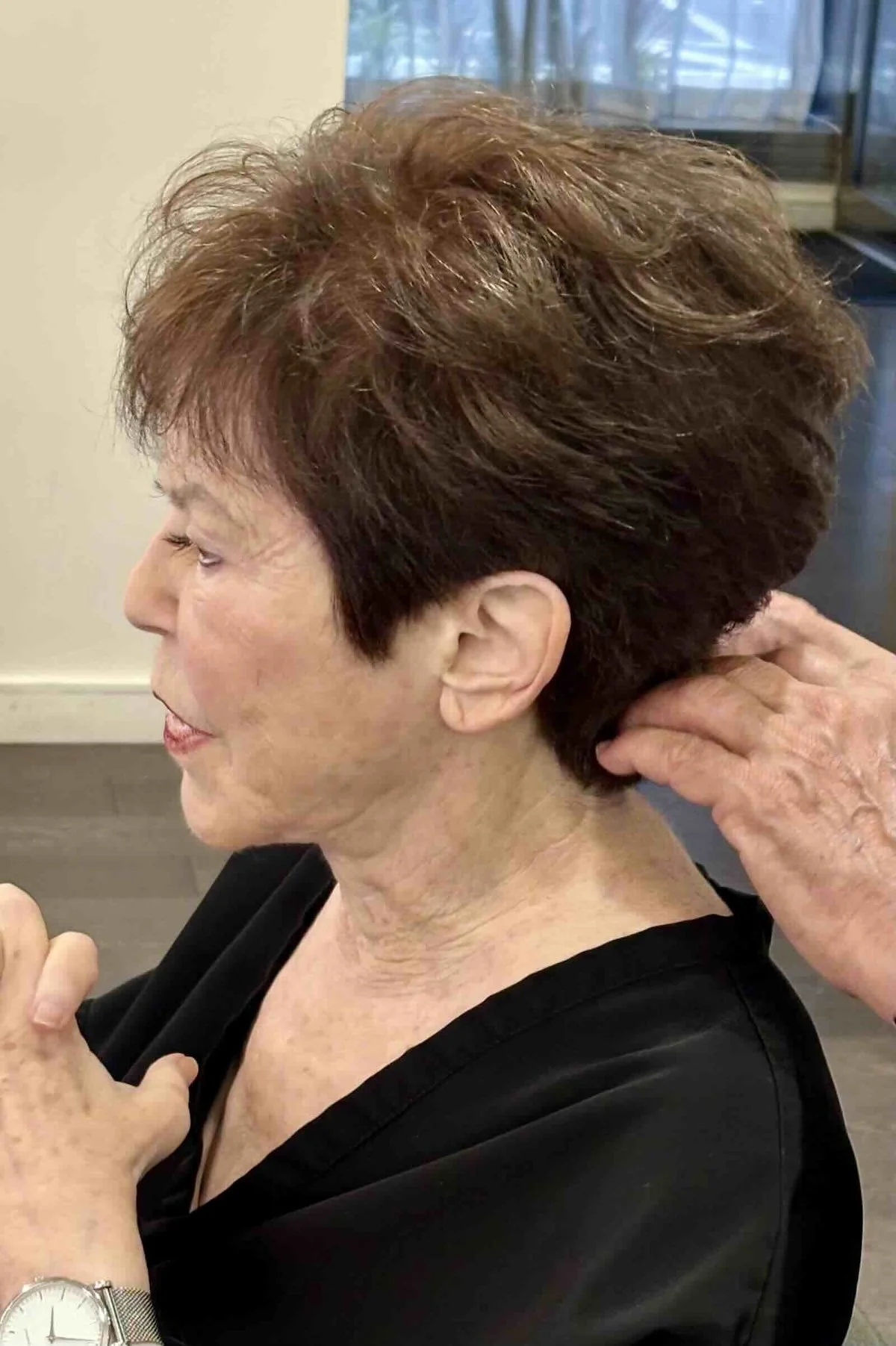
Coverage isn't a step backward. It's a decision.
Is It Okay to Cover Gray Hair Instead of Going Gray?
Yes — covering gray hair is as much a choice as going gray, when it's what a person actually wants. Not everyone with white or silver hair has decided to keep it.
Some have thought it through and come to a clear answer: they don’t want gray hair. Not now. Possibly not ever. The trend toward natural silver does not resonate with how they see themselves. Embracing gray feels like a compromise rather than a liberation. When they look in the mirror, they want to see something warmer, richer, and more aligned with the person they feel they are.
This is a legitimate position. It deserves to be met without pressure to choose another.
The cultural shift toward gray acceptance has been valuable for many people — particularly those who were covering out of habit rather than preference, who had never been permitted to consider another approach. But that shift has introduced a quieter problem: people who want coverage sometimes feel they need to justify it, as if the decision to cover is less sophisticated, less modern, less aligned with current thinking about aging and identity.
It isn't. The decision to cover is as considered as the decision to blend when it is made for the right reasons — because it is actually wanted, not because it feels expected.
What Does Modern Gray Hair Coverage Look Like?
Modern gray hair coverage uses dimension instead of one flat color, so it covers completely but reads as natural hair. Traditional all-over coverage — a single uniform color applied root to tip — isn’t the only way to achieve coverage. And for most people, it is not the best way.
This matters for both maintenance and aesthetics. Flat, uniform coverage creates a sharp line of demarcation as the hair grows — the natural root against the artificial base. Dimensional coverage softens that line, lengthens the stretch before regrowth shows, and makes the grow-out less visually urgent. Anyone can cover their hair without getting trapped in a rigid maintenance cycle.
The warm, golden-brown result coverage creates on white or heavily silver hair can be luminous, richer, warmer, and more present than the silver it replaced. For anyone who wants that warmth, who wants to feel more like themselves in the version of their appearance they choose rather than the one the hair has arrived at on its own, coverage is not a step backward. It is a decision, and the case for when blending is the wrong route is made in Who Gray Blending Is Not For — and What to Consider Instead.
How Do You Choose Between Gray Coverage and Gray Blending?
The choice between gray coverage and gray blending comes down to how the hair should feel in the weeks after the color, not to what the current conversation about gray says is right. The useful question is not whether to cover but what the hair should feel like, today and in the weeks after — and the answer worth listening to is the honest one, not the one that sounds most current.
Asked that way, the answer tends to come out honest. Some people describe wanting to feel lighter, softer, and less concerned with maintenance. That answer points toward blending. Others describe wanting to feel more themselves — more present, more polished, more like the person they see in their minds when they imagine how they look. That answer, often, points toward coverage.
Neither answer is more evolved. Neither requires justification. Both deserve a strategy that meets them exactly where they are.
The gray conversation has expanded over the past several years to include options previously unavailable — the routes are laid out in Gray Hair: The Whole Conversation, and the term at the center of it is unpacked in What Gray Blending Actually Means — and Why the Term Gets Misunderstood. That expansion should include the person who sees silver hair and does not want it, who wants warm coverage, dimensional richness, and a result that genuinely feels like hers. She belongs in that conversation, too.
Cut by Elvin Arvelo.
Effortless Color For The Real You.