What Earns a Place on the Shelf
Clients describe their routines to me more often than they mean to. It usually arrives sideways — an explanation for why the color faded early, or why the ends feel different than they did in the spring.
What I hear is almost always the same shape. Eight or nine bottles. Three of them doing the same job. Two of them quietly working against each other.
Nobody bought them carelessly.
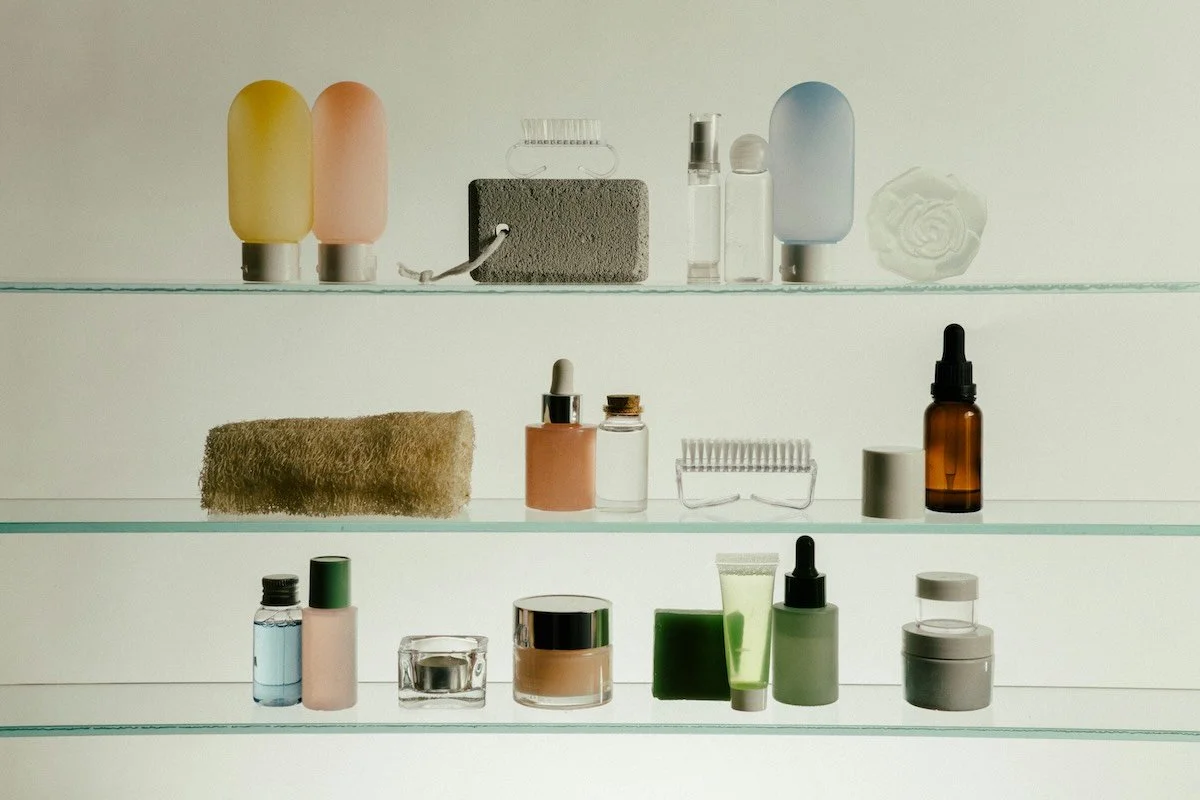
Most of what a shelf holds was bought for a problem that has already passed.
The Shelf Is a Record of Decisions
Every bottle on it responded to something. A season that went badly. A suggestion from four years ago. A recommendation at a counter from someone who had thirty seconds and meant well. An article read at exactly the right moment of frustration.
Taken one at a time, none of those purchases was wrong. The problem is that nothing ever leaves. Shelves are built by addition only, and what accumulates is not a routine. It is sediment.
Hair does not respond to what you own. It responds to what you use, in the order you use it, at the frequency you use it. Most shelves hold three different routines layered on top of one another, and the hair is trying to answer all three at once.
There Are Only Three Jobs
Strip away the marketing, and nearly everything sold for hair does one of three things.
The first is cleansing. This is the only product that touches every strand every single time, which makes it the one worth being particular about. A sulfate-free formula built for color-treated hair — Pureology Hydrate Shampoo is a reliable example — lifts buildup without stripping tone.
The second is structural. This small category does something measurable within the fiber rather than on top of it, and it is the one the industry most often imitates without delivering. Redken Acidic Bonding Concentrate Leave-In Treatment belongs here. Used weekly rather than daily, this category captures what people mean when they say their hair feels different.
The third is surface. Finishing sprays, smoothing creams, oils. Moroccanoil Frizz Shield Spray sits here. Surface products are cosmetic, and there is nothing wrong with cosmetic — a good one shortens the blow-dry and makes the day easier. The error is expecting a surface product to do structural work. That is a promise the category cannot keep, no matter what the bottle says.
What Does Not Earn a Place
Three tests. Most bottles fail at least one.
It duplicates a job already covered. Two shampoos is not twice the cleansing. It is one routine with an inconsistency built into it.
It promises a result its category cannot produce. If it sits on the surface, it is not repairing anything underneath.
It was bought for a problem that no longer exists. Chlorine protection in January. A brass correction for a tone abandoned two years ago.
A Working Shelf Is Small
Three or four products, each doing a different job, used consistently.
Not because restraint is a virtue in itself, and not because expensive things work better. Because hair can only answer so many instructions at once, and a small shelf is the only kind where you can tell what is working.
The clients whose color holds longest are rarely the ones with the most products. They can say, without hesitating, exactly what they use and why.
Photo by Ramsés Cervantes on Unsplash
Effortless Color For The Real You.