The Spring Shift: Why NYC is Trading High-Contrast for Soft Dimension
Every spring, the city recalibrates. The light changes, the air shifts, and something in the way people move through New York becomes slightly less defended — less layered, more exposed. Hair color that was built for a different context starts to read differently, and clients begin noticing the gap between what their color is doing and what they feel the season is asking for. The requests that follow are not for transformation. They are for alignment.
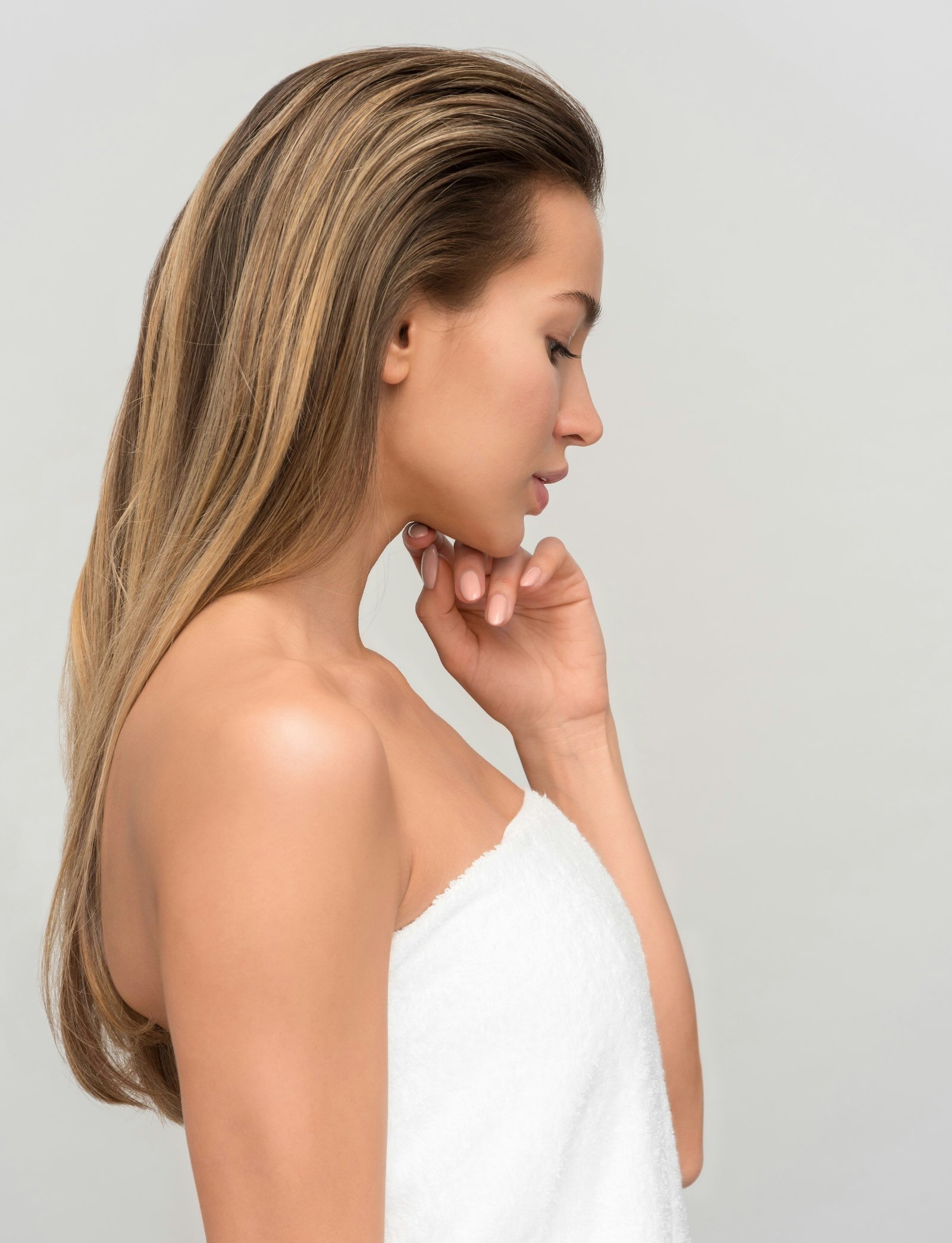
Spring color is less about going lighter—and more about creating softness, balance, and natural reflection.
What Is Actually Happening in the Chair This Spring
The clearest signal of where a season is going does not come from trend forecasts. It comes from what clients describe in the first thirty seconds of a consultation — before they have the vocabulary to name it, before they have settled on a reference image, before they have decided what they want. In spring 2026, clients consistently describe a color preference that does not announce itself. Not the absence of color. The presence of color is so well-integrated that it reads as the hair's natural state, only more refined.
Blondes are moving away from anything that reads icy, ultra-pale, or high-contrast. The target is creamier — a blonde that sits closer to neutral or slightly warm, that looks at home on the person rather than placed on top of them. Brunettes are not asking to be lifted into contrast. They are asking for dimension that moves—subtle, lighter pieces that catch the light mid-shaft, softening the overall silhouette without creating a visible separation between colored and uncolored sections. The aesthetic instruction, across all hair types, is the same: nothing should look like it was put there.
The Shift Away from High Contrast
For several years, high-contrast color dominated — the kind of balayage with sharp transitions from dark root to bright ends, the heavily face-framed looks with aggressive lightness close to the hairline. That aesthetic had its moment because it was graphic and immediately readable. It photographed well. It communicated effort.
What is replacing it is more considered and, in many ways, more technically demanding. A softer dimension requires greater precision in placement than high-contrast work does. When the goal is a transition so gradual it is nearly invisible, there is no margin for a line that is too defined, a section that is too saturated, or a tone that is even slightly off from the target. The craft becomes more visible in its absence — the better the colorist, the less the color appears to have been done at all.
This is one of the reasons balayage continues to evolve as the dominant technique for this direction. Hand-painting allows the colorist to follow the natural movement of the hair, to place lightness where sunlight would find it, and to leave the areas that read naturally darker undisturbed. The result is dimension that does not sit on the surface of the hair — it lives inside it.
Balayage in NYC: Effortless, Lived-In Hair Color by a Master Colorist
Tone as the Primary Variable This Season
The tonal direction that is dominating spring 2026 consultations sits in what might be described as balanced warmth — not golden, not cool, not neutral in the flat sense, but a slightly warm neutral that reads as the hair's own undertone made more visible. Honey through blonde, caramel through brunette, a muted warmth that does not compete with skin tone but complements it. These tones have a specific optical quality: they reflect light in a way that makes the hair appear dimensional and alive without requiring significant lightness.
Cool tones, by contrast, demand more from the maintenance cycle. They fade faster in spring because UV exposure begins to increase in March in a city like New York, and ultraviolet light is one of the primary environmental factors that degrade color pigments. Research on the effects of solar radiation on hair confirms that UV exposure causes measurable changes to hair color, mechanical properties, and surface condition — all of which directly affect how professionally applied color wears through the season.
Warm-neutral tones are more UV-resilient than cooler ones because they work in the same tonal register as the hair's natural underlying pigment rather than opposing it. When the outer deposit fades, what is revealed is still warm — still in range, still intentional-looking. Cool tones, when they fade under UV exposure, tend to reveal brassiness rather than softness, prompting the urge to re-tone. This is not a failure of the technique. It is chemistry. Designing for spring means designing with that chemistry in mind from the start.
Gloss as a Finishing and Maintenance Tool
One of the most consequential shifts in how sophisticated spring color work is being approached is the increased use of the gloss — not as an add-on at the end of a service, but as a deliberate design tool and as a standalone appointment between larger services. A gloss does several things simultaneously: it smooths the cuticle, which immediately increases reflectivity and shine; it deposits a wash of tone that can neutralize, warm, or deepen the color depending on the formula; and it extends the life of the underlying work by sealing the surface and slowing tonal drift.
For clients in the spring transition who do not need structural lightening but whose color has shifted from where it should be — slightly duller, slightly brassier, slightly flatter than it was at the last appointment — a gloss visit is often the complete answer. It is not a compromise or a lesser version of a full color service. It is the right service for the problem at hand, and it produces immediately visible results.
The connection between this kind of thoughtful seasonal adjustment and the broader philosophy of low-maintenance color design is direct.
Read: Spring Hair Color in NYC: The Subtle Shift Clients Ask for Every Year
Supporting Soft Color at Home
Color designed to look effortless requires a specific kind of at-home support — not corrective, not aggressive, but precise. The Support layer for spring 2026 color at AlbertColor includes the Christophe Robin Shade Variation Mask, available in warm or cool shades depending on the client's tonal target, used once weekly to maintain color precision without the commitment of a salon visit. IGK Good Behavior Spirulina Protein Smoothing Spray, applied before heat styling, protects the cuticle from UV and thermal damage while keeping the hair smooth enough to reflect light the way freshly toned hair does. And Sachajuan Color Protect Conditioner, used daily, creates a pH-balanced, cuticle-sealing environment that helps color remain stable between appointments.
These choices are specific to the spring context: products that protect against UV degradation, maintain tonal balance, and support a smooth surface that makes soft, dimensional color appear soft and dimensional rather than flat. Color at this level of refinement does not need heavy intervention at home. It needs intelligent, consistent support.
The Broader Shift: Color That Works With Real Life
What is happening this spring in New York is not a trend in the conventional sense. It is a maturation. Clients who have lived through the cycle of dramatic transformations — the icy blondes, the heavy contrasts, the looks that demanded constant maintenance and re-toning — are arriving at a different question. Not what do I want my hair to look like? But what do I want my hair to feel like when I live with it?
The answer, consistently, is: lighter than it feels, more dimensional than it appears, and easier to maintain than anything they have tried before. That is not a modest ambition. It is a more demanding one, because it requires the color to perform beautifully not just at the appointment, but on day thirty, and day fifty, and when the light changes and the season turns. Designing for that standard is what the work is actually about.
Photo by Icons8 Team on Unsplash
Effortless Color For The Real You.