Why Your Hair Is Different in Other Places
There is a moment at the end of every shower when hair is heavier than it will be all day, and everything that was in the water is still sitting on it. Then it dries, and whatever happened stops being visible. It happened anyway.
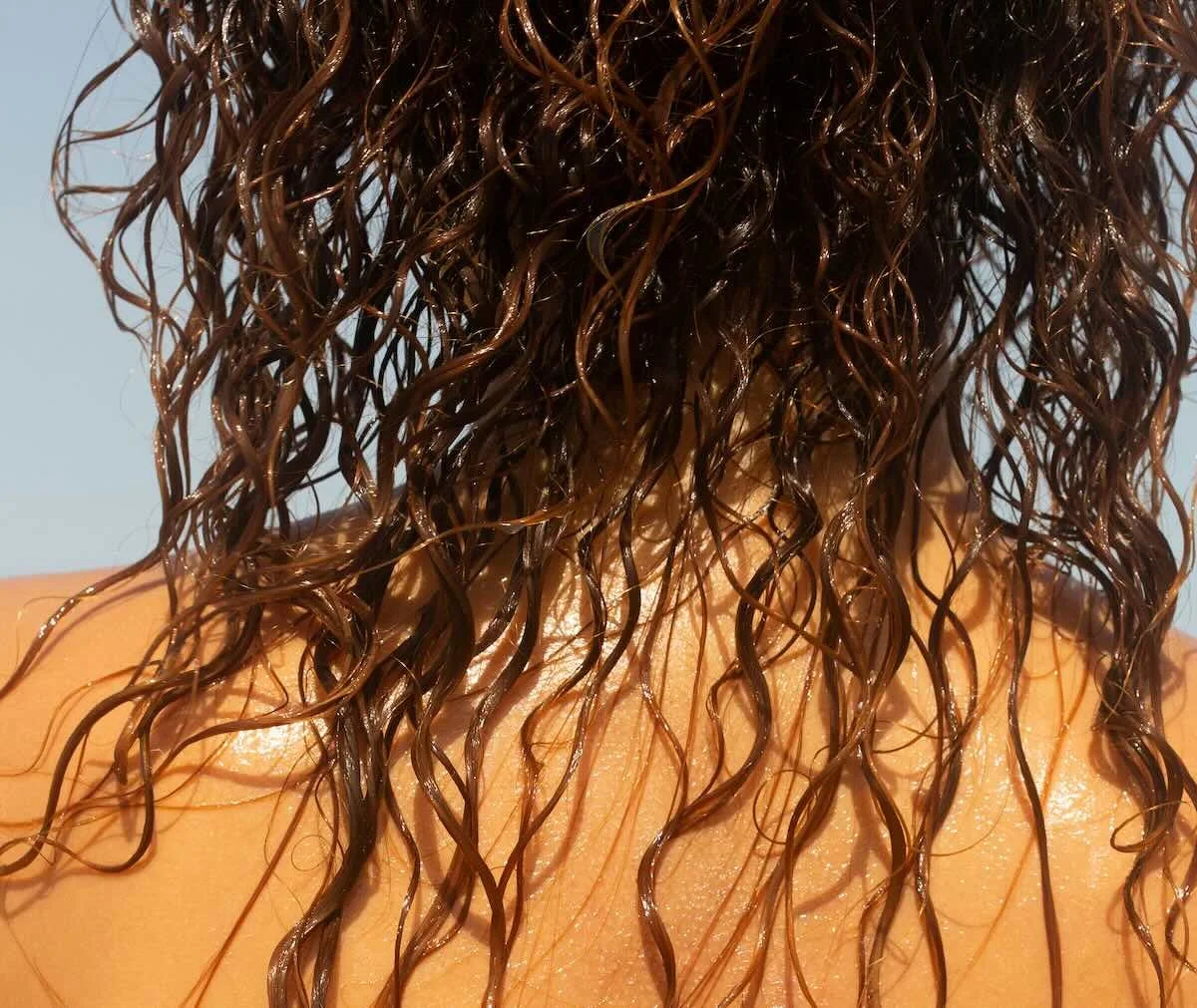
Water is the one ingredient in every wash that nobody chooses. It arrives with the building.
The Only Ingredient Nobody Chooses
You choose the shampoo. You chose it carefully, probably, and you have opinions about it. You choose the conditioner, the mask you were told to use twice a week, the thing you spent too much on in an airport. Every one of those is a decision.
The water you do not choose. It arrives with the building.
It is also, by a very wide margin, the largest thing you put on your hair. Everything else is a rounding error by volume. And it is the one input nobody has an opinion about, because it is the same every day and has been for as long as you have lived there, which is exactly what makes it impossible to see.
It Is Not the Humidity
When hair behaves differently somewhere else, the first thing people reach for is the air.
Humidity is real, and it does real work, but it is a different mechanism with a different set of symptoms, and it is not what I am talking about here. Humidity changes how hair behaves. Water changes what is in it.
That distinction matters because the two get blamed for each other constantly, and only one of them leaves something behind.
Two Grains Per Gallon
New York water is unusual, and most New Yorkers have no idea, because it is the only water they have ever calibrated to.
The city's own drinking water report puts hardness at an average of 32 milligrams per liter, which works out to about 2 grains per gallon. The same report notes that anything up to 3 grains per gallon is considered soft, and that between 3 and 9 is moderately hard. Our water comes down from the Catskills and the Delaware watershed, largely unfiltered, and it is soft by the measure the city itself publishes.
So when a New Yorker leaves, they are not usually going somewhere with better water. They are going somewhere with more in it. And they have spent years learning what their hair does in one of the softest municipal supplies in the country, which means their entire sense of what their hair is like was formed under conditions that do not travel.
Which is why the question worth asking is not what you did while you were away. It is where you were, and what came out of the tap there.
The Version You Can See
There is one case where water announces itself, and almost everyone has heard of it: hair that goes faintly green.
It is not chlorine, whatever the pool has trained everyone to believe. It is copper. Copper is a metal; metal binds to the protein in hair, and it binds most visibly to hair that is light enough to show it. In a pool, the copper is usually in the treatment. In a house, it is in the pipes.
Which means green is not a swimming problem. It is a water problem that swimming made famous.
And it is worth sitting with for a second, because it is proof you already accept. You have never doubted that water can change the color of hair. You have only believed it in the one case loud enough to see.
What It Does the Other Fifty-One Weeks
A woman I know spent two weeks away and came home with a faint green in her ends. She had already decided what caused it.
She had been in a hot tub at a spa, more than once. Copper and hot water get along even better than copper and cold water.
She was right about the green and wrong about which change mattered. The green came out.
What did not come out was two weeks of ordinary showering in water drawn from a deep-well aquifer, ninety minutes from a city that washes in surface water off a mountain. The hot tub was the thing she could see. The tap was the thing that flattened her gloss and had her color reading dull three weeks early. The rest of the time is quiet, and quiet is why it goes unattributed for years.
Metal and mineral accumulate. They do not announce themselves. What they do is take the reflectivity out of color, which most people read as the color fading, even when the pigment is often still there. Gloss stops lasting. Tone goes flat faster than it should. A blonde goes dull rather than brassy, which is different, and it gets treated the same. Color that behaved predictably for years stops behaving predictably, and nothing else has changed.
There is a version of this conversation that is about what you do to your hair - heat, overprocessing, doing too much too often - and it belongs to the question of how to make hair color last longer without overprocessing. This is the other conversation. This is the one where
you did nothing wrong, and something happened anyway, because the building did it.
What Actually Helps
Two things, and one of them is smaller than people expect.
The first is a chelating treatment, the only category that removes metal rather than coating over it. L'Oréal Professionnel Metal Detox makes an unusually precise claim for this industry: it targets metal particles accumulated in hair from water exposure. Not damage in general—that specific thing.
The second is filtering the shower, and precision matters here, because the marketing around this category has none. A shower filter like the Hello Klean Shower Filter reduces chlorine and helps reduce heavy metals, including copper. It does not soften water. Calcium and magnesium go straight through it. If somebody tells you a shower filter will soften your water, they are selling you something that does not exist.
That is a narrower promise than most people want. It is also the honest one, and the narrow promise is the one that holds up.
Neither of these is dramatic. Both of them address a variable that has been running in the background the entire time, which is the only kind of problem worth solving quietly.
The Water You Are Used To
You cannot choose your water. You can know which variable it is.
That is most of what changes when someone finally hears this, and it is not a product or a routine. It is that a thing they had been treating as random, or as their own fault, or as the colorist's, turns out to have a cause with a name and a mechanism. Hair that behaved one way in one apartment and another way in the next was not being temperamental. It was reporting the water accurately.
The next time you come back from somewhere and your hair was inexplicably better, or inexplicably not, the question is not what the air was doing.
Ask what came out of the tap.
Photo by Ohlamour Studio on Unsplash
Effortless Color For The Real You.